










Ecos Mobility Q2 FY27 Profit Rises 21.36% to Rs 17.73 Crore
Key highlights
- Ecos Mobility reported Q2 FY27 consolidated revenue of Rs 234.51 crore, up 9.48% from Rs 214.21 crore.
- Ecos Mobility's Q2 FY27 consolidated net profit rose 21.36% to Rs 17.73 crore from Rs 14.61 crore.
- Q2 FY27 consolidated operating profit increased 13.76% to Rs 27.95 crore.
- Ecos Mobility will hold its Q2 and H1 FY27 earnings call on 16 November 2026 at 11:00 AM IST.
powered by IRIS
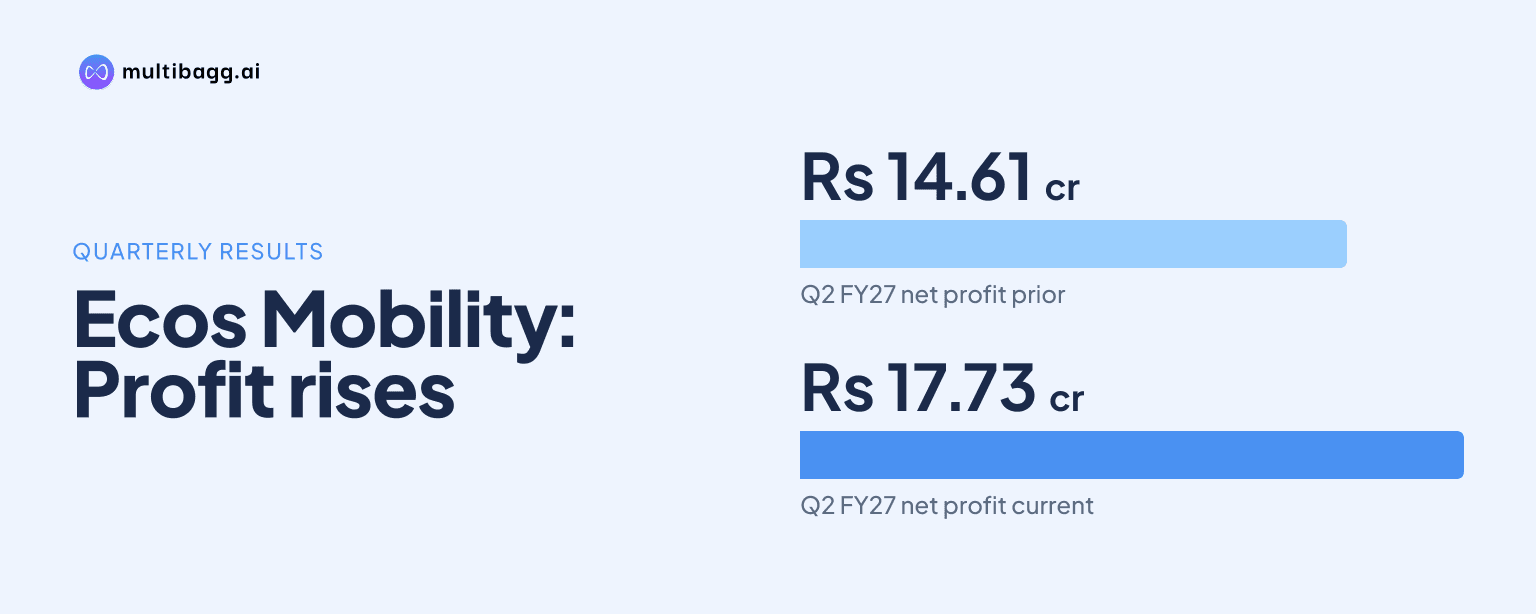
Ecos (India) Mobility & Hospitality Ltd reported consolidated net profit of Rs 17.73 crore for Q2 FY27, up 21.36% from Rs 14.61 crore a year earlier, while consolidated revenue rose 9.48% to Rs 234.51 crore. The September-quarter performance matters because profit increased faster than revenue during the reported period.
Know Ecos (India) Mobility & Hospitality inside out
Results, valuation, peers and who's buying, in one view.
What did Ecos Mobility report for Q2 FY27?
Ecos Mobility reported consolidated revenue from operations of Rs 234.51 crore for the quarter ended 30 September 2026, compared with Rs 214.21 crore in the corresponding quarter a year earlier. The 9.48% year-on-year rise was accompanied by operating profit of Rs 27.95 crore, up 13.76% from Rs 24.57 crore.
Consolidated profit after tax stood at Rs 17.73 crore, against Rs 14.61 crore in Q2 FY26. This represented year-on-year growth of 21.36%. The company declared the unaudited standalone and consolidated results on 13 November 2026 after approval by its Board of Directors.
The reported figures cover the July to September 2026 period and are consolidated results. Ecos Mobility also approved financial results for the half year ended 30 September 2026, although the available disclosure does not provide half-year revenue or profit figures.
How were the results approved and disclosed?
The Board approved Ecos Mobility's unaudited standalone and consolidated financial results for the quarter and half year ended 30 September 2026 at its meeting on 13 November 2026. The financial statements were subject to limited review, with S S Kothari Mehta & Co. LLP identified as the statutory auditor in the company information provided.
The company subsequently filed newspaper advertisements in the English and Hindi editions of Business Standard for the standalone and consolidated unaudited results. This disclosure followed the requirements applicable to listed companies under the SEBI Listing Obligations and Disclosure Requirements framework.
The filings distinguish between the standalone and consolidated performance. The headline quarterly revenue, operating profit and net-profit numbers cited by the company are on a consolidated basis. Investors should therefore avoid treating the separately reported standalone profit figure as directly interchangeable with consolidated profit after tax.
Standalone profit after tax was reported at Rs 18.27 crore for Q2 FY27, compared with Rs 14.30 crore in the corresponding prior-year quarter, an increase of 27.8%. This figure relates to the standalone financial statements and is separate from the Rs 17.73 crore consolidated profit figure.
Got a follow-up? Ask IRIS
What is the context behind Ecos Mobility's quarterly growth?
Ecos Mobility had reported Q1 FY27 revenue growth of 16.7% year-on-year to Rs 211.40 crore. Its investor presentation attributed that earlier-quarter growth to a 27% increase in trip volumes and the addition of 61 new clients. These disclosures provide operating context for the company's performance in the first half of FY27.
In Q2 FY27, revenue growth moderated to 9.48% from the Q1 rate disclosed in the earlier presentation, while operating profit and net profit grew faster than revenue. Operating profit rose 13.76% and profit after tax rose 21.36%, based on the reported quarter-on-quarter comparable annual figures.
The company operates in the transport services industry. Its reported financial performance is therefore relevant to investors tracking corporate mobility and related transport-service demand, though the supplied disclosures do not provide a segment-wise revenue breakup or an explanation for the movement in quarterly profitability.
The Board also constituted a Strategy and Performance Review Committee alongside approval of the Q2 and half-year results. The available information does not set out the committee's mandate or identify any targets linked to it.
What do the filings show about liquidity and investor engagement?
Ecos Mobility reported cash and cash equivalents of Rs 5.65 crore as of 30 September 2026, compared with Rs 20.72 crore at the beginning of FY27. The information also showed trade receivables of Rs 106.92 crore and investing cash outflow of Rs 25.90 crore for the half year.
These balance-sheet figures indicate that cash declined during the first half while receivables and investing outflows were reported at material levels. The company has not, in the supplied information, given a detailed explanation of the individual investments or stated how it expects these movements to develop.
For investors, the earnings release provides the reported growth in revenue and profit, while the cash-flow and receivables disclosures remain relevant areas for further management commentary. The fall in cash and the increase in trade receivables are separate facts from the quarterly profit performance and should be assessed alongside future filings.
Ecos Mobility has scheduled an earnings conference call at 11:00 AM IST on 16 November 2026 to discuss Q2 and H1 FY27 operational and financial performance. The call intimation was filed with BSE and NSE on 10 November 2026 under Regulation 30(6) of the SEBI listing regulations.
Conclusion
Ecos Mobility's Q2 FY27 consolidated results showed revenue of Rs 234.51 crore and profit after tax of Rs 17.73 crore, with profit rising 21.36% year-on-year against revenue growth of 9.48%. The Board approval, limited review process and newspaper publication completed the formal disclosure of the September-quarter and half-year results.
The scheduled 16 November 2026 earnings call is the next disclosed event for investors to monitor. Management's discussion may provide additional context on Q2 operations, first-half performance, receivables, cash movements and the company's stated outlook, none of which has been quantified in the supplied results summary.