










Emcure sees 20 countries left for amphotericin B rollout
Key highlights
- Emcure said liposomal amphotericin B has entered about 50% of its European opportunity, with roughly 20 countries still to enter.
- Europe and U.K. revenue increased 36% year-on-year to Rs 604 crore in Q2 FY27.
- International revenue rose 34.5% to Rs 1,665 crore in Q2 FY27, while constant-currency growth was about 24%.
- Emcure has two amphotericin B manufacturing sites and expects them to meet demand for the next 18 to 24 months.
powered by IRIS
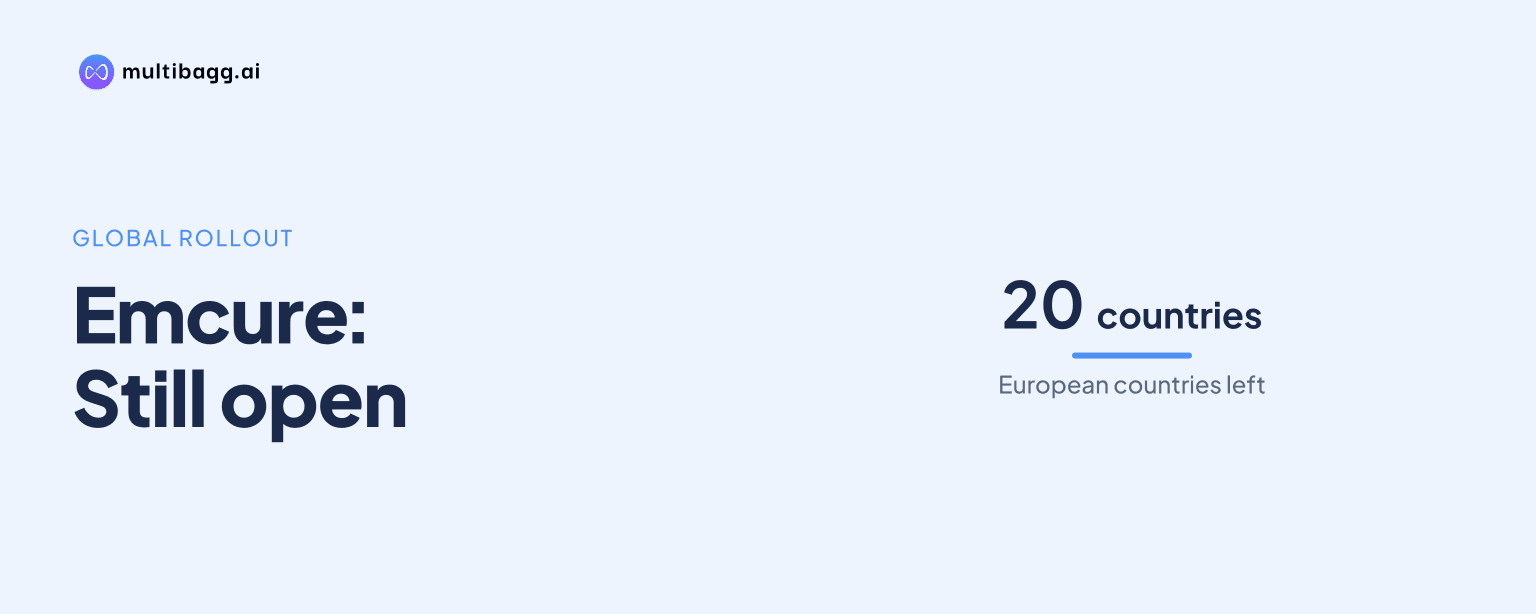
Emcure said in Q2 FY27 that liposomal amphotericin B had entered about 50% of its European market opportunity, leaving roughly 20 countries still to penetrate, while Europe and U.K. revenue increased 36% year-on-year to Rs 604 crore. Management identified the product as a key, but not sole, driver of European growth.
Know Emcure Pharmaceuticals inside out
Results, valuation, peers and who's buying, in one view.
How many amphotericin B markets has Emcure entered?
Emcure has entered about half of its targeted European markets for liposomal amphotericin B and has roughly 20 countries still to enter. Management said it had recently received approvals in a few additional geographies, but did not disclose the countries already commercialised, country-level sales or a timetable for each remaining entry.
The runway follows a quarter in which Europe and U.K. revenue rose 36% year-on-year to Rs 604 crore in Q2 FY27. Management attributed the increase to its base portfolio, new launches and the continued scale-up of liposomal amphotericin B, making clear that the product supports rather than entirely accounts for the regional result.
Emcure does not disclose molecule-level revenue, but management said liposomal amphotericin B contributes less than 10% of international sales. International revenue was Rs 1,665 crore in Q2 FY27, or 59% of consolidated revenue, which indicates that the product remains a limited part of overseas sales while its geographic coverage expands.
What is driving Emcure's Europe growth besides amphotericin B?
Emcure's European growth is also being driven by its established portfolio and new launches. Europe and U.K. grew 36% in Q2 FY27, faster than Canada at 24%, while rest of world, or RoW, grew 41%, showing that growth was spread across the international business rather than confined to one product or territory.
Management also named treprostinil as a product expected to contribute significantly in Europe. It described the product as having limited competition and potential value and margin contribution, although it said treprostinil may not be a high-volume product and gave no approval date, launch date or sales forecast.
Reported international revenue growth of 34.5% included a currency benefit of about 10%, according to management. On a constant-currency basis, international growth was about 24% in Q2 FY27, compared with overall reported revenue growth of 24.3% to Rs 2,820 crore, indicating that launches and base-business growth also contributed to the overseas increase.
When will Emcure launch amphotericin B in emerging markets?
Emcure expects to launch liposomal amphotericin B in at least a couple of groups of emerging markets during the next half, with batches already under production for recently approved countries. In its prepared remarks for Q2 FY27, the company cited approvals in Brazil and Mexico, and management also referred during the call to Brazil, Colombia and Mexico.
Europe is currently the principal contributor from liposomal amphotericin B, according to management. It said the product had not yet contributed comparably in Canada, while emerging-market approvals were only beginning, leaving those launches as a possible future source of sales rather than an explanation for current RoW revenue.
RoW revenue increased 41% year-on-year to Rs 630 crore in Q2 FY27, supported by antiretroviral, or ARV, products, non-ARV launches and portfolio expansion. The RoW mix shifted from about 67% ARV in the preceding quarter to roughly 50% ARV and 50% non-ARV in Q2, as described by management.
Management expects ARV to make up about 50% to 55% of RoW sales in FY27. That mix leaves room for non-ARV launches, including liposomal amphotericin B, but Emcure did not quantify the product's expected contribution in Brazil, Colombia, Mexico or any other emerging-market country.
Got a follow-up? Ask IRIS
Does Emcure have enough capacity for amphotericin B launches?
Emcure has diversified liposomal amphotericin B production across two manufacturing sites, with each site serving specified markets. Management said relevant regulatory audits were recent and closed, and it expects the two sites to cater to demand without restriction for the next 18 to 24 months.
Both sites have approval in the U.K., which management identified as an important market. Management also said it expected approvals for both sites in Europe in due course, without providing a regulatory date, while describing the supply network as able to serve Europe, Canada and emerging markets.
Capacity planning does not remove the prospect of competition in Europe. Management said it expects competition for liposomal amphotericin B to emerge at some point, but did not identify competitors or timing; it also said that international sales of Rs 1,665 crore in Q2 FY27 were broadly spread across products and regions.
How does amphotericin B fit Emcure's FY27 plan?
Emcure raised its FY27 revenue-growth outlook to more than 20% from a previous mid-teens expectation after first-half revenue increased 23.6% year-on-year to Rs 5,401 crore. Management cited improving traction in India and faster scaling in Europe and RoW, where expected product approvals had arrived and were ramping up.
In Q2 FY27, Emcure reported earnings before interest, tax, depreciation and amortisation, or EBITDA, of Rs 575 crore, up 31% year-on-year, with a 20.4% margin. Management expects full-year EBITDA margin improvement at the upper end of its earlier 75 to 100 basis-point range, with one basis point equal to one-hundredth of a percentage point.
Research and development spending was Rs 111 crore, or 4% of revenue, in Q2 FY27. Management said spending would increase in the second half but remain within its full-year range of 4% to 5% of revenue, while more than 20 product approvals received during the quarter supported the international launch pipeline.
Conclusion
Emcure's roughly 20 remaining European country entries show that liposomal amphotericin B still has geographic runway after contributing to 36% Europe and U.K. growth in Q2 FY27. The product is not a concentrated international-sales exposure, however, because management put its contribution below 10% of overseas revenue and cited base products and new launches as additional regional drivers.
The next disclosures to watch are launches in recently approved emerging markets during the next half, further European entries and regulatory progress for the second manufacturing site in Europe. Management's revised FY27 revenue-growth target of more than 20%, alongside planned research and development spending of 4% to 5% of revenue, will provide the broader framework for assessing the rollout.