










Foreign Portfolio Investors withdraw ₹48,056 crore in October
Key highlights
- FPIs withdrew ₹48,056 crore from Indian equities in October 2026 so far.
- Cumulative FPI equity outflows reached ₹3.08 lakh crore in 2026, compared with ₹1.66 lakh crore for all of 2025.
- FPIs had invested ₹20,200 crore in July and ₹29,631 crore in August before withdrawing ₹35,861 crore in September.
- FPI selling eased in the week ended October 23, with overseas investors turning net buyers on 2 trading days.
powered by IRIS
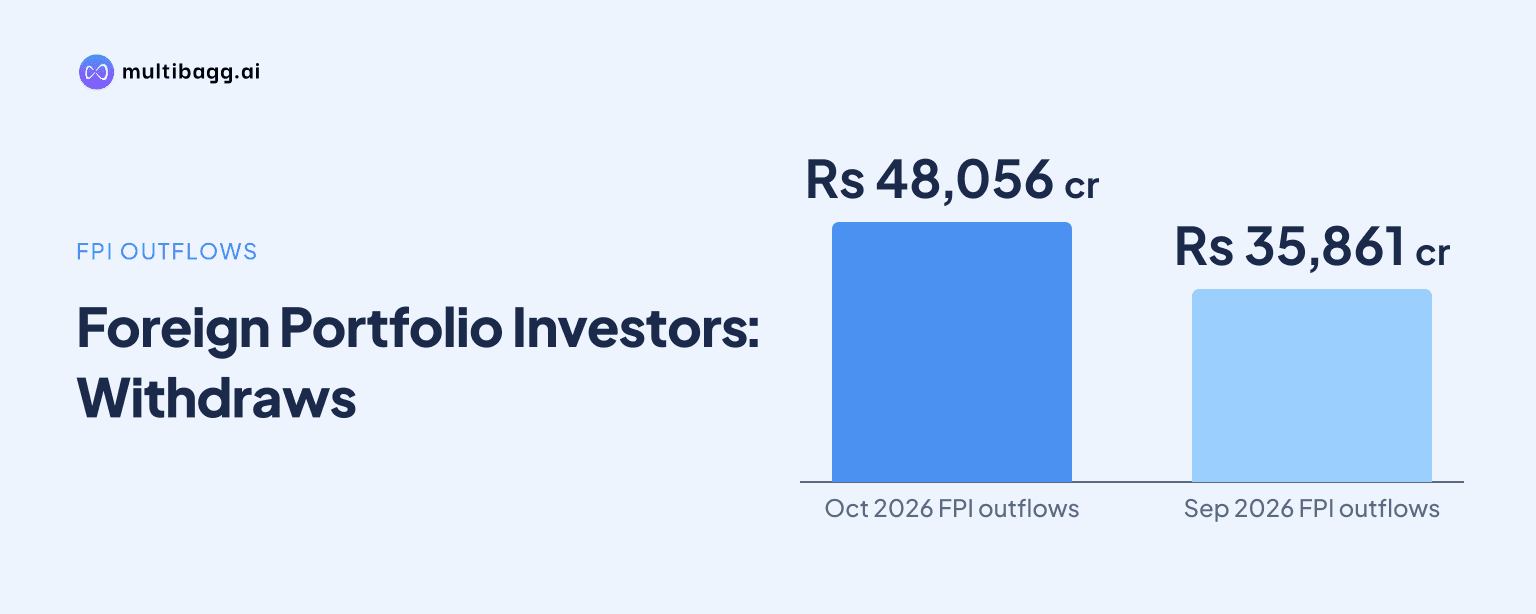
Foreign Portfolio Investors (FPIs) withdrew ₹48,056 crore from Indian equities in October so far, as crude oil near $114 a barrel, Middle East tensions, inflation concerns and weak corporate earnings weighed on sentiment. The withdrawal took cumulative FPI equity outflows in 2026 to ₹3.08 lakh crore, above the ₹1.66 lakh crore recorded in all of 2025.
Why are FPIs selling Indian equities in October?
FPIs are selling Indian equities because elevated crude prices, geopolitical tensions, inflation concerns and an uncertain earnings outlook have raised the perceived risks for overseas investors. According to Dheeraj Gaur, Chief Investment Strategy Officer at Choice Wealth, crude oil rose to around $114 per barrel amid tensions in the Middle East, adding to concerns about domestic liquidity conditions.
Higher crude prices matter because they raise concerns around import costs, inflation and the profitability of companies facing higher fuel and logistics expenses. Although second-quarter results have been relatively strong, market participants have flagged the risk that higher energy and transport costs could affect earnings growth in the coming quarters.
How large are FPI outflows from Indian equities in 2026?
FPI outflows from Indian equities reached ₹3.08 lakh crore in 2026 after the October withdrawal of ₹48,056 crore so far. That is substantially higher than the ₹1.66 lakh crore withdrawn through the whole of 2025, underlining the scale of overseas selling this year.
The October figure followed a net withdrawal of ₹35,861 crore in September. The recent selling contrasts with net FPI investments of ₹20,200 crore in July and ₹29,631 crore in August, according to Central Depository Services Ltd data.
Got a follow-up? Ask IRIS
Has FPI selling pressure started to ease?
FPI selling pressure showed signs of easing in the week ended October 23, when FPIs significantly reduced their selling and turned net buyers on two trading days. This moderation does not reverse the sizable October outflow, but it indicates that daily selling pressure had become less intense.
V K Vijayakumar, Chief Investment Strategist at Geojit Investments Ltd, linked the moderation to a fall in US bond yields. The US 10-year yield eased from 5.36% to around 5%, reducing one factor that had made US assets relatively more attractive to global investors.
What global factors are affecting FPI allocations?
Higher US bond yields, a stronger US dollar and elevated US interest rates have been cited as factors weighing on FPI appetite for Indian equities. These conditions can make American assets more attractive and influence global portfolio allocations away from emerging-market equities.
The India-specific pressure has coincided with an artificial intelligence-led rally in North Asian markets, which has attracted higher foreign capital. At home, domestic institutional inflows and systematic investment plans have helped cushion selling pressure, but broad-based weakness in equities and high crude prices remain downside risks.
Conclusion
The October withdrawal shows that FPIs remain cautious on Indian equities as oil prices, geopolitical uncertainty, inflation risks and earnings concerns overlap. The scale of 2026 outflows is already well above the total recorded in 2025, even though two net-buying days late in October suggest that the pace of selling can change quickly.
Investors will watch whether crude prices and Middle East tensions ease, whether US bond yields remain lower, and how corporate earnings respond to higher oil and logistics costs. Upcoming US GDP data is also among the macroeconomic developments being closely monitored for its potential effect on global risk appetite.