








Genus posts Rs 127 crore operating cash inflow in H1 FY27
MAX Plan at ₹4,999/yr

Find your next multibaggerBe a Pro Investor
Research stocks and track your picks on the go. Download the app.
Key highlights
- Genus reported Rs 127 crore of operating cash inflow in H1 FY27, compared with a Rs 158 crore outflow in H1 FY26.
- Working-capital growth fell to Rs 236 crore in H1 FY27 from Rs 522 crore a year earlier.
- Standalone H1 FY27 revenue rose 19.4% to Rs 2,497 crore, while EBITDA margin was 19.4%.
- Net debt was Rs 1,746 crore on September 30, 2026, compared with Rs 1,560 crore on March 31, 2026.
powered by IRIS
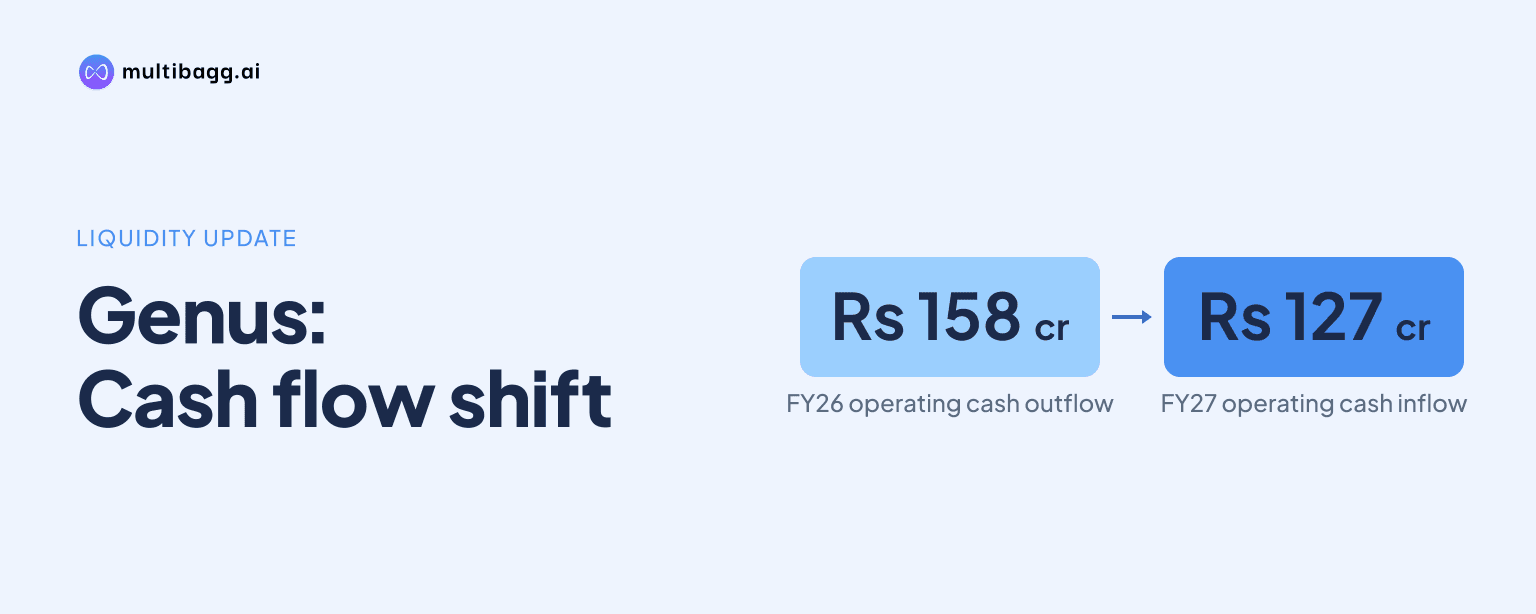
Genus Power Infrastructures Limited reported Rs 127 crore of operating cash inflow in H1 FY27, reversing a Rs 158 crore outflow in H1 FY26 and reaching positive operating cash generation ahead of management’s earlier expectation of the first or second quarter of FY28. Lower working-capital consumption was the main driver.
Know Genus Power Infrastructures inside out
Results, valuation, peers and who's buying, in one view.
How did Genus turn operating cash flow positive in H1 FY27?
Genus turned operating cash flow positive through higher operating profit and a substantially smaller working-capital requirement. Operating profit before working-capital changes rose 9% year on year to Rs 481 crore in H1 FY27 from Rs 441 crore in H1 FY26, while standalone revenue increased 19.4% to Rs 2,497 crore from Rs 2,091 crore.
The result was a Rs 285 crore year-on-year cash-flow swing, from a Rs 158 crore operating outflow in H1 FY26 to a Rs 127 crore inflow in H1 FY27. Management called the shift a structural turning point, attributing it to project maturation and lower cash tied up in working capital rather than only higher accounting profit.
Genus said its working-capital increase was Rs 236 crore in H1 FY27, compared with Rs 522 crore in H1 FY26. It also reduced inventory by more than Rs 100 crore during the first half, even as revenue increased by Rs 406 crore year on year.
Why was working capital the main cash-flow driver?
Working-capital consumption was the main cash-flow driver because its Rs 236 crore increase in H1 FY27 was less than half the Rs 522 crore increase in H1 FY26. The lower requirement came despite 19.4% growth in standalone revenue, indicating that the incremental business used less operating capital than in the previous first half.
Management had said during its May 2026 earnings call that Genus expected to be cash neutral at the operating level by the end of FY27, followed by positive operating cash flow in the first or second quarter of FY28. The Rs 127 crore H1 FY27 inflow therefore arrived before that timetable.
Receivables as of September 30, 2026 reflected quarter-end billing timing, according to management. Genus expects receivables to decline progressively from Q3 FY27 as SAT clearances received from distribution companies, or DISCOMs, are converted into payments.
Management remained confident of improving working-capital days by 50 to 75 days in FY27 compared with FY26. It also reiterated that working-capital needs as a share of incremental revenue should decline, with the business beginning to release working capital from FY28.
What did H1 and Q2 FY27 profitability show?
Genus’s H1 FY27 earnings growth supported the cash-flow improvement, although profit rose more slowly than revenue. Earnings before interest, tax, depreciation and amortisation, or EBITDA, increased 9.2% to Rs 485 crore from Rs 444 crore, while profit after tax, or PAT, rose 7% to Rs 296 crore from Rs 277 crore.
EBITDA margin was 19.4% in H1 FY27, above management’s FY27 guidance of 18%. Management said the margin was achieved despite elevated input costs and seasonal execution challenges during the first half.
Q2 FY27 revenue was softer than the half-year trend. Standalone revenue was Rs 1,133 crore, broadly in line with Rs 1,149 crore in Q2 FY26 but 17% below the preceding quarter, as the monsoon, meter mix, local-body elections in some geographies and slower Uttar Pradesh installations affected execution timing.
Sequential profitability improved in Q2 FY27 despite lower revenue. Gross margin rose 127 basis points quarter on quarter to 38.3%, while EBITDA was Rs 225 crore and EBITDA margin increased 77 basis points sequentially to 19.8%; PAT was Rs 133 crore, representing an 11.8% margin.
Got a follow-up? Ask IRIS
Can Genus improve cash conversion while net debt is higher?
Genus said cash conversion can improve as receivables are collected, although net debt was higher at September 30, 2026. Net debt stood at Rs 1,746 crore, compared with Rs 1,560 crore on March 31, 2026, an increase of Rs 186 crore over six months.
Management said the Rs 1,746 crore balance remained within the indicated peak net-borrowing level of about Rs 2,000 crore. It expects the pace of debt increase to moderate as receivables are converted into cash and expects net debt to start reducing from FY28 as operating cash flows strengthen.
The company’s order book and installed base provide the operating context for this plan. As of September 30, 2026, Genus had an order book of Rs 22,634 crore excluding taxes, including special purpose vehicles, or SPVs, and the GIC platform.
Its advanced metering infrastructure service provider, or AMISP, portfolio comprised about 3.6 crore awarded meters, of which about 1.7 crore had been installed by September 30, 2026. The call did not disclose interest costs, debt maturities or a quarterly cash-collection target.
What could determine Genus’s FY27 cash-flow progress?
Receivables conversion, H2 installations and delivery against FY27 guidance could determine Genus’s next cash-flow steps. Management said H2 is seasonally stronger as installation activity picks up after the monsoon, and it retained revenue guidance of Rs 6,000 crore to Rs 6,500 crore and EBITDA-margin guidance of 18%.
Genus plans to install about 1 crore smart meters in FY27 and has manufacturing capacity exceeding 1.8 crore meters annually. Management said the company installed about 41 lakh meters in H1 FY27, including about 18 lakh in Q2 FY27, when extended monsoon conditions and slower Uttar Pradesh projects reduced installation activity.
The AMISP portfolio could also add operating and maintenance, or O&M, revenue from FY28 as more installed meters enter the operating phase. Management said contracts permit utilities to add up to 30% more meters on the same terms and expects the portfolio to exceed 4 crore meters as new service connections are added.
Management’s expectation of O&M revenue is not a reported FY27 cash receipt. Its stated near-term cash test is whether DISCOM-related SAT clearances translate into Q3 FY27 payments and support the planned 50-to-75-day improvement in working-capital days.
Conclusion
Genus’s Rs 127 crore operating cash inflow in H1 FY27 marked a reversal from the Rs 158 crore outflow in H1 FY26. The change reflected a Rs 286 crore reduction in additional working-capital needs and a Rs 40 crore increase in operating profit before working-capital changes, while net debt rose Rs 186 crore to Rs 1,746 crore.
The next items to watch are management’s plan for receivables to decline from Q3 FY27 after DISCOM SAT clearances, its target to improve working-capital days by 50 to 75 days in FY27, and H2 delivery against Rs 6,000 crore to Rs 6,500 crore of revenue guidance. Management also expects net debt to begin reducing from FY28 as operating cash flow strengthens.

