










GNG Electronics Q2 EBITDA Doubles as Gross Margin Expands
Key highlights
- GNG Electronics reported Q2 FY27 revenue from operations of Rs 624.8 crore, up 42.0% year on year.
- GNG Electronics’ Q2 FY27 EBITDA increased 100.7% to Rs 93.9 crore and EBITDA margin reached 15.0%.
- GNG Electronics’ Q2 FY27 gross profit margin increased 515 basis points to 25.1%.
- GNG Electronics reported H1 FY27 PAT of Rs 85.3 crore, up 66.6% year on year.
powered by IRIS
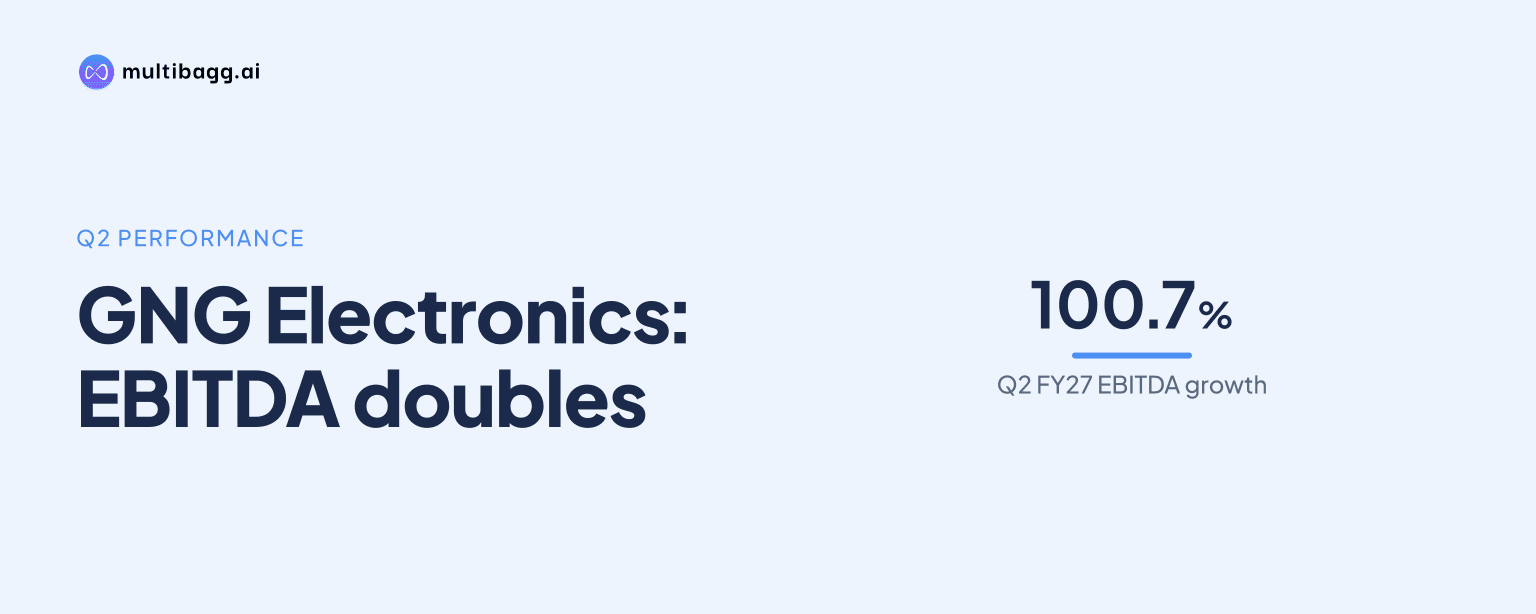
GNG Electronics Limited doubled Q2 FY27 EBITDA to Rs 93.9 crore, as gross profit margin rose 515 basis points year on year to 25.1% and revenue from operations increased 42.0% to Rs 624.8 crore. Gross profit increased 78.7% to Rs 156.7 crore, allowing operating profit to grow faster than sales.
Know GNG Electronics inside out
Results, valuation, peers and who's buying, in one view.
How did GNG Electronics perform in Q2 FY27?
GNG Electronics reported Rs 624.8 crore of revenue from operations in Q2 FY27, up 42.0% from Rs 439.9 crore in Q2 FY26. Total income, including Rs 0.8 crore of other income, reached Rs 625.6 crore compared with Rs 440.2 crore a year earlier. Management cited higher prices for new devices, global memory-market supply constraints, cost optimisation and sustainability as industry factors during the quarter.
GNG Electronics recorded profit after tax, or PAT, of Rs 56.4 crore in Q2 FY27, up 72.5% from Rs 32.7 crore in Q2 FY26. PAT margin rose 159 basis points to 9.0% from 7.4%, while profit before tax increased 88.5% to Rs 68.1 crore. Tax expense rose to Rs 11.7 crore from Rs 3.5 crore.
Why did GNG Electronics’ EBITDA grow faster than revenue?
GNG Electronics’ earnings before interest, tax, depreciation and amortisation, or EBITDA, increased 100.7% to Rs 93.9 crore in Q2 FY27, exceeding its 42.0% revenue growth because gross profit rose 78.7% to Rs 156.7 crore. Gross profit margin reached 25.1%, compared with 19.9% in Q2 FY26, meaning the gross-profit gain was Rs 69.0 crore.
GNG Electronics’ employee benefits expense increased to Rs 38.8 crore from Rs 22.4 crore, while other expenses rose to Rs 24.7 crore from Rs 18.7 crore. Together, these costs increased by Rs 22.4 crore, below the Rs 69.0 crore gross-profit increase, and EBITDA margin consequently rose to 15.0% from 10.6%.
Finance cost increased to Rs 22.0 crore from Rs 8.4 crore, while depreciation and amortisation rose to Rs 3.8 crore from Rs 2.2 crore. These costs help explain why PAT growth of 72.5% was below EBITDA growth of 100.7%, although the Q2 FY27 PAT margin still increased to 9.0% from 7.4%.
What was GNG Electronics’ H1 FY27 financial trend?
GNG Electronics reported H1 FY27 revenue from operations of Rs 1,037.3 crore, up 37.9% from Rs 752.2 crore in H1 FY26. Gross profit rose 67.4% to Rs 258.3 crore, and gross profit margin expanded by 438 basis points to 24.9% from 20.5%. The H1 margin improvement was narrower than the 515-basis-point expansion in Q2.
GNG Electronics’ H1 FY27 EBITDA increased 79.1% to Rs 146.8 crore from Rs 82.0 crore, with EBITDA margin rising to 14.2% from 10.9%. PAT rose 66.6% to Rs 85.3 crore from Rs 51.2 crore, and PAT margin increased 142 basis points to 8.2%. Q2 contributed Rs 93.9 crore of H1 EBITDA, compared with Rs 46.8 crore in the corresponding prior-year quarter.
GNG Electronics’ H1 finance cost rose to Rs 35.9 crore from Rs 19.1 crore, while employee benefits expense increased to Rs 70.7 crore from Rs 44.7 crore. Total expenses were Rs 937.7 crore in H1 FY27 against Rs 696.7 crore in H1 FY26. The gross profit margin increase enabled EBITDA and PAT to outpace revenue growth despite these higher costs.
Got a follow-up? Ask IRIS
How did GNG Electronics expand its operating reach?
GNG Electronics said its operations reached 55 countries in Q2 FY27, with 5,542 customer touchpoints and a supplier base of 820. It held EB Elevate dealer meets in 10 cities and Chai Pe Charcha sessions in more than 70 towns across 17 states and union territories. The presentation does not separately report revenue from these channel activities.
GNG Electronics said 152 partners had enrolled in its EB Elite Program, launched in Q1 FY27. It also opened its first exclusive Electronics Bazaar store for small and medium business customers in Jaipur and attended industry events in the United States and Europe to support international sourcing and distribution. The presentation does not quantify sales from the store, programme or events.
What changed in GNG Electronics’ balance sheet?
GNG Electronics’ total assets were Rs 1,626.9 crore in September 2026, compared with Rs 1,254.0 crore in March 2026. Inventory increased to Rs 911.6 crore from Rs 743.1 crore and trade receivables rose to Rs 306.2 crore from Rs 206.8 crore. Cash and cash equivalents increased to Rs 95.4 crore from Rs 68.9 crore.
GNG Electronics’ total equity increased to Rs 853.6 crore in September 2026 from Rs 759.3 crore in March 2026. Current borrowings rose to Rs 572.3 crore from Rs 403.8 crore, while non-current borrowings increased to Rs 38.2 crore from Rs 1.9 crore. The presentation reports these movements but does not state targets for inventory, receivables or borrowings.
Conclusion
GNG Electronics’ Q2 FY27 results show that higher gross profitability, rather than sales growth alone, drove the earnings outcome. Revenue increased 42.0% to Rs 624.8 crore, gross profit increased 78.7% to Rs 156.7 crore and EBITDA increased 100.7% to Rs 93.9 crore, while gross profit margin expanded to 25.1%.
The next results will show whether GNG Electronics can sustain the Q2 gross profit margin while managing inventory of Rs 911.6 crore and current borrowings of Rs 572.3 crore. Management identified rising memory prices and supply constraints as a near-term catalyst and said affordability, reliability and sustainability support the longer-term refurbished ICT opportunity, but it provided no numerical revenue or margin target.