










Gujarat State Fertilizers & Chemicals sales rise 49% in Q2
Key highlights
- GSFC reported 49% year-on-year growth in consolidated Q2 FY27 sales to INR 4,741 crore.
- Consolidated profit before tax and profit after tax fell 42% and 38%, respectively, in Q2 FY27.
- Fertilizer sales value rose 55%, while sales volume declined 6% to 5.69 lakh metric tonnes.
- GSFC said its Sikka project is planned to meet 50% of DAP and NPK fertilizer requirements through captive consumption.
powered by IRIS
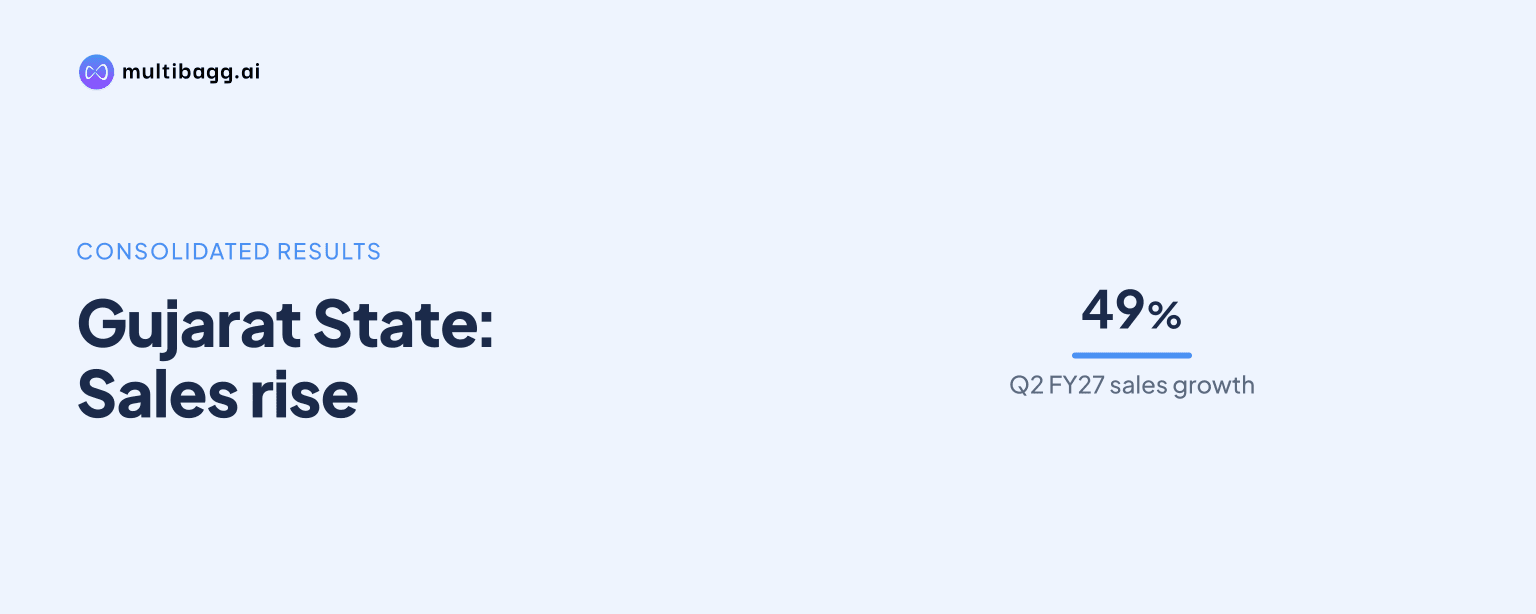
Gujarat State Fertilizers & Chemicals Limited reported 49% year-on-year growth in consolidated Q2 FY27 sales, while profit before tax and profit after tax declined 42% and 38%, respectively. The company also recorded its highest standalone Q2 and first-half sales, but lower fertilizer volumes and a weak monsoon outlook remained relevant operating concerns.
Know Gujarat State Fertilizers & Chemicals inside out
Results, valuation, peers and who's buying, in one view.
What did GSFC report for Q2 FY27?
GSFC reported a 49% year-on-year increase in consolidated sales in Q2 FY27, even as profitability declined from the corresponding quarter a year earlier. Management said consolidated profit before tax fell 42% year on year and profit after tax declined 38%.
On a sequential basis, consolidated sales rose 32% to INR 4,741 crore in the quarter. The company described its Q2 and first-half standalone topline as its highest for the respective periods. Standalone sales reached INR 4,711 crore in Q2 FY27, up 50% year on year.
For the first half of FY27, consolidated sales revenue increased 55% year on year to INR 8,324 crore. Consolidated profit before tax and profit after tax for the six-month period declined 26% and 22%, respectively. The divergence between revenue growth and profit movement was a central point of the November 4 earnings call.
How did the fertilizer business perform during the quarter?
GSFC's fertilizer segment recorded 55% year-on-year growth in sales value during Q2 FY27, with the increase amounting to INR 1,387 crore. However, sales volume in the segment fell 6% to 5.69 lakh metric tonnes from 6.08 lakh metric tonnes in the year-earlier quarter.
This shows that the increase in fertilizer sales value occurred despite lower volumes. The call extract did not provide a detailed product-wise or price-wise breakdown explaining the movement. It therefore indicates a gap between value growth and physical offtake, rather than establishing a specific reason for the higher sales value.
Management also flagged weather conditions as a demand risk. The company said a subdued southwest monsoon and lower reservoir levels, particularly in southern India, were likely to constrain fertilizer demand. This disclosure is relevant because agricultural conditions influence application patterns and seasonal fertilizer purchases.
Got a follow-up? Ask IRIS
What is GSFC planning at its Sikka facility?
GSFC has finalised a phosphoric acid and sulphuric acid project at Sikka, according to Chief Financial Officer S.K. Bajpai. Management said the decision was taken in the context of volatility in international phosphoric acid and sulphuric acid prices.
The proposed project is intended to provide captive supplies for the company's fertiliser operations. Bajpai said 50% of the total requirement for DAP and NPK fertilisers would be met through captive consumption. DAP refers to diammonium phosphate, while NPK fertilisers contain nitrogen, phosphorus and potassium.
The call extract did not disclose the project's capital expenditure, commissioning schedule, capacity or funding method. Investors therefore have confirmation that the project has been finalised and that management has identified a 50% captive-consumption objective, but not the financial or execution details needed to assess its full effect on costs.
Why do revenue growth and lower profits matter for investors?
The Q2 figures matter because GSFC delivered substantial growth in consolidated and standalone sales while reporting lower profit before tax and profit after tax. For investors, this means topline expansion alone does not describe the quarter's full financial outcome.
The fertilizer segment adds another layer to the assessment. Sales value increased 55%, while sales volume declined 6%. The company also pointed to subdued monsoon conditions and lower southern reservoir levels as factors likely to constrain demand, making volume trends and seasonal conditions important areas for monitoring.
The Sikka project is relevant to the company's operational strategy because it is designed to reduce exposure to volatile international prices for phosphoric acid and sulphuric acid. Its stated captive-consumption target covers half of the requirement for DAP and NPK fertilisers, although the earnings call did not provide a timeline for achieving that target.
Conclusion
GSFC's Q2 FY27 update showed strong sales expansion alongside lower profitability. Consolidated sales rose 49% year on year and reached INR 4,741 crore, while profit before tax and profit after tax fell 42% and 38%. Fertiliser sales value rose despite a decline in sales volume, underscoring the difference between revenue growth and physical demand.
The next disclosures to watch are further details on the Sikka phosphoric acid and sulphuric acid project, including capital expenditure, capacity and commissioning plans. Investors will also monitor fertilizer volumes, monsoon and reservoir conditions, and whether the company provides a clearer explanation of the factors behind the profit decline.