










HEG Advanced Materials Gujarat BESS is 64% complete, Q3 FY27 target
Key highlights
- HEGAM’s 200 MWh Gujarat BESS project was 64% complete in Q2 and H1 FY27.
- The Gujarat BESS is targeted for Q3 FY27 commissioning and has a 12-year licence period from COD.
- HEGAM operates 292 MW of renewable capacity, including 278 MW of hydro and 14 MW of wind.
- HEGAM describes its operating hydro and wind assets as debt-free and hydro cash flows as approximately Rs 300+ crore annually.
powered by IRIS
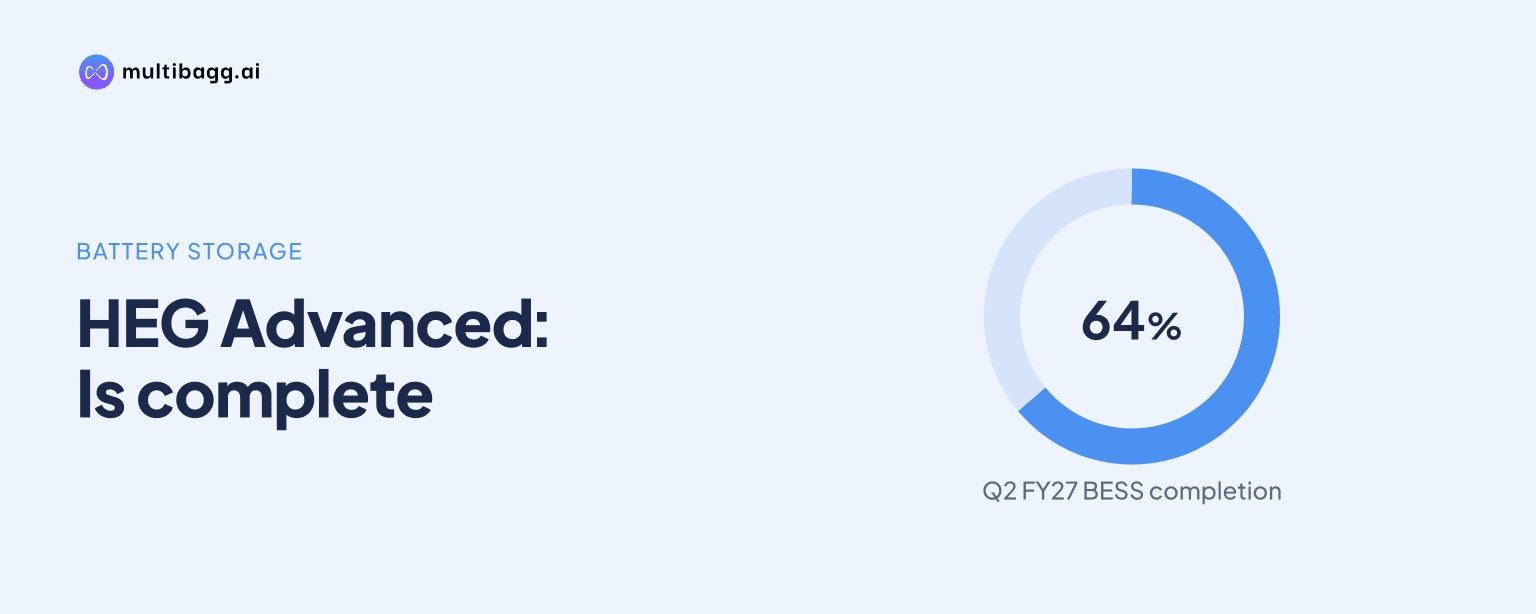
HEG Advanced Materials reported that its 200 MWh Gujarat battery energy storage system project was 64% complete in its Q2 and H1 FY27 presentation, with commissioning targeted for Q3 FY27; the planned asset uses a capacity-based tariff and has a 12-year licence period from commercial operation date.
Know HEG Advanced Materials inside out
Results, valuation, peers and who's buying, in one view.
What is the current status of HEGAM’s Gujarat BESS project?
HEGAM reported 64% actual progress on its 200 MWh battery energy storage system, or BESS, independent power producer project in Gujarat. The asset remains under development and is not included in HEGAM’s 292 MW of operating hydro and wind generation capacity.
HEGAM has set Q3 FY27 as the target commissioning period. This is a management target rather than a reported commissioning date, leaving delivery of the balance of construction and the start of commercial operations as the next project milestones.
The Gujarat BESS is distinct from HEGAM’s battery manufacturing and integration facilities. The existing facility has 1 GWh of capacity, split between a 700 MWh prismatic production line and a 300 MWh cylindrical line, while a 5 GWh expansion facility is under construction. The Gujarat project is separately identified as a green-power asset under development.
What renewable capacity does HEGAM currently operate?
HEGAM currently operates 292 MW of renewable generation capacity, comprising 278 MW of hydroelectric capacity and 14 MW of wind capacity. The 200 MWh BESS would add energy-storage capacity, measured in megawatt-hours, rather than generation capacity measured in megawatts, so it cannot be added directly to the 292 MW total.
Hydroelectric capacity represents 278 MW, or 95%, of HEGAM’s operating portfolio, while the wind project represents 14 MW, or 5%. The operating base is therefore predominantly hydroelectric before the proposed storage project is commissioned.
The two hydro projects are located in Himachal Pradesh. Malana Power Company Limited has 86 MW and has operated since 2001, while AD Hydro Power Limited has 192 MW and has operated since 2010. Their combined 278 MW is substantially larger than the 14 MW Bhendewade Wind Project in Maharashtra.
How will HEGAM’s Gujarat BESS earn revenue?
HEGAM says the Gujarat BESS will have a capacity-based tariff structure, with Gujarat Urja Vikas Nigam Limited named as the client. The disclosed mechanism is therefore based on capacity rather than a stated electricity-generation volume or per-unit energy-sale tariff.
The licence period is 12 years from the commercial operation date, or COD. HEGAM has not disclosed a tariff rate, project cost, return measure, availability requirement or a specific COD date beyond the Q3 FY27 commissioning target in the supplied presentation.
HEGAM identifies the project as a BESS IPP, meaning battery energy storage system independent power producer. Its 200 MWh capacity denotes the energy that can be stored, whereas the existing 292 MW portfolio denotes installed electricity-generation capacity. The measures describe different functions within the green-power business.
The presentation also shows approximately 9,000 MWh of total segmental volume demand, including 3,200 MWh, or 36%, for energy storage systems in India. This is a stated demand segmentation figure and not a disclosed order, project award or revenue forecast for the Gujarat BESS.
Got a follow-up? Ask IRIS
What supports HEGAM’s green-power portfolio before BESS commissioning?
HEGAM states that both operating hydroelectric projects and the 14 MW wind project are debt-free. It also describes the hydro assets as providing approximately Rs 300+ crore of annually stable cash flows, while presenting the 200 MWh Gujarat BESS as capacity under development.
The company identifies its 278 MW of hydroelectric installed capacity as renewable electricity generation eligible for renewable energy certificates. It links the hydro, wind and planned storage assets to its low-carbon growth strategy, but the supplied presentation does not provide project-level financial results for the Gujarat BESS.
The 14 MW Bhendewade Wind Project comprises seven 2 MW units and has generated 25 million units, according to the presentation. It has a 13-year power purchase agreement, or PPA, with MSEDCL. That agreement applies to the wind asset, while the Gujarat BESS has Gujarat Urja Vikas Nigam Limited as client and a separately disclosed 12-year licence period from COD.
The portfolio has not yet recorded an increase in operating generation capacity from the BESS. HEGAM’s operating base remains 292 MW of hydro and wind, compared with a 200 MWh storage project at 64% completion. If commissioned to the stated plan, the project would introduce a capacity-tariff storage arrangement alongside the existing hydro cash flows and wind PPA.
Conclusion
HEGAM’s disclosed 64% progress indicates that the 200 MWh Gujarat BESS has moved beyond an early-stage proposal but remains under development. The asset differs from the company’s 292 MW operating renewable portfolio because it stores energy, uses a capacity-based tariff and has a 12-year licence period from COD, whereas the current base consists of hydroelectric generation and wind power.
The next disclosed milestone is the Q3 FY27 commissioning target. Investors should watch for confirmation of project completion and COD, as well as any subsequent disclosure of the capacity tariff, project cost, availability conditions or expected financial contribution, none of which is quantified in the supplied presentation.