








Hero MotoCorp Wins Rajasthan Court Relief in ₹165 Crore Tax Matter

Find your next multibaggerBe a Pro Investor
Research stocks and track your picks on the go. Download the app.
Key highlights
- Hero MotoCorp said the Rajasthan High Court quashed demand orders totaling approximately ₹165 crore.
- The quashed orders related to Temporary Registration Certificate fees.
- Hero MotoCorp said the ruling avoids a potential liability of approximately ₹165 crore.
- The company disclosed the court outcome on November 24, 2026.
powered by IRIS
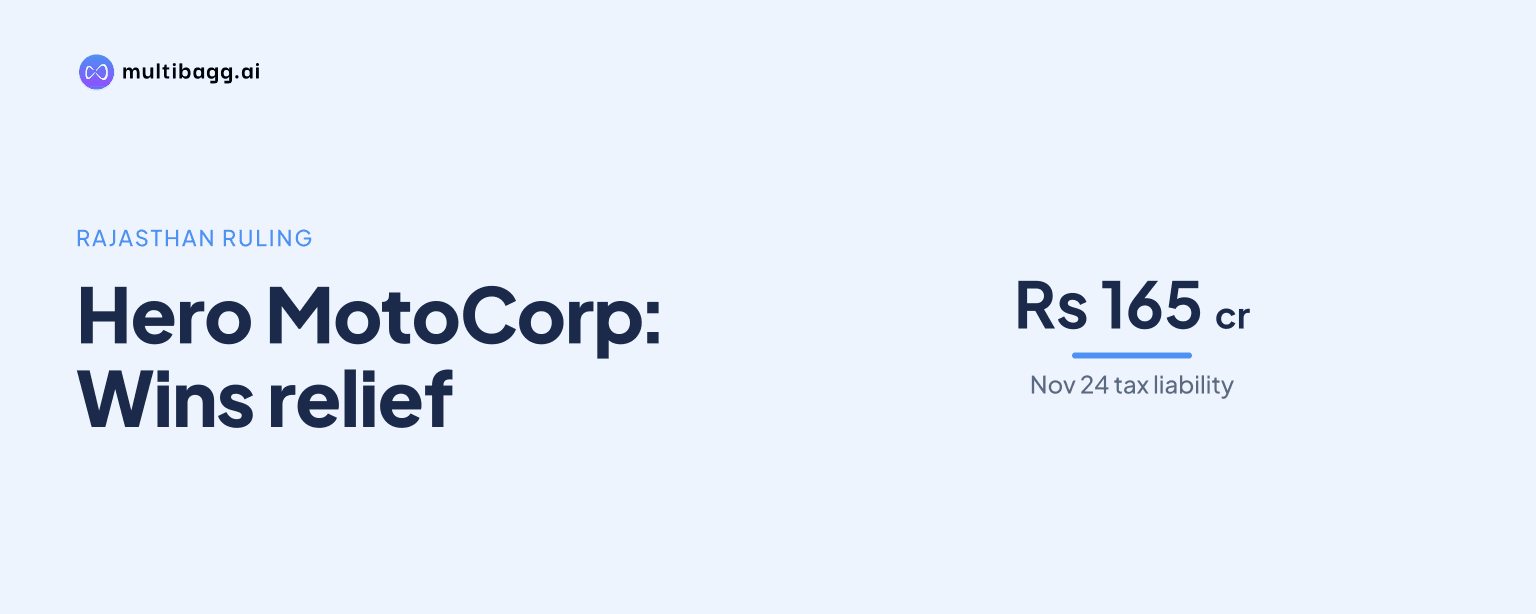
Hero MotoCorp said on November 24, 2026, that the Rajasthan High Court quashed demand orders of approximately ₹165 crore related to Temporary Registration Certificate fees. The filing indicates that the company has avoided a potential liability of about ₹165 crore, subject to the terms and scope of the court’s ruling.
Know Hero MotoCorp inside out
Results, valuation, peers and who's buying, in one view.
What did Hero MotoCorp announce in its filing?
Hero MotoCorp announced that the Rajasthan High Court had quashed demand orders connected with Temporary Registration Certificate fees. The total value of the quashed demands was stated to be approximately ₹165 crore.
The disclosure identifies the court outcome as favourable to Hero MotoCorp because it removes the demand orders cited in the matter. The company’s filing describes the amount as a potential liability that has been avoided following the High Court’s decision.
The announcement is relevant for investors because it concerns a legal and tax-related exposure of a listed company. Court orders that remove demand notices can clarify the status of a disputed liability, particularly where the amount involved is material enough to require an exchange disclosure.
Which demand orders did the Rajasthan High Court quash?
The Rajasthan High Court quashed demand orders relating to Temporary Registration Certificate fees, according to Hero MotoCorp’s filing. The company placed the aggregate value of those orders at approximately ₹165 crore.
A Temporary Registration Certificate is the subject specifically identified in the disclosure. However, the supplied filing summary does not provide the individual demand amounts, the periods covered by the orders, the government authority that issued them, or the detailed legal grounds on which the High Court quashed them.
The available information also does not state whether any further legal or administrative procedure is pending. As a result, the filing supports the reported court outcome and amount, but not broader conclusions on the underlying fee framework or the full history of the dispute.
How significant is the ₹165 crore court relief for Hero MotoCorp?
The ₹165 crore relief is significant because Hero MotoCorp said it avoids a potential liability of approximately that amount. The amount represents the combined value of the demand orders quashed by the Rajasthan High Court.
The immediate effect disclosed is on the specific Temporary Registration Certificate fee matter. The filing does not quantify any impact on revenue, profit, cash flow, tax expense, provisions, or the company’s balance sheet. It also does not disclose any share-price movement associated with the announcement.
For shareholders, the development reduces uncertainty around the demand orders covered by the ruling. But the filing should be read narrowly: it reports a court decision in one fee-related dispute and does not provide a company-wide update on all statutory, tax, or litigation matters.
Got a follow-up? Ask IRIS
Why does the court order matter for investors and operations?
The court order matters because demand orders can create a potential financial obligation until their status is resolved. By reporting that the Rajasthan High Court quashed the orders, Hero MotoCorp has communicated that the approximately ₹165 crore exposure identified in this matter is no longer payable under those quashed demands.
The decision also matters from a compliance perspective. Temporary Registration Certificate fees relate to vehicle registration processes, making the issue relevant to an automotive manufacturer’s regulatory and administrative operating environment. The filing, however, does not provide details on any changes to registration procedures, dealer operations, customer payments, or vehicle deliveries.
No separate comments from government officials, dealers, customers, or other parties were included in the supplied information. There is also no disclosed estimate of any financial benefit beyond the avoidance of the stated potential liability.
What information has Hero MotoCorp not disclosed about the matter?
Hero MotoCorp has not disclosed the detailed reasoning in the Rajasthan High Court order in the information provided. The filing summary does not specify the dates on which the demand orders were issued, the assessment or fee periods involved, or whether the orders were linked to a particular category of vehicle or registration activity.
The company has also not stated whether it had previously paid any part of the disputed amount, made an accounting provision, or recognised a contingent liability. Without those details, the precise accounting treatment and any effect on reported financial statements cannot be established from the filing alone.
Investors should therefore distinguish between the confirmed event and matters not addressed in the disclosure. The confirmed event is the quashing of demand orders worth approximately ₹165 crore; the remaining legal, procedural, and financial details have not been set out in the supplied filing summary.
Conclusion
Hero MotoCorp’s November 24 filing reports a favourable Rajasthan High Court outcome in a Temporary Registration Certificate fee dispute. The court quashed demand orders totaling approximately ₹165 crore, and the company said the ruling avoids a potential liability of that amount.
The key item to watch is whether Hero MotoCorp provides further information on the court order’s reasoning, the periods and authorities involved, and the accounting treatment of the quashed demands. The supplied filing does not disclose a further hearing date, appeal plan, or financial-statement impact.

