










ICRA sees bank credit offsetting bond-yield ratings drag
Key highlights
- ICRA’s Ratings business grew about 15.2% in the first half of this year.
- Bank credit grew 21.4% in the first half, versus about 3.7% growth in bond-issuance volumes.
- Management expects bank-credit growth to remain buoyant in the second half.
- ICRA said bank-loan rating fees are typically lower than bond-rating fees.
powered by IRIS
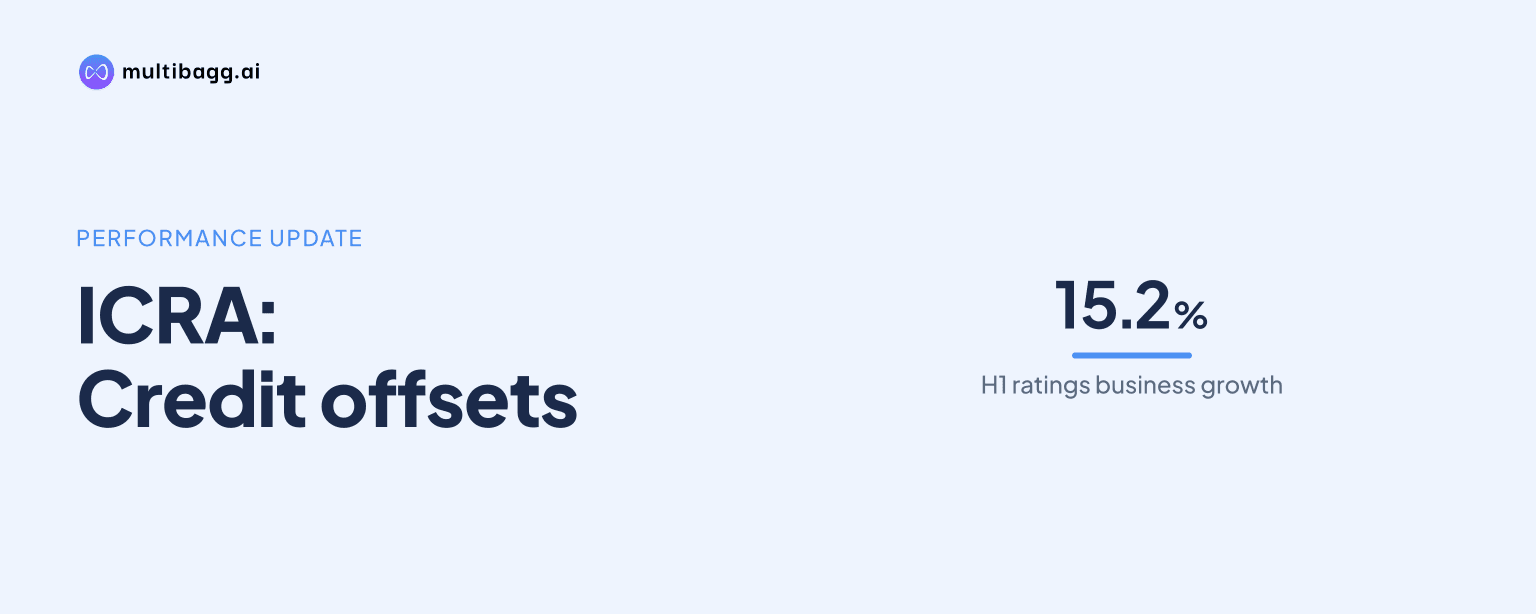
ICRA Limited expects bank-credit growth to support ratings demand in the second half after bank credit expanded 21.4% in the first half, compared with about 3.7% growth in bond-issuance volumes. Management said elevated bond yields can shift activity toward bank loans, although lower fees on bank-loan ratings may dilute revenue growth.
Know ICRA inside out
Results, valuation, peers and who's buying, in one view.
Why does ICRA expect bank credit to support ratings demand?
ICRA expects bank-credit growth to remain buoyant in the second half, providing ratings activity if elevated bond yields keep bond-market issuance subdued. Management described first-half bank-credit growth of 21.4% as an all-time good number, compared with about 3.7% growth in bond-issuance volumes during the same first-half period.
Management answered yes when asked whether it expected similar credit growth in the second half through bank lending, assuming bond yields remained elevated and bond activity subdued. This is management’s demand view rather than numerical guidance for ICRA’s Ratings revenue, and it depends partly on the credit segments in which ICRA operates.
The first-half figures show a change in the source of credit-market activity.
ICRA said the relative strength in bank credit was reflected in reported first-half performance across ratings agencies. However, management said the lending trend does not translate mechanically into the same ratings growth for every agency because segment exposure also affects the outcome.
How fast did ICRA's Ratings business grow in the first half?
ICRA’s Ratings business grew about 15.2% in the first half of this year, according to management. The growth came while overall bond-issuance volume growth was about 3.7%, indicating that ratings activity was supported by more than the aggregate bond-issuance trend cited on the call.
Management also referred to a 12.4% compound annual growth rate, or CAGR, in revenue from around 2021 and said growth had been consistent over the last three to four years. The 15.2% figure covers first-half Ratings business growth, while the 12.4% CAGR is a longer-period revenue measure, so the two are not directly comparable.
An analyst said ICRA had grown more slowly than peers and lost ratings-market share. Management did not confirm that premise or provide a market-share figure, saying instead that it tracks share in the segments where it intends to participate and believes it has a significant or healthy share in those segments.
Got a follow-up? Ask IRIS
How do elevated bond yields affect ICRA's ratings revenue mix?
Elevated bond yields can shift ratings activity from bonds to bank loans, but ICRA said this could have a slightly dilutive effect on ratings revenue growth because bond-rating fees are typically higher than bank-loan rating fees. Management described this as a broader industry mix issue, with the effect also determined by the segments in which ICRA operates.
The 21.4% bank-credit expansion may therefore sustain ratings demand without producing the same fee level as comparable bond-financing activity. ICRA did not quantify the fee difference between bond and bank-loan ratings, and it gave no specific second-half Ratings revenue-growth target.
ICRA also said bond markets had windows of activity despite generally elevated yields. Management cited the second fortnight of June, when yields fell during a truce in West Asia, and said several large issuers used that opportunity to access the bond market.
Management said bond issuances also recorded strong second-quarter growth against a contracted prior-year base because issuers anticipated that yields could rise further. It added that commercial paper, or CP, outstanding had grown by more than 20%, with some issuers borrowing quickly after using CP while expecting higher yields. The call did not quantify the contribution of this activity to ICRA’s revenue.
What could change ICRA's second-half ratings outlook?
ICRA’s second-half outlook depends on the path of bond yields, the continuation of bank-credit growth and the timing of rating mandates. Management cautioned that quarter-on-quarter comparisons can be inaccurate because an agency may issue a rating release in one quarter while another releases a similar mandate in the following quarter.
Timing can also move activity between the final quarter of one financial year and the first quarter of the next. ICRA said its 15.2% first-half Ratings growth is the relevant reported indicator, while 21.4% bank-credit growth is management’s central demand signal for the second half.
Pricing is another variable, although ICRA gave no broad price-change figure. Responding to a question about a competitor’s reported surveillance-fee increase, management said ICRA’s agreements include an enabling clause for surveillance and that client negotiations had generated some traction in certain cases.
The company did not disclose the number of clients affected, the fee changes or the resulting revenue effect. A continued shift toward bank-loan ratings could support assignment activity but still affect the pace at which that activity converts into revenue because bond-rating fees are typically higher.
Conclusion
ICRA’s message is that a funding-market shift need not reduce ratings demand. First-half bank-credit growth of 21.4% was well above the roughly 3.7% increase in bond-issuance volumes, while ICRA’s Ratings business grew 15.2%. The trade-off is economic: a larger share of bank-loan ratings can dilute revenue growth because those assignments generally carry lower fees than bond ratings.
The next point to watch is whether bank-credit growth remains buoyant in the second half, as management expects, while bond yields stay elevated. Investors can also watch for further bond-issuance windows, the outcome of surveillance-fee negotiations, and evidence that ICRA’s Ratings growth remains consistent with the 12.4% revenue CAGR management cited from around 2021.