










Foodlink earmarks Rs 62.901 crore without signed sites
Key highlights
- Foodlink has earmarked Rs 62.901 crore for one Rajasthan kitchen and two proposed banquets.
- Foodlink had not identified precise sites or signed lease agreements for the three Indian projects.
- Foodlink had vendor quotations but no definitive supplier agreements or placed orders for the Indian capital expenditure.
- Foodlink schedules Rs 62.901 crore of kitchen and banquet deployment for Fiscal 2028.
powered by IRIS
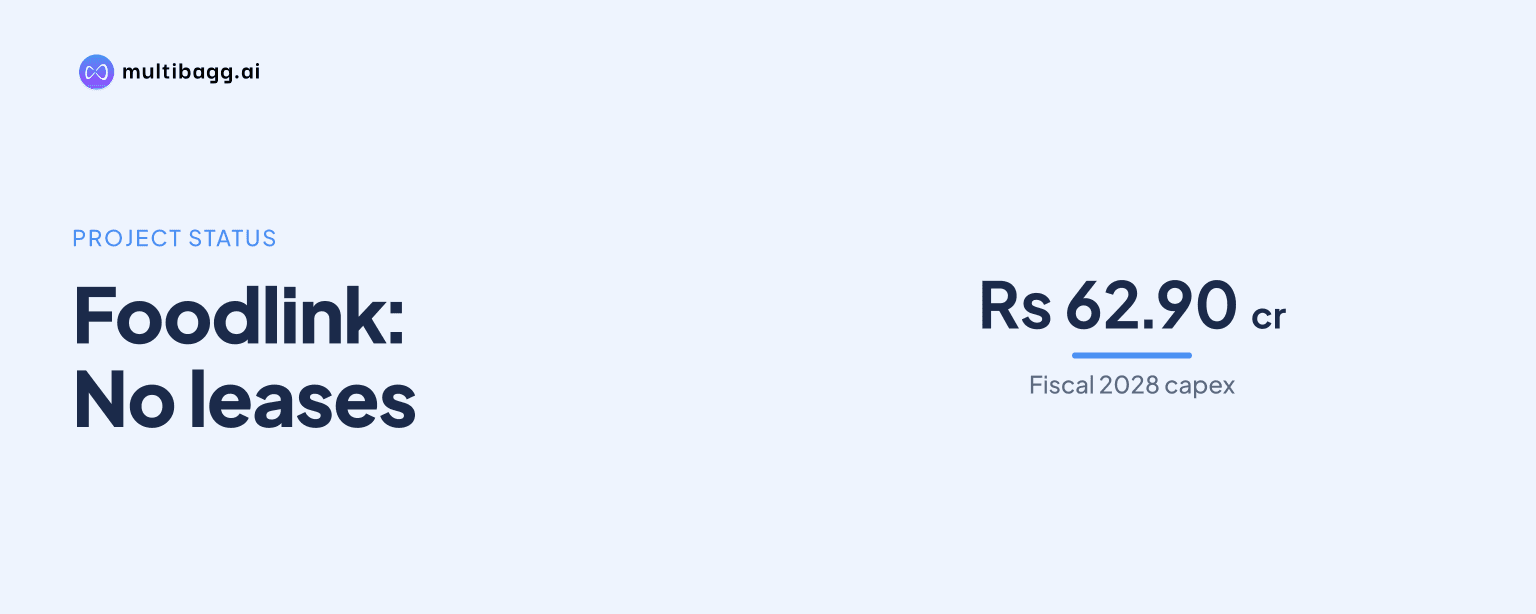
Foodlink has earmarked Rs 62.901 crore for a proposed Rajasthan centralized kitchen and two proposed banquets, but had not identified their precise sites, signed leases or entered definitive vendor agreements as of its Red Herring Prospectus. The three projects are scheduled for Fiscal 2028 deployment and rely on quotations, assumed sizes and future approvals.
How much has Foodlink earmarked for projects without signed sites?
Foodlink has earmarked Rs 62.901 crore from net proceeds for one centralized kitchen and two banquets whose exact locations remained unidentified at the prospectus date. The allocation consists of Rs 21.398 crore for a Rajasthan kitchen, Rs 20.741 crore for a Jaipur banquet and Rs 20.762 crore for a Bangalore banquet. Foodlink may locate the kitchen in Udaipur, but describes all three city references as potential locations rather than finalized properties.
Foodlink’s wider expansion allocation is Rs 113.708 crore, including Rs 50.807 crore for four casual dining restaurants in the United Arab Emirates through Foodlink Global Restaurants & Catering Services LLC, its material subsidiary. The proposed fresh issue is capped at Rs 192 crore, before offer expenses, and Foodlink also proposes Rs 21 crore for repayment or prepayment of certain borrowings. General corporate purposes may not exceed 25% of gross fresh-issue proceeds, or Rs 48 crore at the maximum fresh-issue size.
Why are Foodlink’s project costs not fixed?
Foodlink’s Rs 62.901 crore cost estimate is based on assumed formats, independent architect certificates and vendor quotations, not executed construction or supply contracts. The centralized kitchen estimate is supported by a September 10, 2026 certificate from Bharat & Savita Lohar Architects, while the banquet estimates use certificates dated September 10, 2026 and November 12, 2026. Foodlink says actual sizes, formats and expenditure can change with property availability, rent, addressable market and expected demand.
The kitchen’s Rs 21.398 crore estimate comprises Rs 18.294 crore of listed expenditure and Rs 3.104 crore of goods and services tax. The estimated Jaipur banquet cost is Rs 20.741 crore, while the Bangalore banquet estimate is Rs 20.762 crore. The Rs 21 lakh difference arises from separate quotation sets, including Rs 2.16 crore of licences and approvals for Jaipur versus Rs 2.38 crore for Bangalore, while goods and services tax is Rs 3.038 crore in each banquet estimate.
Foodlink has not deployed funds for the Indian capital expenditure as of the prospectus date. Its kitchen quotations were dated August 27, 2026 and were generally valid for 180 days or six months; the principal Bangalore civil-work quotation was dated November 5, 2026 and valid for six months. Quotation validity does not commit either Foodlink or the vendors, and Foodlink states that final suppliers and final prices may differ.
What must Foodlink complete before the Rajasthan kitchen and banquets open?
Foodlink must first select properties and secure leasehold premises before it can build the proposed facilities. It had not entered lease or licence agreements for the proposed kitchen, Jaipur banquet or Bangalore banquet at the prospectus date. Lease deposits and advance rentals are excluded from IPO-funded capital expenditure and are to be met through internal accruals or future borrowing.
Foodlink estimates annual rent of Rs 72 lakh to Rs 96 lakh for the potential Udaipur kitchen and Rs 2 crore to Rs 3 crore annually for each potential Jaipur and Bangalore banquet. The company says standard Indian kitchen leases are nine years, with annual rent escalation of 5% to 10%, whereas banquet leases typically run five to nine years with escalation of 4% to 5%. These obligations will depend on the future sites and commercial terms that Foodlink has yet to negotiate.
Foodlink must also obtain operational permissions after finalizing locations. The proposed kitchen requires, among other approvals, Food Safety and Standards Authority of India registration, a trade licence, fire licence, goods and services tax registration and Legal Metrology certification. The proposed banquets require similar permissions plus a music licence from Phonographic Performance Limited. Foodlink says it will apply for these approvals in due course, meaning operational timing depends on both site selection and regulatory processing.
Got a follow-up? Ask IRIS
How does Foodlink’s planned expansion compare with its existing network?
Foodlink operates seven centralized kitchens, comprising six in India and one in Dubai, with combined space of more than 91,500 square feet and capacity of more than 100,000 meals daily. The proposed 10,000-square-foot Rajasthan kitchen equals about 11% of that disclosed existing kitchen footprint. Foodlink’s Jaipur kitchen started operations in Fiscal 2027, while its Mumbai kitchen was originally established in Fiscal 2013 and relocated within Mumbai in Fiscal 2019.
Foodlink incurred Rs 6.61 crore to open centralized kitchens in the six months ended September 30, 2026, compared with the Rs 21.398 crore estimated for the proposed Rajasthan kitchen. The comparison does not establish a directly comparable unit cost because Foodlink does not disclose the number, size or location of kitchens represented by the six-month spending. The new estimate also includes a 10,000-square-foot assumption, specific civil works, equipment and approvals.
Foodlink operates three banquets in Mumbai, Ahmedabad and New Delhi with combined space exceeding 242,000 square feet. The planned Jaipur and Bangalore facilities would add an assumed 50,000 square feet, equivalent to about one-fifth of the existing disclosed banquet footprint. Foodlink incurred Rs 36.997 crore opening banquets in Fiscal 2026, compared with Rs 41.503 crore proposed for two new banquets, and reported 3,362 catered events across its Banquets and Integrated Food and Beverage Services business during the disclosed six-month and fiscal periods.
When does Foodlink plan to deploy the expansion funds?
Foodlink expects to deploy Rs 62.901 crore for the kitchen and two banquets in Fiscal 2028, with no scheduled deployment for these three assets in Fiscal 2027. By contrast, the Rs 21 crore allocation for debt repayment or prepayment is scheduled for Fiscal 2027. The stated timing is an estimate, because Foodlink says deployment depends on completion of the offer, market conditions, business needs and management’s assessment of economic trends.
Foodlink can extend the deployment period if a scheduled use is not completed in its stated fiscal, including because of delays in procuring or operationalizing assets, licences or approvals. The company says it may revise allocations among objects in accordance with applicable law. If costs rise because of inflation, revised quotations, taxation or other factors, Foodlink says additional costs for the kitchen and banquet projects will be funded entirely from internal accruals; it may also explore future lender debt if there is a funding shortfall.
Conclusion
Foodlink’s Indian expansion programme has a quantified capital plan but not finalized project execution arrangements. The Rs 62.901 crore allocation is supported by area assumptions, architect certifications and vendor quotations, while the decisive components of delivery, namely locations, lease terms, vendor selection, orders and permissions, remained pending at the prospectus date.
The next disclosed milestone is Fiscal 2028, when Foodlink plans to deploy the kitchen and banquet allocation. Progress will depend on Foodlink identifying Udaipur, Jaipur and Bangalore properties, converting quotations into contracts, securing statutory approvals and meeting lease-related costs and any cost increases through internal accruals or, where required, future debt.