










iValue uses multi-OEM projects to build recurring revenue
Key highlights
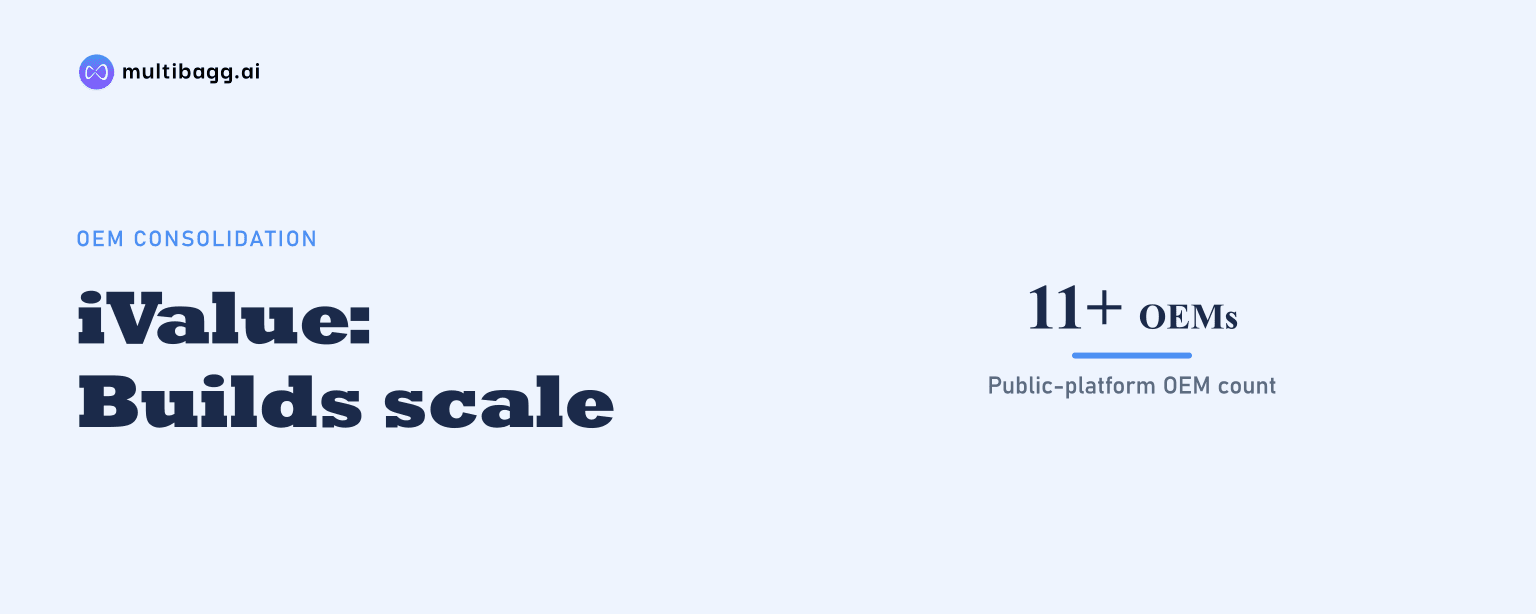
- iValue says its public-platform refresh consolidated 11+ OEMs into one unified solution.
- iValue says its largest public-sector-bank account was built over a 12-to-24-month horizon.
- The banking infrastructure transformation combines 10+ global technology vendors.
- Annual subscriptions, maintenance renewals and capacity expansion are stated revenue mechanisms in the case studies.
powered by IRIS
Ivalue Infosolutions Limited, operating as iValue, is using public-sector and banking projects combining 11+ original equipment manufacturers (OEMs) to build multi-year revenue streams from annual subscriptions, cloud consumption, maintenance renewals, managed services and capacity expansion.
Know Ivalue Infosolutions inside out
Results, valuation, peers and who's buying, in one view.
How does iValue create recurring revenue from multi-OEM projects?
iValue’s model begins with an initial technology deployment and extends into subscription, consumption, maintenance and expansion activity over a multi-year lifecycle. Its three case studies cover a government public-platform refresh, a large public-sector-bank relationship and a banking infrastructure modernisation programme, each involving multiple technology suppliers and a Tier-1 delivery partner.
The revenue mechanisms differ by deployment but follow the same sequence. The public-platform programme moves from initial enablement and platform build to annual subscriptions, cloud consumption, maintenance renewals and refresh cycles. The bank relationship adds cross-selling, upselling and managed services over a stated 12-to-24-month account-development horizon, while the other bank programme identifies annual subscriptions, maintenance renewals and capacity expansion after a large initial deal.
What does the 11+ OEM public-platform project demonstrate?
iValue says the mission-critical public-platform refresh consolidated 11+ OEMs into one unified solution with a Tier-1 system integrator (SI). The programme covers end-to-end modernisation of national digital infrastructure, and iValue presents the consolidation as an alternative to technologies otherwise spread across multiple distributors.
The technology stack combines network, application, database and identity security with performance monitoring, real-time analytics, cloud infrastructure, information-technology lifecycle tools, content management, content delivery and edge-security services. Scalable cloud infrastructure with elastic capacity is the stated mechanism that could link revenue to digital-service usage, alongside annual renewals and later upgrades.
Management describes the public-platform contract as a landmark transaction and identifies reference selling, further public-sector work and wider access to SI portfolios as opportunities. The presentation does not name the customer or disclose the project value, award date, renewal volumes, cloud-consumption revenue or financial contribution from the 11+ OEM deployment.
How is iValue expanding within its largest bank relationship?
iValue says its largest customer relationship developed from discrete product transactions into a broad, multi-OEM engagement with a large public-sector bank. Its stated “land, expand and deepen” approach uses early technology wins as anchors for additional products, supported by a dedicated vertical-focused team and collaboration with a Tier-1 SI.
The account covers network security, security information and event management (SIEM), threat intelligence, identity, compliance, big data, event streaming, in-memory computing and real-time analytics. It also includes cloud security, artificial intelligence for IT operations (AIOps), application delivery, infrastructure modernisation, and enterprise content and governance platforms, giving iValue multiple stated areas for cross-selling and upselling.
The change described in this case is a move from product distribution into managed services. Management says managed services added higher-margin, predictable annuity income and that subscription-based and recurring revenues formed a growing mix, with account value built progressively over 12 to 24 months. The presentation does not quantify service revenue, the recurring-revenue mix, customer spending or the margin effect.
Got a follow-up? Ask IRIS
What is different about the 10+ OEM bank transformation?
iValue says the other public-sector-bank transformation is an integrated modernisation programme from the outset, rather than a relationship built through a 12-to-24-month expansion process. The engagement combines 10+ global technology vendors for mission-critical core banking, security and digital infrastructure in a regulated environment.
The deployment was delivered with a Tier-1 global consulting partner and spans core information technology, security, analytics, storage, networks and digital quality. iValue says it provides single-window accountability, while the architecture is designed for high availability, scale and compliance with Indian banking and cybersecurity mandates.
Its revenue model is a large initial deal followed by a multi-year lifecycle of annual subscriptions, maintenance renewals and capacity expansion. Management also says the 10+ OEM architecture was designed to optimise total cost of ownership against fragmented vendor alternatives, but it does not provide a cost comparison, contract duration, contract value or measured savings.
Where does iValue see further replication opportunities?
iValue identifies public and private banks, non-banking financial companies (NBFCs), insurance firms and adjacent regulated enterprises as potential markets for the 10+ OEM banking model. It also cites expansion with large SIs, closer consulting-partner alignment and OEM-led joint opportunities as routes to additional projects.
For the public-platform programme, management lists annual renewals, cloud-consumption growth and next-generation upgrades across the deployed stack. For the largest bank relationship, it points to new workloads, platforms, regulatory initiatives and lifecycle upgrades, while also describing the engagement as a reference for banking, financial services and insurance (BFSI) customers.
The case studies establish the commercial architecture but leave operating measures undisclosed. iValue provides no annual recurring revenue, renewal rate, managed-services customer count, pipeline value, replication target or timeline for the 11+ OEM and 10+ OEM programmes, so the financial scale of the stated annuity model cannot be determined from these examples.
Conclusion
iValue’s three case studies show a consistent approach: combine 11+ or 10+ OEM technologies, work with a Tier-1 SI or consulting partner, and extend an initial government or BFSI deployment through subscriptions, maintenance, cloud usage, managed services and capacity additions. The largest bank relationship provides the clearest stated account-building timeframe of 12 to 24 months, while the other cases emphasise multi-year lifecycles.
The next disclosures to watch are outcomes from management’s stated plans for annual renewals, cloud-consumption growth, next-generation upgrades, new workloads and replication across banks, NBFCs and insurers. The presentation identifies these avenues but provides no revenue target, renewal-rate target, contract value or scheduled milestone for the three case studies.