








ixigo sees Rs 10-12 crore quarterly hotel spend near term

Find your next multibaggerBe a Pro Investor
Research stocks and track your picks on the go. Download the app.
Key highlights
- ixigo invested more than Rs 11 crore in hotels in Q2 FY27, including about Rs 10 crore for people and technology.
- ixigo indicated a Rs 10 crore to Rs 12 crore quarterly hotel-investment range for the next couple of quarters.
- Hotel GTV rose 2.6 times year-on-year to Rs 111.34 crore in Q2 FY27, with about 4.7 lakh room nights.
- ixigo increased directly contracted hotels to more than 12,000 from 10,000 in the prior quarter.
powered by IRIS
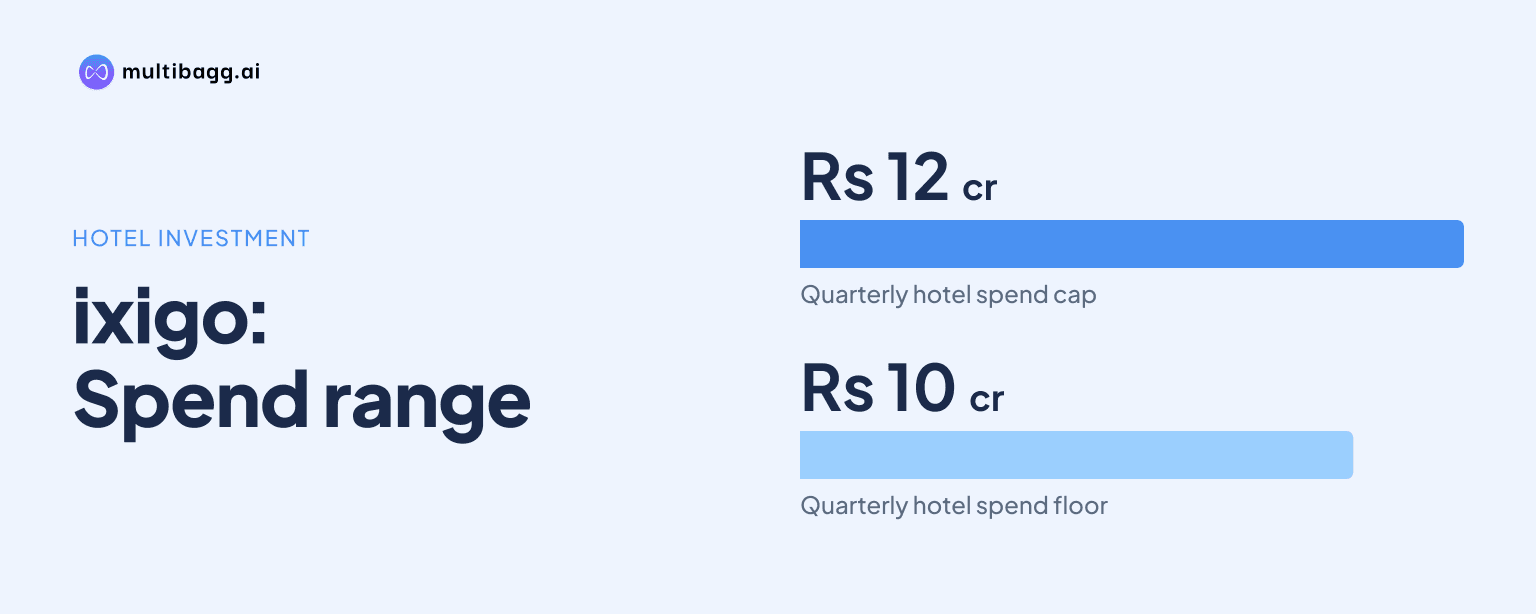
ixigo invested more than Rs 11 crore in hotels in Q2 FY27, including a Rs 1.21 crore segment loss and about Rs 10 crore for people and technology, and management indicated a similar Rs 10 crore to Rs 12 crore quarterly range for the next couple of quarters. The spending is subject to customer-payback checks and company-level profitability guardrails.
Know Le Travenues Technology inside out
Results, valuation, peers and who's buying, in one view.
How much did ixigo invest in hotels in Q2 FY27?
ixigo invested slightly more than Rs 11 crore in hotels during Q2 FY27. The separately disclosed hotels segment posted a loss of Rs 1.21 crore, versus a Rs 0.71 crore loss in the comparable quarter, while management estimated that it spent a further Rs 10 crore on hotel people and technology costs below contribution margin.
The reported segment loss therefore covers only part of the capital being allocated to hotels. Management said hotel product, technology and staffing expenses sit in group costs below contribution margin, and that Q2 FY27 was deliberately weighted towards people and technology investment. ixigo also began consolidating Brevistay in the quarter, meaning part of the hotel business growth was inorganic.
What hotel spending does ixigo expect in coming quarters?
ixigo expects hotel investment in a similar Rs 10 crore to Rs 12 crore range in each of the next couple of quarters, according to management. Saurabh Devendra Singh described the range as a rough modelling reference rather than formal guidance, and said spending could rise or fall if growth and returns on the ground become more or less compelling.
Management said its principal guardrail is the payback from customers acquired through discounts or performance marketing. ixigo tracks whether those customers return to book hotels or other travel services, rather than committing to a fixed annual hotel budget. It also said it intends to preserve company-level profitability and not go substantially below the Q2 FY27 adjusted earnings before interest, tax, depreciation and amortisation, or EBITDA, of Rs 23.58 crore, which was down 17% from Rs 28.48 crore a year earlier.
ixigo is currently focusing hotel investment mainly on users already within its platforms. Management said it is not as active on third-party channels as some other online travel agencies and does not expect to move outside its existing customer funnel in the next couple of quarters. It added that it could increase spending earlier if the opportunity emerged sooner than expected.
Why is ixigo allocating more money to hotels?
ixigo is allocating more to hotels because management sees scope in budget, mid-market and independent properties, where it said online penetration is low. Management cited a VIDEC industry report saying about 60% of Indian hotel room nights are sold below Rs 2,000 a night and independent hotels account for 73% of rooms.
The strategy is tied to ixigo’s existing ground-travel user base. The company said 94% of its transactions involve travel to or from Tier 2 and Tier 3 cities, while more than nine out of 10 trips it sells are through train or bus. More than 86% of hotel bookings came from travellers who were already on ixigo’s platforms, providing an internal audience for hotel cross-selling.
Management is seeking to improve fulfilment and reliability before pursuing broader customer acquisition. It said direct hotel relationships can help ensure that room descriptions, pricing and availability shown on the app match the on-ground experience. The company had direct contracts with more than 12,000 hotels across about 1,100 towns at the end of Q2 FY27.
Got a follow-up? Ask IRIS
How fast is ixigo’s hotel business growing?
ixigo’s hotel gross transaction value, or GTV, grew 2.6 times year-on-year to Rs 111.34 crore in Q2 FY27, with approximately 4.7 lakh room nights and a gross take rate above 12%. Hotels were reported as a separate segment for the first time, and ixigo said earlier periods had been restated on a comparable basis.
That expansion occurred alongside a 20% sequential increase in directly contracted hotel properties, from 10,000 to more than 12,000. ixigo sells inventory from 70,000 hotels in India, but management said the direct-supply network is central to improving service quality and take rates. It said a smaller subset of directly contracted hotels already operates at the 16% to 17% gross take rates mentioned by an analyst, while the blended rate remains above 12%.
The hotel line was smaller than ixigo’s established travel segments in Q2 FY27. Train revenue was Rs 149.14 crore, bus revenue was Rs 81.04 crore and flight revenue was Rs 82.66 crore, compared with hotel GTV of Rs 111.34 crore. Unlike those revenue figures, hotel GTV represents the value of bookings transacted, so it is not directly comparable with segment revenue.
When does ixigo expect hotels to become profitable?
ixigo does not expect to prioritise hotel profitability immediately and gave no target quarter for the segment to turn profitable. Management said it expects to continue investing for two to three years while building scale, provided that incremental spending produces returns through repeat bookings and broader customer engagement.
The company said investment will vary between costs above and below contribution margin depending on what it chooses to build in a given period. In Q2 FY27, the allocation was more heavily below contribution margin through people and technology spending, rather than the segment’s reported Rs 1.21 crore contribution loss. Management said it is trying to optimise for a sustainable business rather than a near-term contribution-margin outcome.
ixigo plans to develop hotel-focused peace-of-mind products, but did not disclose a launch date or financial target. Management said it has observed higher customer-satisfaction scores, better repeat behaviour and negative experiences such as booking bumps and room mismatches within tolerable limits for a subset of hotels. Those operating measures will determine whether it expands investment from the indicated Rs 10 crore to Rs 12 crore range.
Conclusion
ixigo’s Q2 FY27 disclosure makes clear that the Rs 1.21 crore hotels segment loss does not reflect the full cost of expanding the category. Total hotel investment exceeded Rs 11 crore after including about Rs 10 crore in people and technology, while hotel GTV reached Rs 111.34 crore and directly contracted supply increased by more than 2,000 properties from the prior quarter.
The next issue to watch is whether ixigo remains around the Rs 10 crore to Rs 12 crore quarterly investment range over the next couple of quarters as direct supply expands and gross take rates move up from above 12%. Management has said spending will depend on customer payback and repeat bookings, while its stated four- to five-year ambition is to become the largest online travel agency in the budget-to-mid-market hotel category.

