








ixigo reports hotels separately after 2.6x GTV growth in Q2

Find your next multibaggerBe a Pro Investor
Research stocks and track your picks on the go. Download the app.
Key highlights
- ixigo hotel GTV rose 2.6 times year on year to Rs 111.34 crore in Q2 FY27.
- ixigo recorded approximately 4.7 lakh hotel room nights in Q2 FY27, up 3.9 times year on year.
- ixigo estimated total hotel investment of slightly more than Rs 11 crore in Q2 FY27.
- ixigo hotel contribution margin improved to negative 15% from negative 55% a year earlier.
powered by IRIS
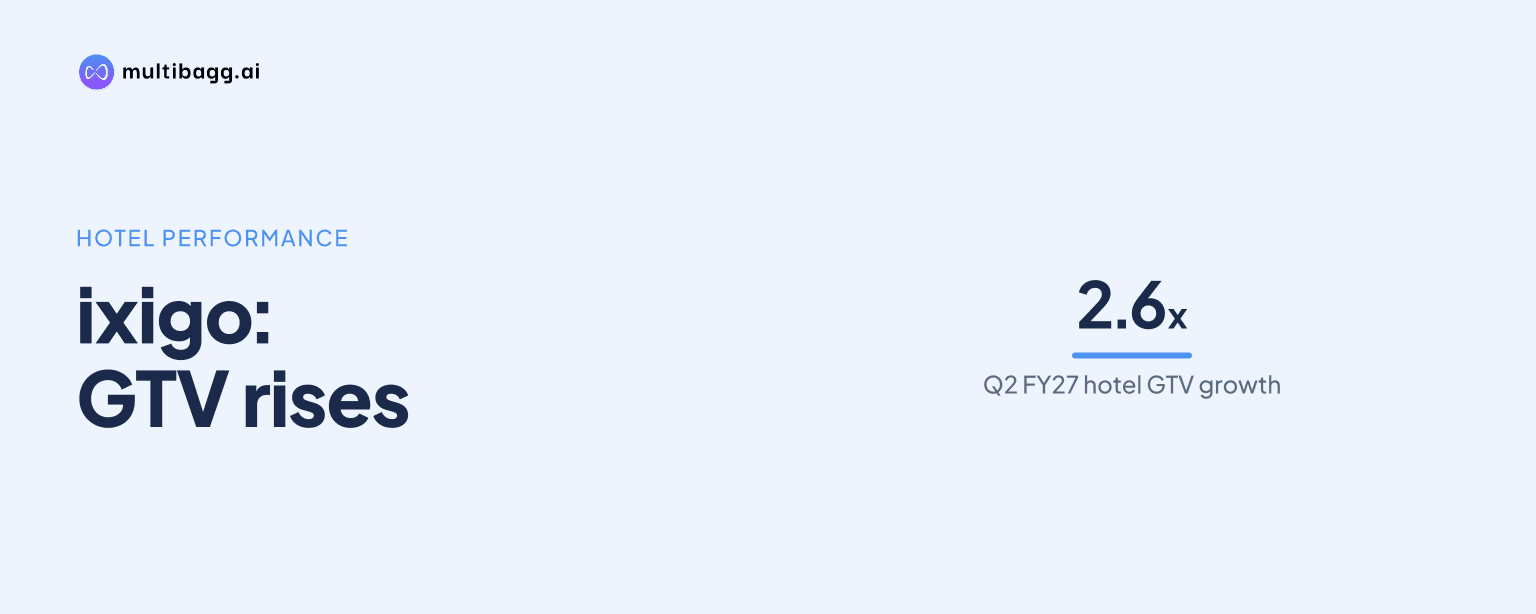
Le Travenues Technology Limited, which operates as ixigo, began separately reporting hotels in Q2 FY27 after hotel gross transaction value, or GTV, rose 2.6 times year on year to Rs 111.34 crore. Management estimated total hotel investment of slightly more than Rs 11 crore during the quarter, including people and technology costs that sit below segment contribution margin.
Know Le Travenues Technology inside out
Results, valuation, peers and who's buying, in one view.
Why is ixigo reporting hotels as a separate segment?
ixigo is reporting hotels separately because management said the business had become material and product-market fit was emerging. In Q2 FY27, hotels generated Rs 111.34 crore of GTV, approximately 4.7 lakh room nights and a gross take rate above 12%, which management said was the highest across its business lines. The company said the expanded disclosure reflected greater confidence in the category, while recognising that the business remains at an early stage.
ixigo also changed the presentation of two related activities in Q2 FY27. Food-on-train services were moved into the trains segment, while Brevistay was consolidated within hotels; ixigo said it restated earlier periods on a like-for-like basis. Management added that Brevistay began consolidating during the quarter, so a part of hotel growth was inorganic rather than generated only by the pre-existing hotel operation.
The hotel supply network shows the scale ixigo is seeking to build. The company sells rooms from 70,000 hotels and had direct relationships with more than 12,000 hotels across about 1,100 towns in Q2 FY27, up from 10,000 direct hotel relationships in the preceding quarter. Management identified direct supply, better fulfilment and customer support when bookings go wrong as priorities for improving reliability.
How fast did ixigo's hotel business grow in Q2 FY27?
ixigo's hotel GTV rose 39% sequentially and 2.6 times year on year to Rs 111.34 crore in Q2 FY27. Net room nights after cancellations exceeded 5,100 a day, while quarterly room nights rose 3.9 times year on year and more than 50% from the comparable Q1 level. Hotel revenue exceeded Rs 8.10 crore, growing more than sixfold year on year, according to management.
Hotel contribution economics improved relative to revenue, although the reported loss increased in rupee terms. Contribution margin improved to negative 15% of revenue in Q2 FY27 from negative 55% a year earlier, while the contribution loss rose to Rs 1.21 crore from Rs 0.71 crore in Q2 FY26. The figures show that revenue growth reduced the loss ratio even as ixigo continued investing in the category.
More than 86% of hotel bookings in Q2 FY27 came from travellers already using ixigo platforms or from captive users. Management linked this to developing unit economics, noting that 94% of ixigo transactions involve travel to or from Tier 2 and Tier 3 cities. More than nine out of 10 trips sold by ixigo are by train or bus, providing opportunities to add affordable accommodation to existing journeys.
Got a follow-up? Ask IRIS
What is ixigo spending to build its hotel business?
ixigo estimated it spent a further Rs 10 crore on hotel people and technology in Q2 FY27, taking total investment in hotels to slightly more than Rs 11 crore. Management said much of the product, technology and employee spending is recorded in group costs below contribution margin. Therefore, the Rs 1.21 crore hotel contribution loss represented only part of the expenditure directed towards the segment.
Management said ixigo would continue investing in hotels as a strategic category and would calibrate spending according to progress and expected long-term returns. The call did not disclose a two-to-three-year investment timetable. It did disclose an aspiration to become the largest player serving its targeted hotel market over the next four to five years, supported by direct supply, repeat business and improved service reliability.
The market opportunity cited by management is focused on lower-priced lodging. About 60% of hotel room nights in India sell below Rs 2,000 a night, while independent hotels account for 73% of rooms, according to the VIDEC industry report cited on the call. Management identified budget, mid-market and independent hotels as areas where online penetration is lower and travellers need more dependable booking and support.
How does hotel investment compare with ixigo's core businesses?
ixigo's hotel business remains smaller than its passenger segments, but its 2.6-times GTV growth exceeded group growth of 22% in Q2 FY27. Group GTV reached Rs 5,304.47 crore, revenue from operations rose 13% to Rs 320.96 crore, and contribution margin increased 14% to Rs 124.86 crore. Passenger segments grew more than 11% to 3.98 crore during the quarter.
Buses and trains generated positive contribution margins, unlike hotels. Bus GTV grew 32% to Rs 752.65 crore, revenue increased 24% to Rs 81.04 crore and contribution margin rose 27% to Rs 43.14 crore, or 53% of revenue. Train revenue grew 16% to Rs 149.14 crore and contribution margin increased 29% to Rs 47.23 crore, while management placed ixigo's share of the online travel agency rail market at close to 64%.
Flights followed a different pattern in Q2 FY27. Flight GTV grew 37%, supported by higher fares, but revenue fell 8% to Rs 82.66 crore and contribution margin declined 10% to Rs 35.68 crore. Management said gross take rate fell to 7% from 9.4% as base fares and international mix increased, while fewer bank offers required ixigo to fund more discounts; international flight GTV nevertheless grew 59% year on year.
The hotel investment and other group costs coincided with a lower adjusted earnings before interest, tax, depreciation and amortisation, or EBITDA, result. Adjusted EBITDA declined 17% to Rs 23.58 crore from Rs 28.48 crore in Q2 FY26. Reported profit after tax was Rs 63.42 crore, including a Rs 40.66 crore one-time gain from the August 13 sale of a Freshbus stake, which management distinguished from operating performance.
Conclusion
The separate hotel disclosure makes ixigo's expansion measurable through business-line data: Rs 111.34 crore of Q2 FY27 GTV, about 4.7 lakh room nights and a gross take rate above 12%. Contribution margin improved from negative 55% to negative 15% of revenue, but the absolute contribution loss rose and management estimated total investment of slightly more than Rs 11 crore, indicating that the segment is still being built rather than managed for near-term profit.
The next disclosures to watch are direct hotel supply, repeat usage and fulfilment as ixigo pursues its stated four-to-five-year ambition in budget, mid-market and independent hotels. Management has said it will calibrate hotel investment according to progress and long-term returns. At the group level, future hotel spending can be assessed alongside Q2 FY27 adjusted EBITDA of Rs 23.58 crore and cash and cash equivalents of about Rs 1,831.71 crore, net of borrowings.

