










JK Lakshmi Cement Limited Q2 Profit Falls 74.7% to ₹20.43 Crore
Key highlights
- JKLC's consolidated net profit fell 74.66% year-on-year to ₹20.43 crore in Q2 FY27.
- Revenue from operations increased 5.6% to ₹1,616.92 crore, while total expenses rose 10% to ₹1,598.29 crore.
- Cement sales volume rose 5% to 29.83 lakh tonnes, but capacity utilisation declined to 62% from 65%.
- JKLC is investing ₹3,325 crore at Durg, with the main capacity project targeted for completion by March 2028.
powered by IRIS
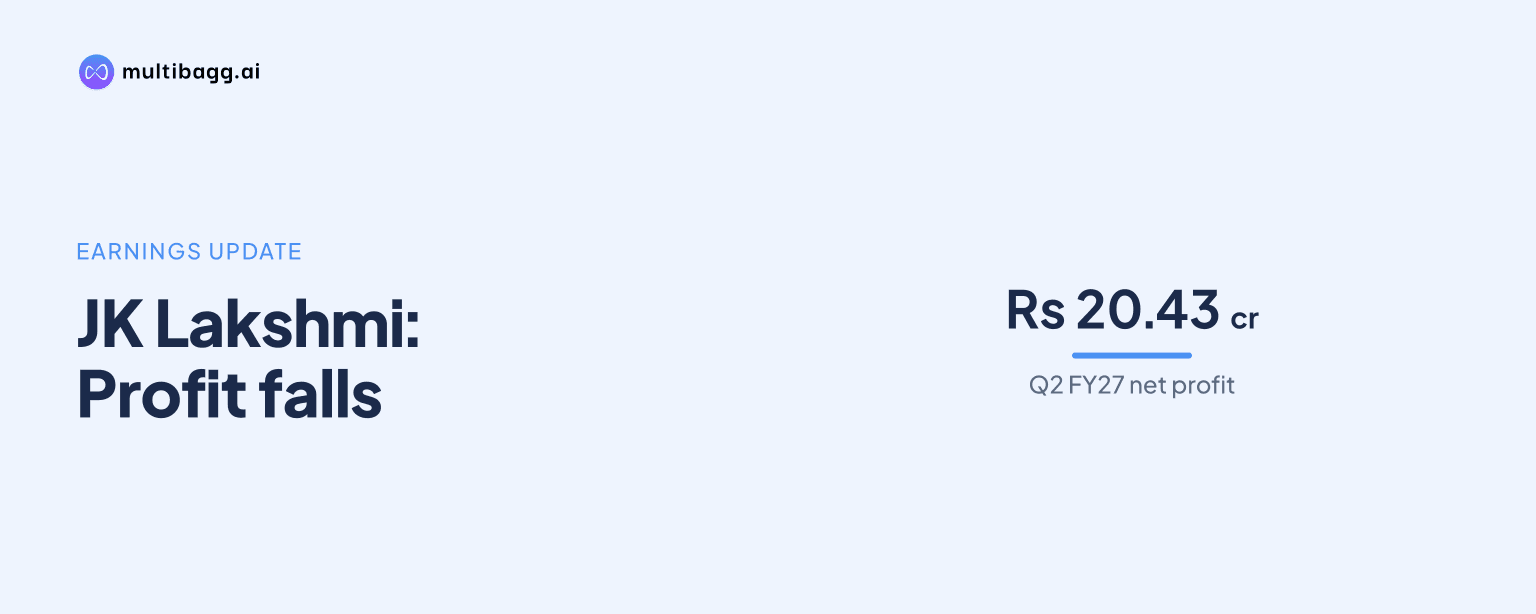
JK Lakshmi Cement Limited reported consolidated net profit of ₹20.43 crore for Q2 FY27, down 74.66% from ₹80.63 crore a year earlier, as expenses rose faster than revenue despite a 5% increase in cement sales volume. The result shows the effect of cost pressure and muted price realisations on cement margins.
Know JK Lakshmi Cement inside out
Results, valuation, peers and who's buying, in one view.
What were JKLC's Q2 FY27 financial results?
JKLC's consolidated net profit fell to ₹20.43 crore in the quarter ended September 30, 2026, from ₹80.63 crore in the corresponding quarter of FY26. The decline came even as revenue from operations increased 5.6% year-on-year to ₹1,616.92 crore from ₹1,531.77 crore.
Total income, including other income, rose 4.66% to ₹1,626.88 crore. However, total expenses increased 10% to ₹1,598.29 crore, leaving a substantially smaller profit pool. On a standalone basis, the company reported profit after tax of ₹20.88 crore, compared with ₹82.33 crore in the year-earlier quarter.
Why did JKLC's profit decline despite higher sales?
JKLC's profit declined because operating costs rose faster than income and operating margins narrowed. The company reported PBIDT of ₹164.49 crore for the July-September quarter, compared with ₹232.86 crore a year earlier, while profit before tax stood at ₹29.02 crore.
Sales volumes rose to 29.83 lakh tonnes from 28.43 lakh tonnes, but this growth did not translate into stronger profitability. Average cement sales realisation was largely unchanged at ₹4,885 per tonne against ₹4,895 per tonne in Q2 FY26. The supplied interim report also indicated that EBITDA per tonne declined to ₹517 from ₹732, while operating margin fell to 10% from 14%.
The company identified elevated petcoke prices, as well as geopolitical uncertainties affecting fuel, freight and packaging costs, as factors likely to keep costs under pressure. It said cement makers may seek price increases, but intense competition could limit their ability to pass higher costs on to customers.
Got a follow-up? Ask IRIS
How did volume, realisations and leverage change at JKLC?
JKLC recorded higher sales volume but saw slightly lower capacity utilisation and nearly flat realisations in Q2 FY27. Capacity utilisation was 62%, compared with 65% in the year-earlier quarter, indicating that volume growth occurred without an increase in utilisation.
For the first half of FY27, net sales reached ₹3,521.70 crore and PBIDT was ₹438.26 crore. Profit before tax for the six-month period was ₹168.90 crore, while total consolidated income was ₹3,547.09 crore, up 6.9% year-on-year.
The balance-sheet indicators disclosed by the company showed net debt to EBITDA of 2.31 times and net debt to equity of 0.51 times as of September 2026. These measures are relevant because JKLC is funding large projects through a combination of borrowings and internal accruals.
What is JKLC's Durg expansion plan?
JKLC is undertaking ₹3,325 crore of capital expenditure at its Durg plant in Chhattisgarh, including a ₹325 crore railway siding project and a ₹3,000 crore capacity expansion programme. The railway siding project is being financed with ₹225 crore of debt and the balance through internal accruals, and its first phase has been completed.
The larger Durg project includes a 2.3 million tonne per annum clinkerisation expansion and three grinding units with combined cement capacity of 4.6 million tonnes per annum. JKLC said the ₹3,000 crore project would be funded through debt and internal accruals and is expected to be completed by March 2028.
The company also reported that renewable sources accounted for 48% of its power mix during the quarter. At its Sirohi Cement Plant, it is pursuing a project to raise the total sustainability ratio from 4% to 16%, alongside the capacity investment programme.
Conclusion
JKLC's Q2 FY27 numbers reflect a clear divergence between volume growth and earnings performance. Revenue and cement dispatches increased, but a 10% rise in expenses, flat realisations and lower operating profitability reduced consolidated net profit by nearly three-fourths year-on-year. The result also highlights the competitive constraints facing cement producers attempting to recover higher input costs through prices.
Investors will watch the management discussion scheduled through the November 5, 2026 investor conference call, particularly for commentary on fuel costs, price realisations and demand during the peak construction season. Progress on the Durg railway siding and the larger capacity project, which is scheduled for completion by March 2028, will remain important for assessing capital allocation and funding needs.