










Kotyark earned 57,874 credits, monetisation remains prospective
Key highlights
- Kotyark earned 57,874 carbon credits between September 2020 and March 2022.
- Kotyark reports annual biodiesel capacity of 4,80,000 kilolitres.
- Kotyark says it received Verra carbon certification in 2024.
- Management targets utilisation of about 60% to 70%, versus about 7% to 8% currently.
powered by IRIS
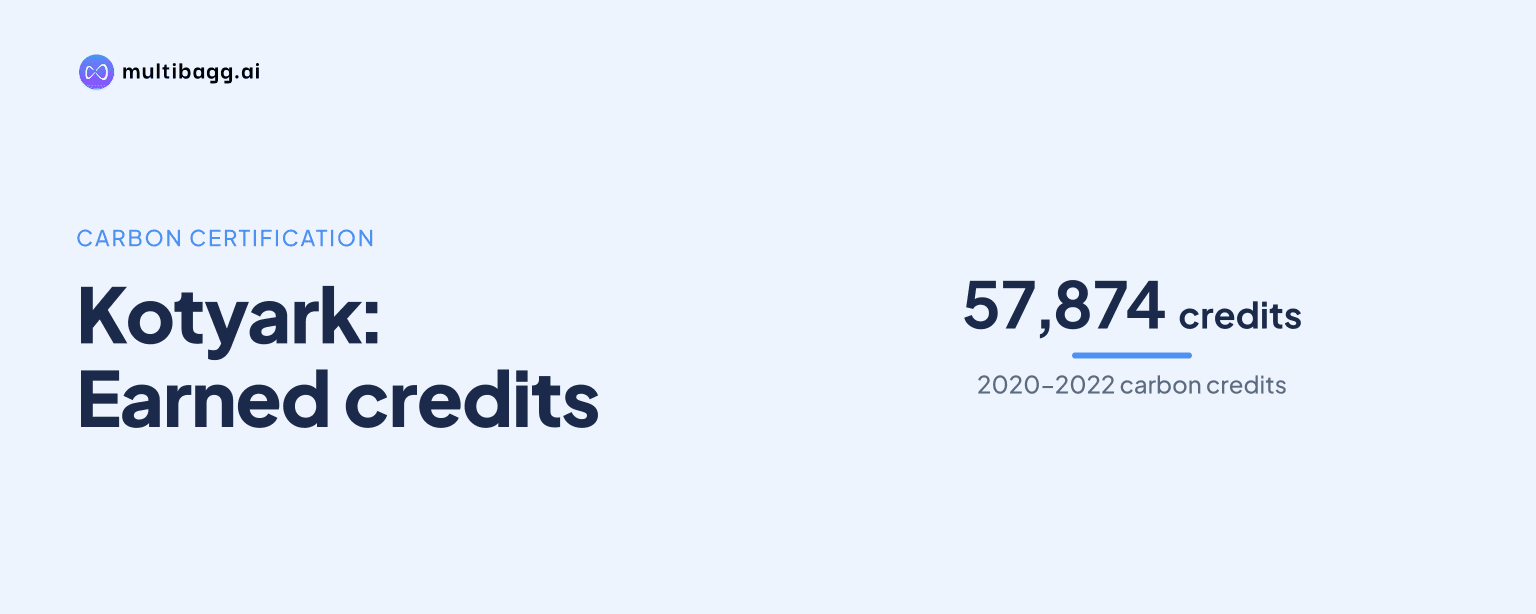
Kotyark Industries Limited earned 57,874 carbon credits between September 2020 and March 2022, but Kotyark does not report carbon-credit sales or revenue in its presentation. The credits stem from its waste-oil biodiesel platform, which has annual biodiesel capacity of 4,80,000 kilolitres and operates with zero effluent discharge.
Know Kotyark Industries inside out
Results, valuation, peers and who's buying, in one view.
How many carbon credits has Kotyark earned?
Kotyark has earned 57,874 carbon credits for the period from September 2020 to March 2022. The presentation reports the figure under environmental stewardship and repeats it as the environmental yield of Kotyark’s waste-to-energy biodiesel model, which uses used cooking oil, acid oils and non-edible oils.
The 57,874-credit figure is a record of credits earned, rather than a disclosed rupee contribution to revenue. Kotyark explains that one carbon credit represents the reduction or removal of one metric tonne of carbon-dioxide emissions, but it does not provide an annual split of the credits, an issuance date for each credit, or a realised price.
Kotyark also identifies 2024 as the year in which it became the first Indian biodiesel company to receive Verra carbon certification. Separately, it says Infinite Solutions recognised it in 2024 as the world’s first project to produce biodiesel registered under the Voluntary Carbon Mechanism. The presentation does not provide project documentation, a methodology, or a direct link between those 2024 statements and the credits earned during September 2020 to March 2022.
How could Kotyark monetise carbon credits?
Kotyark says carbon-credit monetisation can occur after emission reductions are assessed, documented, verified and certified by accredited agencies. Credits issued under recognised standards may then be sold through exchanges, brokers or bilateral agreements in domestic or international carbon markets.
The presentation describes such proceeds as an additional sustainability-linked income stream, not as booked income. Kotyark does not disclose a carbon-credit buyer, sale agreement, credit price, transaction date, revenue figure or accounting treatment for the 57,874 credits earned through March 2022.
Kotyark lists corporates with environmental, social and governance commitments, industrial companies seeking to offset emissions, global sustainability-focused entities, and carbon-trading intermediaries as potential purchasers. It also says the opportunity can scale with higher biodiesel volumes, but the issuance process means greater fuel output alone would not establish a saleable credit balance.
What operating platform underpins Kotyark’s credit potential?
Kotyark’s underlying activity is biodiesel production from renewable and waste-based feedstocks, including used cooking oil, acid oils and non-edible vegetable oils. Its plants can use about 10 to 15 feedstocks and processing inputs depending on seasonal availability, pricing and procurement economics, while used cooking oil accounts for an indicated 84% to 86% of major raw materials.
The manufacturing process converts prepared feedstock with methanol and catalysts into biodiesel, known as B100, and crude glycerin. Kotyark says its waste-to-energy process can achieve up to 99% yield from feedstock to B100, although the presentation does not define the measurement basis or operating conditions for that stated yield.
Kotyark operates two integrated manufacturing facilities, at Sirohi in Rajasthan and Anand in Gujarat. As at 31 March 2026, Sirohi had installed capacity of 1,500 kilolitres per day and utilisation of 5% to 6%, while Anand had 100 kilolitres per day and utilisation of 30%; Anand’s utilisation was therefore higher despite Sirohi having 15 times its daily installed capacity.
The company reports cumulative annual biodiesel capacity of 4,80,000 kilolitres and annual crude-glycerin capacity of 63,000 kilolitres. Crude glycerin is a by-product, with Kotyark estimating about 14 litres of crude glycerin from every 100 litres of biodiesel, creating a second output stream alongside the biodiesel activity relevant to its credit proposition.
Got a follow-up? Ask IRIS
What could change Kotyark’s future carbon-credit outcome?
Management is targeting capacity utilisation of about 60% to 70% over the medium term, from current overall levels of about 7% to 8%. The plan follows the expansion of Rajasthan biodiesel capacity from 500 kilolitres per day to 1,500 kilolitres per day and is linked to higher Oil Marketing Company, or OMC, participation, industrial demand and retail expansion.
Higher production could expand the renewable-fuel activity available for assessment, but Kotyark’s stated monetisation route still requires verification, certification, issuance and a sale. The presentation also says earnings are affected by OMC tender cycles and procurement timing, so operating volumes may depend on tender allocations and subsequent purchase orders or supply indents.
Feedstock availability and pricing remain relevant because Kotyark switches among about 10 to 15 materials according to procurement economics. In the second quarter of financial year 2027, or Q2 FY27, management said profitability benefited from previously purchased lower-cost raw materials, while raw-material prices had subsequently increased; revenue from operations was Rs 61.27 crore, down 5.5% year on year.
The broader demand context includes India’s stated 5% biodiesel-blending target by 2030, compared with estimated blending of more than 1% in 2025. Kotyark also identifies volatility in energy and carbon markets as a margin factor and flags electric vehicles and other clean-energy alternatives as influences on future demand, leaving potential carbon-credit income contingent on both market conditions and execution.
Conclusion
Kotyark’s 57,874 carbon credits provide evidence that its biodiesel operations earned credits from September 2020 to March 2022. Its 2024 Verra certification milestone and voluntary-mechanism registration statement describe a potential framework for further activity, but the presentation does not show that credits have been sold or that carbon-credit revenue has been recognised.
The next disclosed operating marker is management’s target to raise utilisation from about 7% to 8% to about 60% to 70% over the medium term after the Rajasthan expansion to 1,500 kilolitres per day. Investors can watch whether OMC participation, higher biodiesel volumes and the 2030 5% blending target lead to newly verified credits and disclosed monetisation transactions.