








Krishca Strapping Solutions Limited plans 96,000 TPA in cold rolling
MAX Plan at ₹4,999/yr

Find your next multibaggerBe a Pro Investor
Research stocks and track your picks on the go. Download the app.
Key highlights
- Krishca plans 96,000 TPA of cold-rolling capacity, comprising 60,000 TPA in Chennai and 36,000 TPA in Vapi.
- The Chennai cold rolling mill has stated capital expenditure of Rs 130 crore and is targeted for commercial production around December 2026.
- The Vapi Phase 1 project is planned for 36,000 TPA on 4 acres, with commercial production targeted for June 2027.
- Vajra Alloys has an 800-TPA Phase 1 superalloys capacity and is included in a Rs 98.22 crore potential PLI incentive estimate.
powered by IRIS
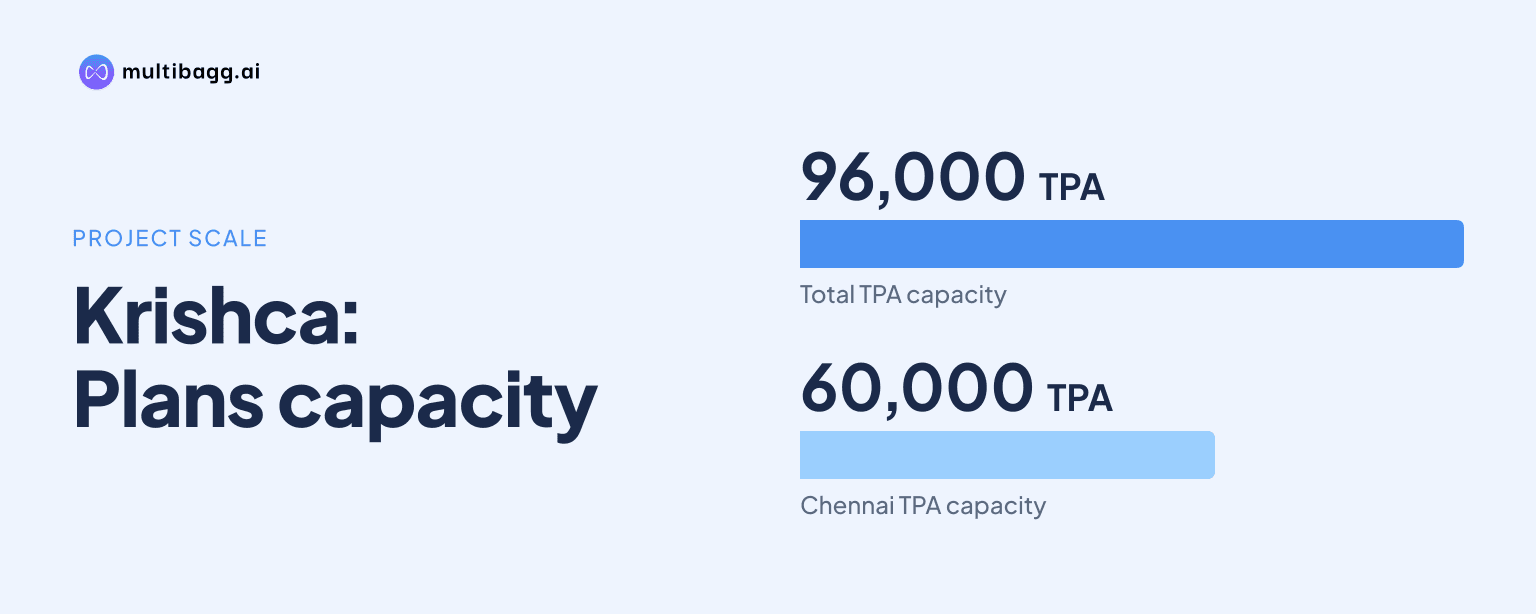
Krishca Strapping Solutions Limited plans 96,000 tonnes per annum (TPA) of cold-rolling capacity through a 60,000-TPA Chennai mill targeted for around December 2026 and a 36,000-TPA Vapi project targeted for June 2027. Separately, its Vajra Alloys facility has an 800-TPA first phase for superalloys and special steels.
Know Krishca Strapping Solutions inside out
Results, valuation, peers and who's buying, in one view.
What cold-rolling facilities is Krishca building?
Krishca is planning two cold-rolling mills with combined capacity of 96,000 TPA, split between Chennai and Vapi, Gujarat. The Chennai project has 60,000 TPA capacity, while Manda Stainless Private Limited, a proposed subsidiary in which Krishca says it will hold 51%, is planning a 36,000-TPA Vapi Phase 1 mill.
The two projects would extend Krishca beyond industrial packaging, where the presentation reports an order book of more than Rs 300 crore over five years, 15 active contracts across India and more than 500 employees. The planned manufacturing capacity is directed at specialty steel rather than primary-packaging products such as high-density polyethylene tarpaulin, straps and desiccants.
When are Krishca's new plants expected to start production?
Krishca targets commercial production at Chennai around December 2026 and at the Vapi Phase 1 facility in June 2027. The presentation places the Vapi project under Manda Stainless Private Limited and specifies 4 acres of land and a 60,000-square-foot building for its first 36,000-TPA phase.
Chennai has disclosed capital expenditure of Rs 130 crore for its 60,000-TPA mill. Krishca describes the site as South India’s first cold rolling mill for precision ultra-thin strips and as the only cold rolling mill producing stainless steel in South India, which are claims made in the presentation. The stated product thickness is 0.1 millimetres to 0.4 millimetres for stainless-steel and high-carbon strips.
How will Krishca use and sell its cold-rolled output?
Krishca says around 1,000 tons of Chennai output will be used captively and that 80% will be sold externally with value addition of Rs 10,000 to Rs 15,000 per metric ton. The presentation says backward integration is expected to reduce input costs by 4% to 6%, but it does not disclose the cost base, timing or volume period underlying that estimate.
For Chennai, Krishca intends to source hot-rolled coils from JSL, Rimjhim, Sambhv and SAIL, using a cold-rolling route rather than investing in hot rolling. The Vapi project is intended to serve utensil-grade stainless steel and high-carbon-grade cold-rolled coils. Chennai’s stated focus is 0.1-to-0.4-millimetre stainless and high-carbon strips, while Vapi’s stated markets are utensil-grade stainless steel and high-carbon coils.
Got a follow-up? Ask IRIS
What government incentive assumptions support Krishca's projects?
Krishca estimates potential Production Linked Incentive (PLI) scheme incentives of Rs 98.22 crore over four years for its cold-rolling and Vajra Alloys projects. It says both projects have qualified for the scheme and that it was the only South India company with a Ministry of Steel PLI memorandum of understanding among 88 memorandums signed in February 2026; the incentive amounts remain projections tied to incremental production.
The cold-rolling project’s PLI table assumes annual production rising from 12,000 tons in financial year (FY) 2027 to 70,000 tons in FY30, with expected incentives of Rs 72.93 crore. Vajra Alloys is shown rising from 150 tons in FY28 to 700 tons in FY30, with expected incentives of Rs 25.28 crore. The table lists 1,333 tons per month alongside 12,000 tons per annum in FY27 for cold rolling, while 12,000 tons divided by 12 months equals 1,000 tons; the presentation does not explain the difference.
What is Vajra Alloys expected to manufacture?
Vajra Alloys is planned as an 800-TPA Phase 1 facility for superalloys and special steels, targeting aerospace, defence, industrial engineering, oil and gas, and power plants. Krishca says around 75% of India’s superalloys are imported and identifies an absence of a private commercial-scale South Indian facility beyond MIDHANI’s defence output.
The near-term focus is industrial and precision components, while defence and aerospace approvals are expected to take around 12 months, according to the presentation. The disclosed ownership structure includes a 13% equity stake for the technical team and an 18% strategic stake for Sambhav Steel Group. That approval timetable distinguishes the facility’s initial industrial output from its stated aerospace and defence targets.
Conclusion
Krishca’s disclosed manufacturing plan combines 96,000 TPA of cold rolling at Chennai and Vapi with an 800-TPA superalloys Phase 1 at Vajra Alloys. Chennai is the largest individual project at 60,000 TPA with stated capital expenditure of Rs 130 crore, while Vapi would add 36,000 TPA through a proposed subsidiary in which Krishca plans a 51% stake.
The next disclosed milestones are Chennai’s target of commercial production around December 2026, Vapi’s June 2027 target and the around 12-month approval path for Vajra Alloys’ defence and aerospace markets. Output against the FY27-to-FY30 production path will also matter because Krishca’s projected Rs 98.22 crore of PLI incentives depends on incremental production.

