










Kwality seeks temporary biosimilar supply before registration
Key highlights
- Kwality said erythropoietin contributed 1% of total revenue in Q2.
- Management targets Rs 30 crore to Rs 40 crore of erythropoietin revenue in FY28.
- Kwality cited Egypt as a country where it obtained an erythropoietin biowaiver.
- Pembrolizumab preclinical work was expected to finish by February, with possible supply in March or April 2027 if accepted.
powered by IRIS
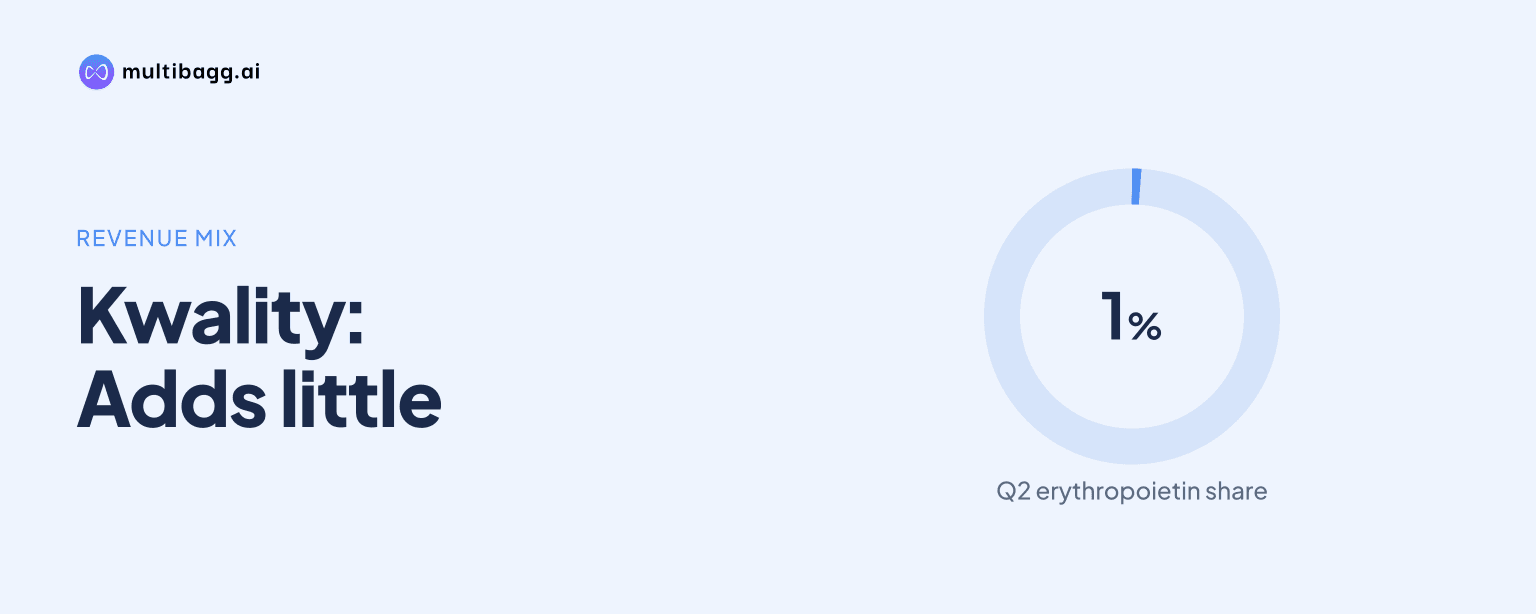
Kwality Pharma is pursuing ministry-approved biowaivers to make temporary biosimilar supplies before full product registration, with management targeting Rs 30 crore to Rs 40 crore of erythropoietin revenue in FY28. Kwality said erythropoietin already accounted for 1% of total revenue in Q2 and had secured a biowaiver in Egypt.
Know Kwality Pharmaceuticals inside out
Results, valuation, peers and who's buying, in one view.
How is Kwality using biowaivers for biosimilar sales?
Kwality is using biowaivers to seek temporary supply permits while clinical studies continue, rather than treating them as substitutes for product registration. Management said it had filed erythropoietin biowaiver applications wherever the route was available and had obtained one in Egypt, where it expected additional revenue in Q3.
The distinction is that a biowaiver may permit immediate supplies, but full product registration remains subject to clinical studies. Kwality said erythropoietin had generated 1% of its total revenue in Q2, showing that the route had begun producing sales, although each additional supply approval remains dependent on the relevant ministry.
Management's FY28 revenue objective of Rs 30 crore to Rs 40 crore for erythropoietin depends on expanding these temporary supplies before clinical work is completed. It said revenue could rise materially after clinical completion, but the outcome would depend on the speed of registrations, making the target conditional on country-level regulatory decisions.
What evidence does Kwality need for a biowaiver?
Kwality said its biowaiver applications use preclinical, analytical and manufacturing-characterisation data rather than completed human clinical studies. Management described preclinical work in at least two species, specifically mice and rabbits, plus qualification testing on an artificial cell line as required elements of the process.
The ministry compares the evidence with the reference product and applicable biowaiver guidelines before deciding whether to issue a supply permit. Kwality said it had completed guideline-related characterisation of the cell line, drug substance and drug product, and had performed many of these activities internally rather than through outsourcing.
Kwality plans to have all equipment and technical personnel required for such studies within the company by the following year. Management linked that plan to its confidence in the pembrolizumab application, but said the authority must still assess whether the characterisation and validation data match the relevant requirements before permitting supplies.
Which biosimilars could Kwality supply before registration?
Kwality identified erythropoietin as its first biowaiver-led biosimilar and named pembrolizumab, nivolumab and pertuzumab as the next two or three products. Management said the oncology products are being developed for different indications and will follow the same application approach, although it gave no clinical-completion date for nivolumab or pertuzumab.
Pembrolizumab has the nearest disclosed development timetable. Kwality said its biowaiver application was expected to be ready by January, with preclinical work expected to finish by February, and that some quantities could be commercialised in March or April 2027 if an authority accepts the application.
Management said it would try to supply pembrolizumab in a rest-of-world, or ROW, market or a regulated market if the application were accepted. It also cited product shortages as a reason it believed acceptance was possible, but this was management's view and not evidence of approval, registration or committed sales.
The pipeline has a phased timetable. Management said the remaining two or three biosimilar molecules would not be able to commercialise in FY29 but could commercialise in FY30, whereas erythropoietin had already contributed 1% of Q2 revenue. That difference leaves erythropoietin as the only biosimilar with reported sales evidence in the call.
Got a follow-up? Ask IRIS
What revenue does Kwality expect from erythropoietin?
Kwality's management targets Rs 30 crore to Rs 40 crore of erythropoietin revenue in FY28 through commercialisation in countries allowing biowaiver-based supplies. It said the figure could be higher after clinical studies are complete, but maintained that registration timing would determine the scale of eventual sales.
For FY29, management cited a potential Rs 80 crore to Rs 100 crore from erythropoietin, describing this as about 10% of its expected sales volume from the molecule. Compared with the FY28 target range, that implies a projected increase of Rs 40 crore to Rs 70 crore, but both ranges are management expectations rather than reported revenue.
The FY29 outlook differs from the oncology biosimilar plan. Management said the other two or three molecules were not expected to commercialise until FY30, while erythropoietin had an Egypt biowaiver and a 1% Q2 revenue contribution. The company did not provide a revenue target for pembrolizumab, nivolumab or pertuzumab.
What limits Kwality's biowaiver strategy?
Kwality cannot use a biowaiver to obtain permanent product registration without clinical studies. Management stated that a biowaiver can enable temporary or immediate supplies, while registration remains subject to clinical evidence, even where an erythropoietin permit such as Egypt's has already been obtained.
Country-by-country acceptance is a central constraint. Management said a biowaiver application may be made in many countries under newer U.S. guidelines, but the relevant ministry decides whether to accept it. Kwality said it had filed wherever the route was applicable, but did not disclose how many erythropoietin applications were approved beyond Egypt.
The near-term pembrolizumab schedule also illustrates the dependency on external decisions. Management expected application readiness by January and preclinical completion by February, followed by possible supplies in March or April 2027 only if acceptance occurred. No equivalent timing or revenue range was provided for nivolumab and pertuzumab.
Conclusion
Kwality's biowaiver plan offers a regulatory-contingent route to biosimilar sales before full clinical-study-based registration. The clearest disclosed evidence is erythropoietin's 1% contribution to Q2 revenue, the Egypt biowaiver and management's Rs 30 crore to Rs 40 crore FY28 target. The model may support temporary supplies, but it does not replace the clinical studies required for registration.
The next disclosed milestones are pembrolizumab application readiness by January, preclinical completion by February and possible limited supply in March or April 2027 if accepted. For erythropoietin, the key issue is whether further country permits support management's projected Rs 80 crore to Rs 100 crore FY29 revenue range while clinical studies and registrations progress.