










Libas Consumer Products Limited Q2 Profit Rises as Revenue Falls 34%
Key highlights
- Libas Consumer Products reported Q2 FY27 consolidated revenue of ₹13.76 crore, down 34.0% year on year.
- Q2 FY27 consolidated net profit was ₹0.98 crore, compared with ₹0.05 crore in Q1 FY27.
- Operating margin expanded to 11.26% from 5.51% in Q1 FY27 and 7.00% in Q2 FY26.
- The qualified review stated that obsolete inventory and period profit were overstated by ₹7.01 crore.
powered by IRIS
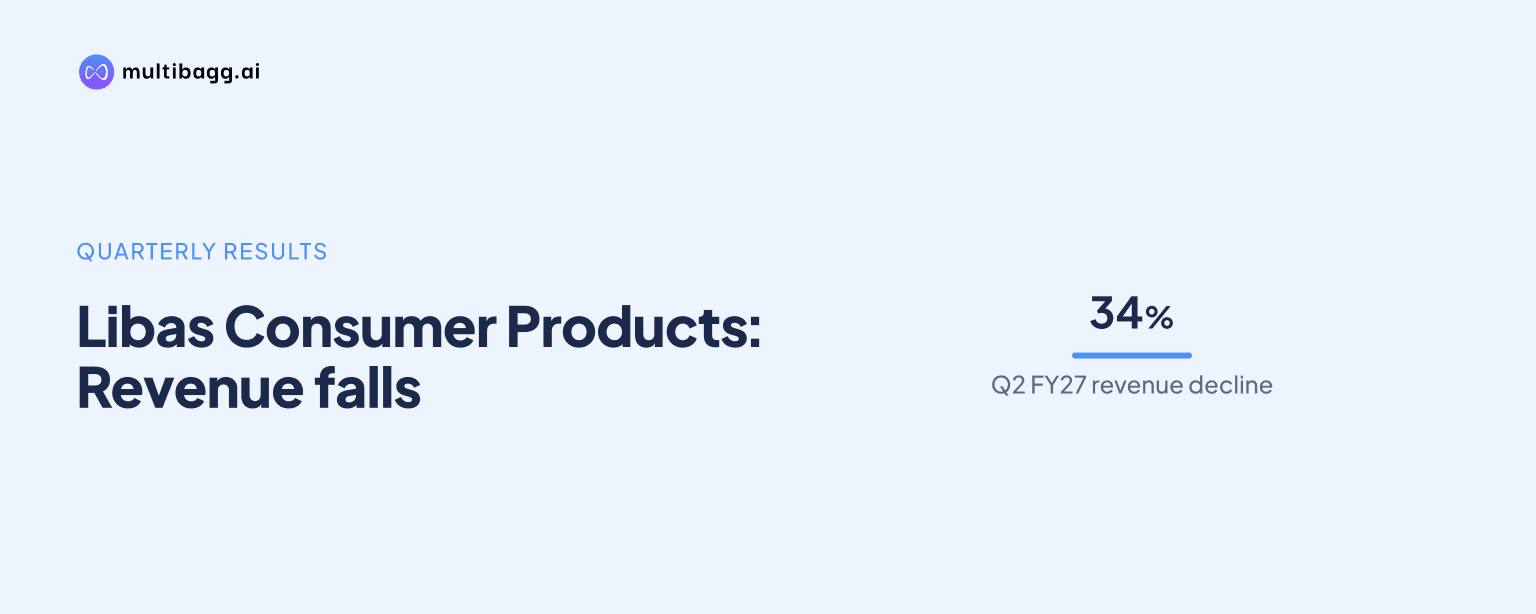
Libas Consumer Products Limited reported Q2 FY27 consolidated net profit of ₹0.98 crore, up from ₹0.05 crore in Q1 FY27, even as revenue from operations fell 34.0% year on year to ₹13.76 crore. The result shows a sharp sequential improvement in profitability, but continuing pressure on sales volumes and a qualified auditor review remain material considerations.
Know Libas Consumer Products inside out
Results, valuation, peers and who's buying, in one view.
What did Libas Consumer Products report for Q2 FY27?
Libas Consumer Products reported consolidated revenue from operations of ₹13.76 crore for the quarter ended September 2026, compared with ₹20.85 crore in the year-ago period. Revenue was 8.35% higher than ₹12.70 crore reported in the preceding June 2026 quarter, indicating a sequential recovery from a lower base.
Consolidated net profit stood at ₹0.98 crore, compared with ₹0.05 crore in Q1 FY27 and ₹1.09 crore in Q2 FY26. The profit increase from the June quarter was 1,860%, although the year-on-year comparison showed a decline of about 9.7%. Basic and diluted earnings per share were ₹0.57, against ₹0.18 in Q1 FY27 and ₹0.87 a year earlier.
Profit before tax rose to ₹1.16 crore from ₹0.36 crore in the preceding quarter and ₹1.10 crore in Q2 FY26. The company reported finance costs of ₹0.37 crore, higher than ₹0.33 crore in the year-ago quarter. Tax expense was ₹0.17 crore, compared with a low effective tax rate in the prior-year period, which contributed to the decline in reported net profit despite higher pre-tax profit.
How did operating margins improve despite lower sales?
Libas Consumer Products' operating margin, excluding other income, increased to 11.26% in Q2 FY27 from 5.51% in Q1 FY27 and 7.00% in Q2 FY26. Operating profit rose 6.5% year on year to about ₹1.55 crore, despite the decline in revenue.
The margin expansion was supported by lower material and purchase costs relative to revenue. Materials and purchases fell 44.9% year on year to ₹9.42 crore, a sharper reduction than the fall in revenue. Employee expenses declined 12.2% to ₹0.52 crore.
Other expenses, however, increased 34.3% year on year to ₹2.26 crore and were also higher than ₹1.68 crore in the June quarter. This means the improvement in operating profitability was driven primarily by the cost of materials rather than a broad-based reduction across all expense categories.
Which business segments shaped the quarterly result?
The rock salt segment was the principal contributor to segment profitability in Q2 FY27. It generated revenue of ₹5.28 crore, representing 38.3% of consolidated revenue, and reported a segment result of ₹2.71 crore. Its segment result margin was 51.4%.
Rock salt revenue declined 35.1% year on year, but the segment result increased sharply from ₹0.61 crore in Q2 FY26. This improvement helped offset the weaker performance of the garments business during the quarter.
The garments segment generated revenue of ₹8.44 crore, or 61.3% of total revenue, but reported a segment loss of ₹1.10 crore. The loss compares with a segment profit of ₹0.82 crore in the year-ago quarter, underlining that the core garments operation remained under pressure even as consolidated margins improved.
The revenue mix is therefore important for assessing the result. While garments remained the larger revenue contributor, the rock salt segment supplied the reported segment profit that supported consolidated operating performance.
Got a follow-up? Ask IRIS
What does the auditor's qualified review mean for investors?
The consolidated reviewer issued a qualified conclusion on the Q2 FY27 results. The reviewer stated that obsolete inventory was overstated by ₹7.01 crore and that the period's profit was overstated by the same amount because of this issue.
The reviewer also flagged the non-recognition of gratuity liability and the non-filing of tax deducted at source returns for the first and second quarters. These observations relate to accounting and compliance matters disclosed alongside the results and are separate from the operating trends reported in the quarterly statement.
Consolidated inventories were ₹31.73 crore at September 2026, compared with ₹30.42 crore at March 2026. The inventory observation is significant relative to the company's reported quarterly revenue and profit, making the qualification a key disclosure for readers assessing the financial statements.
How does the first-half performance compare with last year?
Libas Consumer Products reported consolidated H1 FY27 revenue of ₹26.46 crore, down 32% year on year. Consolidated net profit for the half year was ₹1.03 crore, following a profit recovery in the September quarter after the weak June-quarter result.
The standalone business reported Q2 FY27 revenue of ₹10.06 crore, down 28.0% year on year, with net profit of ₹0.51 crore. Standalone EBITDA was ₹1.08 crore, up 25.6% from the year-ago quarter, while EBITDA margin improved to 10.7% from 6.2%.
The company had reported a net loss of ₹1.58 crore in H1 FY26. The H1 FY27 profit therefore marks an improvement from that loss, but the decline in consolidated revenue and the qualified review remain important context for evaluating the half-year numbers.
Conclusion
Libas Consumer Products delivered a substantial sequential recovery in Q2 FY27 profit and operating margin, with net profit rising to ₹0.98 crore and operating margin reaching 11.26%. Yet consolidated revenue remained 34.0% below the year-ago quarter, while the garments segment recorded a loss and the rock salt segment provided most of the segment-level profit.
The next results will show whether the sequential revenue increase from ₹12.70 crore to ₹13.76 crore can continue and whether the garments business improves. Investors will also need to monitor the company's response to the qualified review, particularly the stated ₹7.01 crore obsolete-inventory overstatement, gratuity provision and TDS filing observations.