










Lloyds Enterprises Limited gains LMEL exposure to 55 Mtpa
Key highlights
- LEL holds a 4.13% stake in LMEL.
- LMEL’s ROM ore-handling environmental clearance increased from 10 Mtpa to 55 Mtpa.
- LMEL operates an 85-km slurry pipeline at 10 Mtpa and plans a 195-km, 16-Mtpa line.
- LMEL targets commissioning of a 1.2-Mtpa steel plant by March 2027.
powered by IRIS
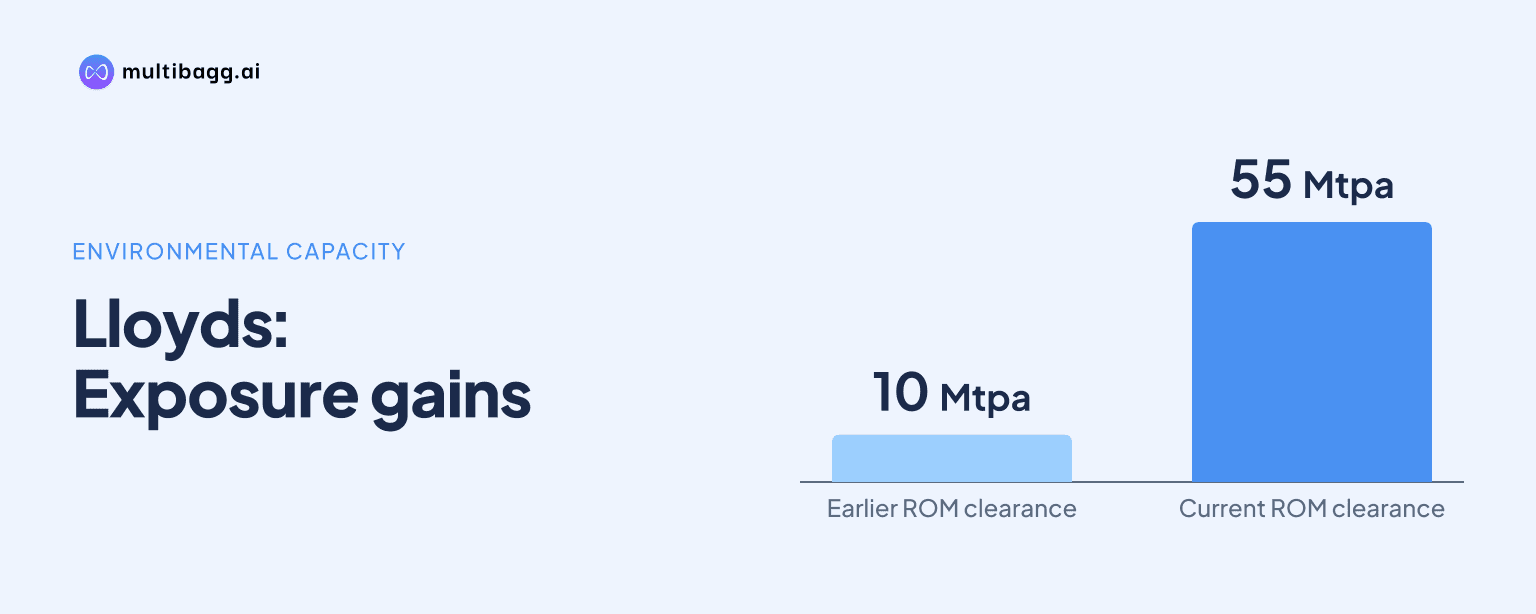
Lloyds Enterprises Limited holds a 4.13% stake in Lloyds Metals & Energy Ltd, giving it exposure to a mine-to-metal platform whose run-of-mine ore-handling environmental clearance increased from 10 Mtpa to 55 Mtpa. The disclosed expansion includes pellet, direct reduced iron and steel projects, supported by operating and planned slurry-pipeline infrastructure.
Know Lloyds Enterprises inside out
Results, valuation, peers and who's buying, in one view.
What does LEL’s 4.13% LMEL stake provide?
LEL’s 4.13% stake provides exposure to LMEL’s mine-to-metal operating chain rather than only to a standalone metals asset. The presentation identifies LMEL as a group company and describes its model as combining a large, long-life iron-ore resource with logistics, beneficiation, pelletisation and direct reduced iron production.
LEL says LMEL’s operating design includes captive beneficiation, pelletisation and direct reduced iron, or DRI, facilities alongside slurry-pipeline logistics. LEL characterises this integration as reducing delivered costs, but the presentation does not disclose a cost-per-tonne figure. It also cites optionality from warrant conversions without providing the number of warrants, conversion terms or timing.
The LMEL investment is distinct from LEL’s other group exposure disclosed in the presentation. LEL reports an approximately 31% economic stake in the Swarnagiri gold project through a 50% interest in Prakar Estate and Promoters LLP, whereas the LMEL holding is a direct 4.13% stake. LMEL is linked to iron ore, pellets, DRI and planned steel output.
How is LMEL increasing ore and processing capacity?
LMEL’s run-of-mine, or ROM, ore-handling environmental clearance has increased from 10 Mtpa to 55 Mtpa, a 45-Mtpa increase in approved handling capacity. This is the largest single capacity change disclosed for LMEL and expands the approved ore-handling base for its downstream mine-to-metal build-out.
The presentation states that LMEL has 8 Mt of pellet capacity following the commissioning of Plant 2 in May 2026, with expansion planned to 12 Mt. It also lists 0.70 Mt of DRI capacity. These facilities describe a chain in which iron ore can move through beneficiation and pelletisation before feeding DRI production.
A third 4-Mt pellet plant is identified as the next capacity wave. LEL also lists a beneficiation programme with 30 Mt of throughput, although the presentation provides no commissioning date, capital cost, output yield or revenue contribution. The disclosed figures set out the intended production architecture rather than its financial outcome.
Got a follow-up? Ask IRIS
What logistics infrastructure supports LMEL’s mine-to-metal plan?
LMEL has an 85-km slurry pipeline operating at 10 Mtpa, according to LEL’s presentation. The pipeline forms part of the integrated logistics system described by LEL, moving ore slurry instead of relying solely on conventional freight and handling routes.
The planned next line is a 195-km, 16-Mtpa slurry pipeline from Hedri to Ghugus, including a Chandrapur stockyard. LEL says the project is intended to reduce freight and handling costs further. The planned line is 110 km longer and has 6 Mtpa more stated capacity than the existing 85-km, 10-Mtpa pipeline, although no construction schedule or investment amount is disclosed.
LMEL’s mining integration includes an arrangement with Thriveni under a mining development and operations, or MDO, model, which LEL says improves mining productivity. In Odisha, LMEL’s strategic interests in MRPLL and BRPL add pellet and slurry assets; BRPL has 540 thousand tonnes per annum of pellet capacity and began MDO work at Tata Steel’s Joda West mines on 1 June 2026.
LEL also discloses a memorandum of understanding with Tata Steel to explore mining, logistics and steel collaboration. The stated areas include MDO services and build-operate-transfer slurry-pipeline models. This is an exploration agreement, not a disclosed operating contract, and the presentation gives no commercial terms, project commitments or timetable for any resulting partnership.
When could LMEL’s steel expansion become operational?
LMEL’s 1.2-Mtpa steel plant is targeted for commissioning by March 2027, according to LEL. The target is listed among the presentation’s near-term catalysts, alongside the FY27 ramp-up of pellets, DRI and the slurry corridor, and remains a management plan rather than a completed capacity addition.
The disclosed sequence begins with expanded ore handling, moves through beneficiation and pellet capacity, and then adds DRI and steelmaking. At the time of the presentation, pellet capacity stood at 8 Mt after Plant 2’s May 2026 commissioning, while the 1.2-Mtpa steel plant was still targeted for March 2027. This separates commissioned pellet infrastructure from the planned downstream steel asset.
LEL identifies scaled-up steel plans at Konsari as part of the next capacity wave. However, the presentation does not provide a final capacity number, investment amount, commissioning date or regulatory milestone for those broader Konsari plans. The March 2027 target therefore applies specifically to the disclosed 1.2-Mtpa steel plant.
The presentation compares LMEL’s market performance with two benchmarks over the period ending September 2026. LMEL returned 53.9%, compared with 26.8% for the Nifty Metal index and minus 8.1% for the Nifty 50 index. This comparison records share-price performance for the shown period and does not establish the outcome of future capacity projects or their effect on LEL’s investment value.
Conclusion
LEL’s 4.13% stake links it to LMEL’s disclosed mine-to-metal expansion, led by the increase in ROM ore-handling clearance from 10 Mtpa to 55 Mtpa. Existing infrastructure includes an 85-km slurry pipeline operating at 10 Mtpa, 8 Mt of pellet capacity and 0.70 Mt of DRI capacity, while further pellet, logistics, beneficiation and steel projects extend the production chain.
The next disclosed milestone is management’s March 2027 commissioning target for the 1.2-Mtpa steel plant. Execution remains to be demonstrated on the planned 195-km, 16-Mtpa Hedri-to-Ghugus slurry line, the third 4-Mt pellet plant, the 30-Mt beneficiation programme and any commercial projects that may arise from the Tata Steel memorandum of understanding.