










Lupin targets 1.2-1.3x India market growth with semaglutide
Key highlights
- Lupin reported Rs 2,383.6 crore of India business sales in Q2 FY27, up 14.7% year on year.
- Lupin said its India business is positioned to grow at 1.2-1.3 times the presentation’s IPM growth measure.
- Chronic therapies were about 66% of Lupin’s India sales in H1 FY27, with a target of about 70% by FY31.
- Lupin launched 12 India products in H1 FY27 and plans more than 20 launches for FY27.
powered by IRIS
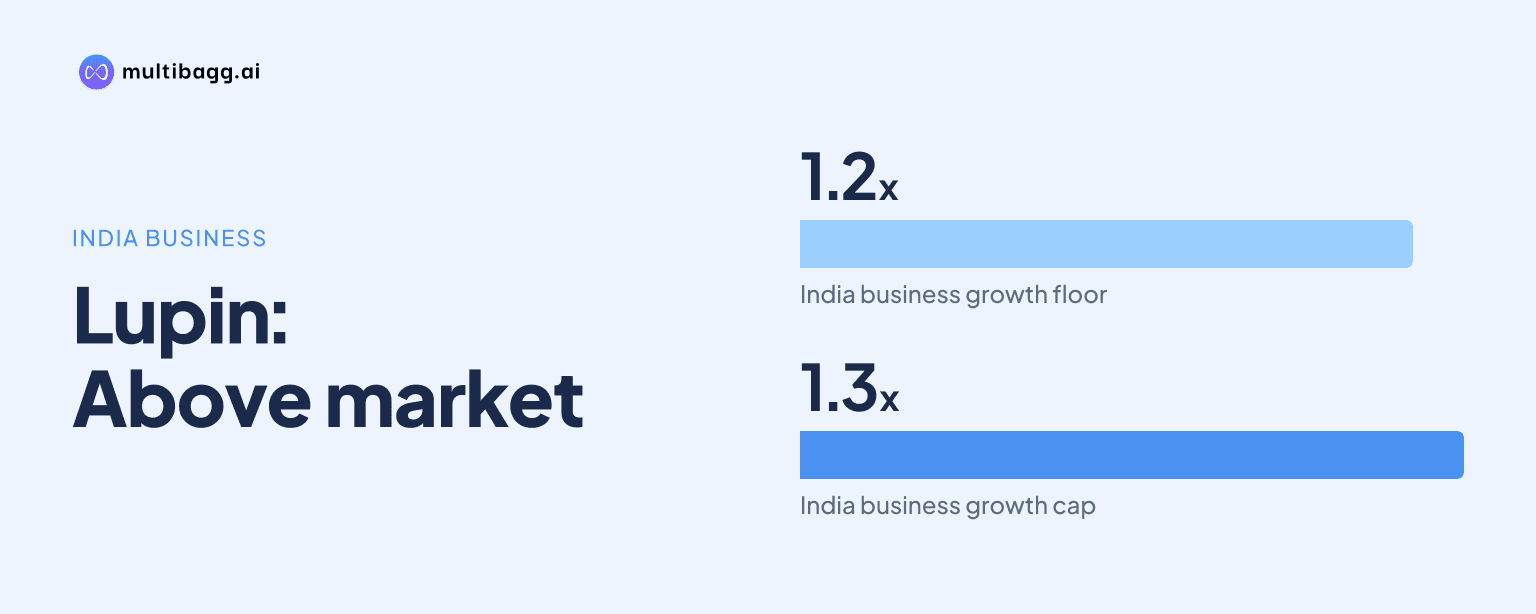
Lupin said in Q2 FY27 that its India business is positioned to grow at 1.2-1.3 times the presentation’s IPM growth measure, after reporting Rs 2,383.6 crore of India sales, up 14.7% year on year. The plan includes a dedicated semaglutide division and a target for chronic therapies to reach about 70% of sales by FY31.
Know Lupin inside out
Results, valuation, peers and who's buying, in one view.
How quickly is Lupin’s India business growing?
Lupin’s India business grew 14.7% year on year to Rs 2,383.6 crore in Q2 FY27, while sales were nearly unchanged from Rs 2,379.6 crore in Q1 FY27. The business includes prescription medicines, over-the-counter products, diagnostics and other sales. India represented 31% of Lupin’s Rs 7,785.5 crore consolidated sales in Q2 FY27.
India sales increased by Rs 475.4 crore between Q4 FY26 and Q2 FY27, compared with a Rs 4 crore sequential increase from Q1 FY27 to Q2 FY27. In H1 FY27, Lupin’s India prescription business grew 14.4%, compared with approximately 14.3% growth in the presentation’s IPM measure. The presentation separately cited IPM growth of 13.8% in Q2 FY27.
Which therapies are driving Lupin’s India growth?
Lupin’s chronic portfolio is the principal stated growth driver, with chronic therapies growing 19.5% in H1 FY27 versus 17.2% for the IPM measure cited in the presentation. Chronic therapies accounted for about 66% of India sales in H1 FY27, compared with about 65% in FY26. Lupin ranked second in respiratory and third in both cardiac and diabetes care, based on IQVIA moving annual total data for September 2026.
Anti-diabetes, dermatology and cardio each grew faster than their respective markets in H1 FY27, according to Lupin’s management information system data. Anti-diabetes grew 28.6%, versus 18.8% growth for the IPM measure, while anti-diabetes and dermatology grew at 1.5 times market growth and cardio at 1.1 times. India volume growth was 6.1% in H1 FY27.
Lupin launched 12 products in H1 FY27 and plans to launch more than 20 during FY27. The launches included four respiratory products, three gastrointestinal products, and one each in neuro, cardio, gynaecology, anti-infectives and orthopaedics. Lupisert ranked third among new central nervous system launches on the presentation’s cited 12-month IQVIA new-introductions measure.
How will Lupin use a semaglutide-focused division?
Lupin plans a dedicated semaglutide division covering diabetology, endocrinology, gastroenterology and gynaecology as part of its India growth plan. The presentation does not disclose a product launch date, revenue target or sales forecast for this division. It does identify the division alongside plans to build emerging therapies.
The division supports Lupin’s stated aim to increase chronic therapies to about 70% of India sales by FY31, from about 66% in H1 FY27. Lupin also said it intends to in-license new products through partnerships, including GLP1-s, and has an in-house pipeline of innovative assets and biosimilars. The presentation does not specify which pipeline assets would sit within the semaglutide division.
Got a follow-up? Ask IRIS
How is Lupin expanding its India reach?
Lupin plans to expand its reach through partnerships in e-commerce, organised retail and institutional business, expansion of its extra-urban Uday division, and a planned strategic expansion in the hospital channel. These initiatives sit alongside an India formulations field force of about 11,400, including about 8,800 medical representatives. Lupin also identified alliances, acquisitions and other inorganic activity involving mid-sized companies, brands and portfolios as potential growth routes.
A portfolio covering gastrointestinal, cough-and-cold and other therapies grew about 57% year on year and recorded its highest quarterly sales in six quarters. Another business vertical grew 32% year on year and served more than 7 lakh patients during the quarter. Lupin’s digital cardiac offering onboarded about 15,000 patients during the quarter, alongside neuro-rehabilitation services and patient-support programmes.
What does Lupin’s growth target require in FY27?
Lupin’s 1.2-1.3 times IPM growth target requires it to sustain chronic-therapy outperformance while adding products, partnerships and channels. The H1 FY27 comparison for the prescription business was narrow, at 14.4% growth for Lupin versus about 14.3% for the IPM measure. Anti-diabetes showed a wider reported difference, with 28.6% growth for Lupin against 18.8% for the IPM measure.
Product execution is one disclosed element of the FY27 plan because Lupin had completed 12 launches in H1 FY27 and targets more than 20 for the full year. In-licensed products represented about 6% of India prescription sales in H1 FY27, unchanged from FY26. Any alliances, acquisitions or portfolio transactions would therefore add to an external-product base that was reported as stable through H1.
Conclusion
Lupin’s India plan combines Q2 FY27 sales of Rs 2,383.6 crore, up 14.7% year on year, with faster H1 growth in chronic therapies than the cited IPM measure. The company is using its respiratory, cardiac and diabetes-care positions, planned product launches, a semaglutide-focused division and wider channels to support its stated 1.2-1.3 times market-growth objective.
The next disclosed milestones are Lupin’s plan for more than 20 India product launches in FY27 and its longer-term aim for chronic therapies to reach about 70% of sales by FY31. Management’s plans also include e-commerce, retail and hospital-channel expansion, plus alliances or acquisitions involving mid-sized companies, brands and portfolios; the presentation does not provide timing, financial terms or identified transaction targets.