










Maharashtra Seamless assigns plants by pipe specialisation
Key highlights
- Maharashtra Seamless plans Nagothane as a 0.5-inch to 20-inch oil-and-gas-focused division with premium connections.
- Mangaon is planned for 0.5-inch to 6-inch smaller pipes, cold-drawn products and drill pipes.
- Telangana is planned to focus on cylinder pipes up to 14 inches and has a finishing line under implementation.
- Maharashtra Seamless said it was hopeful of stock-exchange approval by January or February 2027.
powered by IRIS
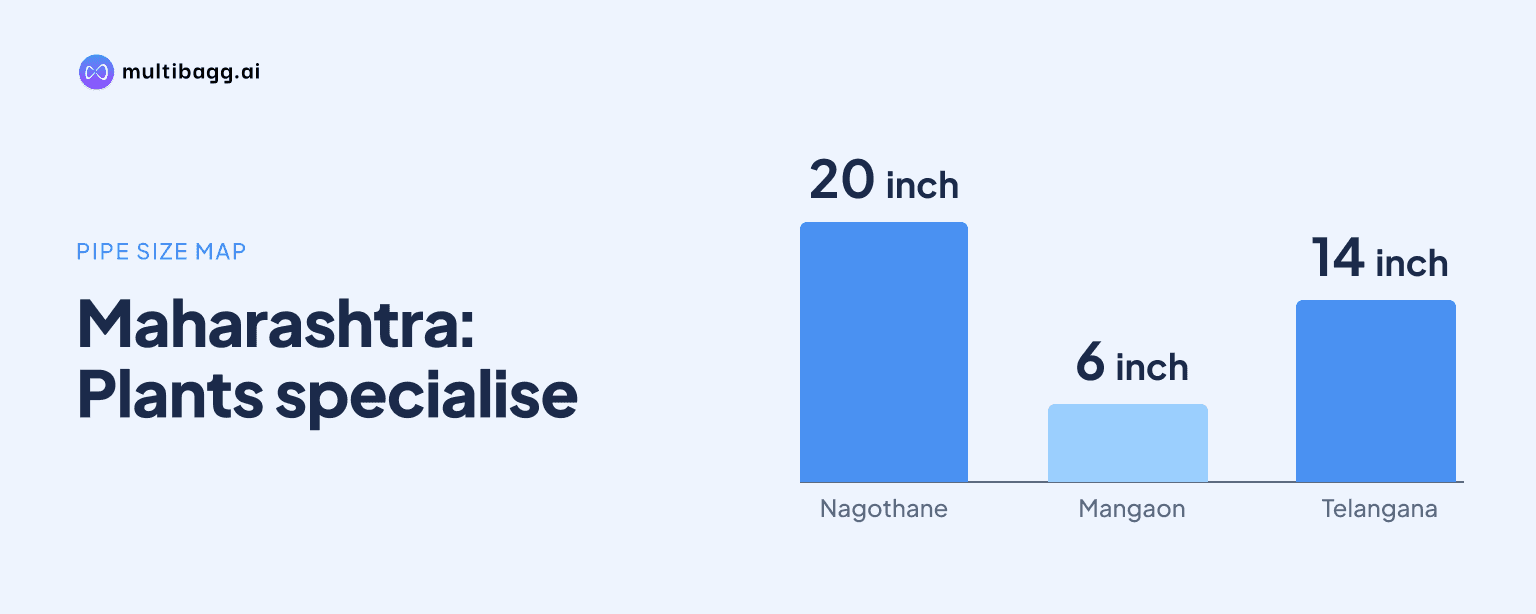
Maharashtra Seamless plans to organise three seamless-pipe companies by plant capability and product focus, with Nagothane covering a 0.5-inch to 20-inch range for oil and gas, Mangaon concentrating on cold-drawn and drill pipes, and Telangana focused on cylinder pipes up to 14 inches. Management expects stock-exchange approval by January or February 2027.
Know Maharashtra Seamless inside out
Results, valuation, peers and who's buying, in one view.
How will Maharashtra Seamless divide its pipe plants?
Maharashtra Seamless plans to allocate its Nagothane, Mangaon and Telangana mills according to their respective size ranges and product mixes. Nagothane, which management said will remain in Maharashtra Seamless, has the broadest stated range, from 0.5 inch to 20 inch. Mangaon has a 0.5-inch to 6-inch range, while Telangana can produce pipes up to 14 inches.
The proposed arrangement is not a division of identical factories, according to management's explanation on the call. The mills have different capabilities, and the company said the separation was devised using three criteria: size range, geographical location and product mix. Management referred to the post-demerger structure as three companies within the seamless-pipe segment.
What products will each Maharashtra Seamless division make?
Maharashtra Seamless said Nagothane will be more focused on the oil-and-gas sector after the proposed demerger. The division will also include premium connections, or premium threaded connections, because that operation is physically located next to Nagothane's manufacturing facilities. Its 0.5-inch to 20-inch range is wider than Mangaon's 0.5-inch to 6-inch range and Telangana's range of up to 14 inches.
Mangaon will concentrate more on smaller-size products, cold-drawn pipes and drill pipes, management said. Its stated 0.5-inch to 6-inch range sets it apart from Nagothane's oil-and-gas emphasis. The company did not quantify revenue, production volume or order-book allocations for Mangaon's planned product lines during the call.
Telangana will be oriented more toward cylinder pipes, a product that management said had initially been developed by that unit itself. The company is also implementing a finishing line at Telangana and expects to activate it during the current financial year. It has not yet begun taking orders for the added capacity because management does not want to procure the associated raw material before full commissioning.
Why is Maharashtra Seamless using a product-based demerger?
Maharashtra Seamless said the split reflects operational differences among the three seamless-pipe mills, rather than a common product profile across each entity. Nagothane's 0.5-inch to 20-inch capability is being aligned with oil and gas and premium connections, while the smaller 0.5-inch to 6-inch Mangaon range is being directed toward cold-drawn and drill-pipe products. Telangana's cylinder-pipe focus is linked to an existing product developed at that site.
Management did not provide a separate explanation of sales synergies, non-compete provisions, potential business overlap or the allocation of the treasury portfolio among the three companies. It said the scheme and its rationale had already been submitted to stock exchanges and were available in the public domain. Management said it would disclose more after the exchanges approve the scheme.
The company said it had shifted its registered office from Maharashtra to Gurgaon because most decision-making occurs at its Gurgaon office. That administrative move was discussed alongside the demerger, but management separately attributed it to the location of decision-making rather than to the 0.5-inch to 20-inch Nagothane product range or another plant allocation.
Got a follow-up? Ask IRIS
When could Maharashtra Seamless complete the demerger process?
Maharashtra Seamless has submitted the schemes to both stock exchanges for approval and said it was hopeful of receiving approval by January or February 2027. This is management's expectation, not a confirmed regulatory timetable. The company said more details would be provided once approval is received.
The disclosed information does not state when the three proposed companies would begin operating separately after exchange approval. Nor did management give the precise legal allocation of assets, liabilities, employees or treasury investments in the call. The current disclosure instead identifies the intended product positioning of Nagothane, Mangaon and Telangana and their reported manufacturing ranges.
Maharashtra Seamless said it would include the plant-specialisation explanation in future investor presentations. That could give investors a recurring view of how oil-and-gas products at Nagothane, cold-drawn and drill pipes at Mangaon, and cylinder pipes at Telangana are positioned while the approval process continues into January or February 2027.
How do current orders and capacity plans affect Maharashtra Seamless?
Maharashtra Seamless is pursuing the proposed reorganisation while executing an order book of more than Rs 2,200 crore. Management said the order book had risen from about Rs 1,700 crore in the previous quarter and described the increase as more than 30% from an already elevated level. It said orders in both seamless and electric resistance welded, or ERW, pipes generally have execution timelines of two to four months.
The company said it was on track for annual guidance of 430,000 tonnes after producing or dispatching around 200,000 tonnes in the first half. Management said it expected to achieve an additional 230,000 tonnes in the remaining period. It did not disclose how much of the Rs 2,200 crore-plus order book, or the 430,000-tonne guidance, related to Nagothane, Mangaon or Telangana.
Management said rapid order execution is a current priority because it seeks to reduce inventories and debtors reported as of September 30. As orders increased from Rs 1,700 crore to Rs 2,200 crore, the company said it bought more than Rs 500 crore of inventory. It attributed the reported margin effect to a notional inventory valuation adjustment under Indian Accounting Standards, or Ind AS, and said the effect would reverse as inventory is converted into pipes and dispatched.
The Telangana finishing line is therefore a capacity project that has not yet entered the order-taking cycle, whereas the existing order book is being executed over two to four months. Management said it did not want to take orders for the increased Telangana capacity before commissioning because booking them would require raw-material purchases. The future cylinder-pipe focus and the current execution programme are consequently at different stages.
Conclusion
Maharashtra Seamless has described a proposed demerger based on differentiated manufacturing roles: Nagothane would combine the widest 0.5-inch to 20-inch range with oil-and-gas products and premium connections, Mangaon would focus on smaller cold-drawn and drill pipes, and Telangana would specialise in cylinder pipes up to 14 inches. The available disclosure defines the intended product allocation, but not the final allocation of financial assets or commercial arrangements between the entities.
The next matters to watch are management's expected activation of the Telangana finishing line during the current financial year and its hoped-for stock-exchange approval by January or February 2027. Execution of the Rs 2,200 crore-plus order book, the planned additional 230,000 tonnes in the remaining period, and the conversion of inventory into dispatched pipes will also shape the operating backdrop while the scheme awaits approval.