










Megaliter Varunaa reaches more than Rs 140 crore contracted value
Key highlights
- Megaliter reached 16 contracted projects and 11 MLD of capacity in H1 FY26-27.
- Contracted long-term value rose to more than Rs 140 crore from Rs 49.43 crore in 2025-26.
- Thirteen of Megaliter's 16 contracted projects were commissioned through Q2 FY26-27.
- Megaliter added Rs 1.17 crore of Q2 EBITDA before consolidation adjustments.
powered by IRIS
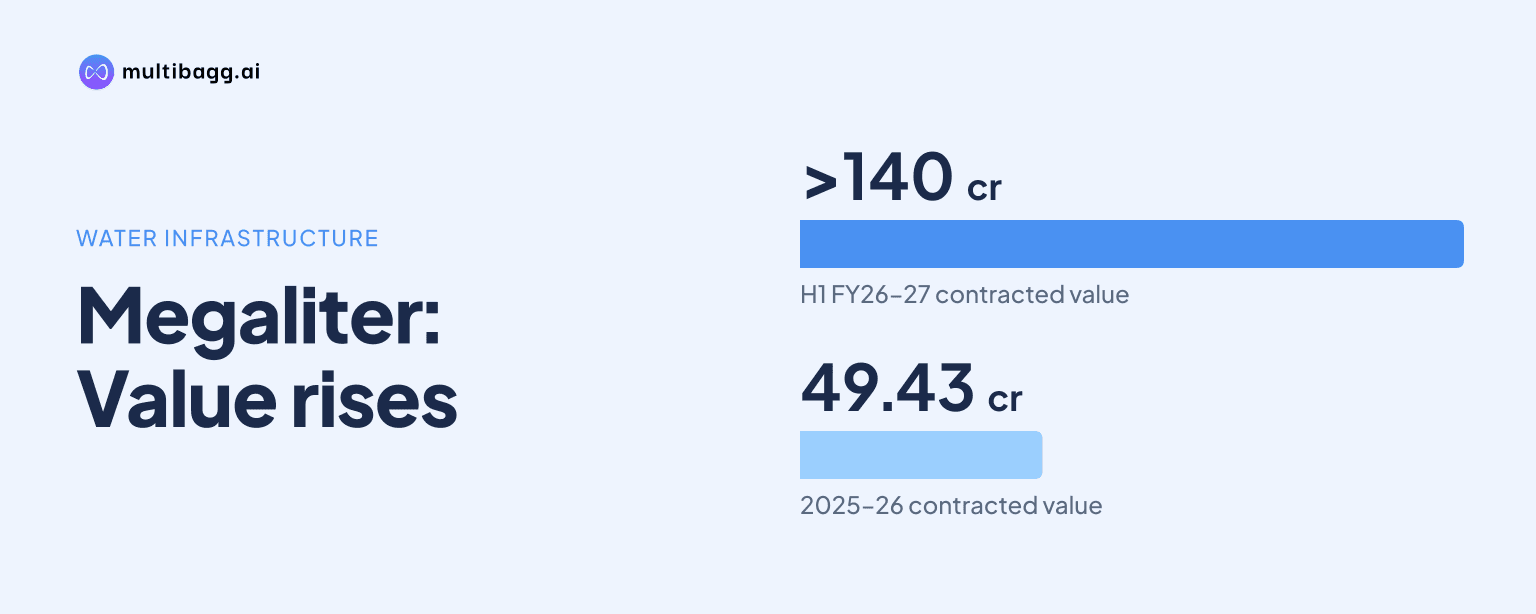
Megaliter Varunaa reached 16 contracted water-treatment projects, 11 million litres per day of capacity and more than Rs 140 crore of contracted long-term value in H1 FY26-27, up from one 0.6 MLD plant and Rs 5.24 crore in 2022-23. Thirteen projects were commissioned by Q2, while management said about 80% of contracted value remained unrecognised.
Know Banka Bioloo inside out
Results, valuation, peers and who's buying, in one view.
How quickly has Megaliter's contracted portfolio grown?
Megaliter's contracted portfolio grew from one plant in 2022-23 to 16 projects in H1 FY26-27, with contracted treatment capacity rising from 0.6 MLD, or million litres per day, to 11 MLD. Contracted long-term value, or LTV, increased from Rs 5.24 crore to more than Rs 140 crore over the same period.
The largest step-up occurred between 2025-26 and H1 FY26-27: the project count increased by 10, contracted capacity more than doubled from 5.3 MLD to 11 MLD, and LTV rose by more than Rs 90.57 crore from Rs 49.43 crore. The presentation describes the portfolio as moving from a single 600 kilolitres per day plant in mid-2022 to a multi-project water-infrastructure base.
What share of Megaliter's projects is already commissioned?
Megaliter had commissioned 13 of its 16 contracted projects through Q2 FY26-27, leaving three projects classified as work in progress. This split means most contracted plants had entered the commissioned base, while the remaining three still required execution before joining operating assets.
The wider FY27 scorecard reported five sewage treatment plants, or STPs, and multiple smaller projects completed during Q2, with four commissioned and four under commissioning across EPC and Megaliter activities. The presentation also reported commercial assets in Hyderabad under execution, assets in Mumbai and Bengaluru under commissioning, and the Kerala quick watering system under commissioning.
Megaliter's model differs from a one-time engineering, procurement and construction, or EPC, project because it owns plants it builds and earns contracted recurring revenue over years. Management said roughly 80% of the more than Rs 140 crore contracted LTV was yet to be recognised, making commissioning and subsequent billing central to translating the contracted base into reported income.
Got a follow-up? Ask IRIS
How is Megaliter affecting consolidated earnings?
Megaliter added Rs 2.13 crore of total income and Rs 1.17 crore of earnings before interest, tax, depreciation and amortisation, or EBITDA, in Q2 FY26-27, according to the consolidated bridge. Its indicated EBITDA margin was about 55%, compared with Banka BioLoo Limited's standalone Q2 EBITDA margin of 9.5%.
The consolidated result was affected by Rs 6.83 crore of intercompany eliminations in Q2, compared with about Rs 1.23 crore a year earlier. As a result, consolidated Q2 total income was Rs 11.87 crore, down 9.2% year on year, despite the bridge showing Rs 16.56 crore of standalone income and Megaliter's Rs 2.13 crore contribution before eliminations.
Consolidated Q2 EBITDA was Rs 2.38 crore at a 20.1% margin, while consolidated profit after tax was Rs 13.1 lakh, compared with a Rs 1.09 crore loss a year earlier. For H1 FY26-27, consolidated EBITDA was Rs 4.31 crore and profit after tax was Rs 9.2 lakh, versus an H1 loss of Rs 1.09 crore in the prior-year period.
The presentation attributes the difference between Megaliter's operating contribution and its reported profit contribution to the cost of building the asset base, including Rs 2.20 crore of finance cost and depreciation. Megaliter recorded a Rs 60,000 loss in Q2 within the bridge, while the company said its H1 capital expenditure of Rs 12.43 crore was financed by Rs 5 crore of outside equity and Rs 4.11 crore of net borrowings.
What must Megaliter execute to recognise contracted value?
Megaliter must commission plants, bill customers and collect payments to convert its more than Rs 140 crore contracted LTV into recurring revenue, according to the FY27 scorecard's sequence of “Commission → Bill → Collect → Sustainable PBT.” The disclosed target is operational rather than revenue guidance, and management separately stated that its 2030 ambition of recycling more than 15 billion litres annually is not FY27 guidance.
The company reported that more than 10 assets were online and monitored in H1 FY26-27, with all 25+ STP sites planned to be online in Q3. Digital performance monitoring is one of five stated execution priorities, alongside commissioning, collections, profit delivery and prudent funding of the platform.
Funding and collections remain measurable execution items because net debt to equity was 0.82 times in H1 FY26-27, up from 0.74 times at 31 March 2026. Receivables were Rs 26 crore versus Rs 25.67 crore in March 2026, while standalone H1 operating cash flow was Rs 1.88 crore, compared with Rs 1.06 crore in the comparison cited in the presentation.
Conclusion
Megaliter has built a materially larger contracted water-treatment portfolio, increasing from one plant and Rs 5.24 crore of LTV in 2022-23 to 16 projects, 11 MLD and more than Rs 140 crore in H1 FY26-27. The platform contributed Rs 1.17 crore of EBITDA in Q2 before consolidation adjustments, while 13 commissioned projects provide the operating base for the recurring model described by management.
The next items to watch are the commissioning of the remaining three contracted projects, the planned Q3 connection of all 25+ STP sites to online monitoring, and the progression of receivables from Rs 26 crore. Management's stated FY27 process requires assets to be commissioned, billed and collected before the largely unrecognised 80% of contracted LTV can become reported recurring earnings and cash flow.