








MV Electrosystems says refurbishment could match new systems

Find your next multibaggerBe a Pro Investor
Research stocks and track your picks on the go. Download the app.
Key highlights
- MV Electrosystems said India has about 15,000 to 16,000 locomotives and adds roughly 1,500 to 1,600 each year.
- Management said locomotives more than 15 years old require complete rehabilitation.
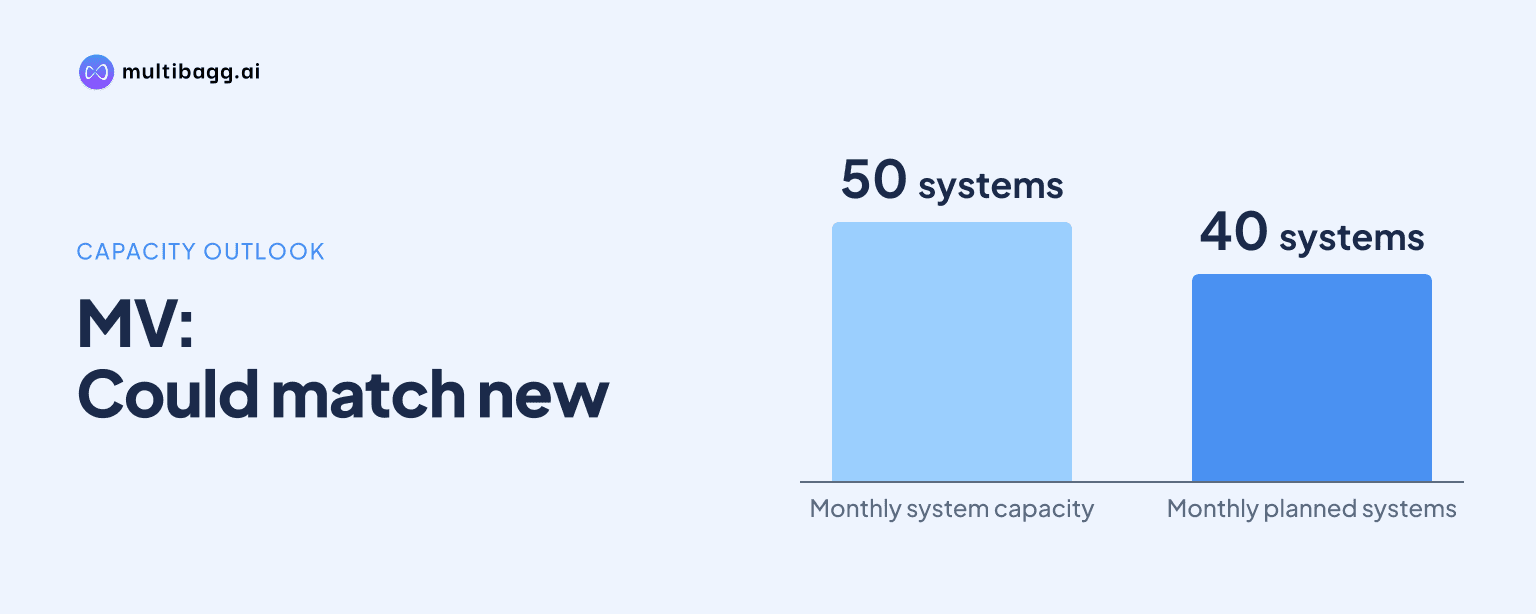
- MV Electrosystems said Unit 2 can make 50 propulsion systems monthly but plans output of up to 40 systems.
- Management said maintenance generally contributes 3% to 5% of a purchase order’s value.
powered by IRIS
MV Electrosystems Limited says locomotive propulsion-system refurbishment could eventually match the new-system market, based on India’s installed fleet of about 15,000 to 16,000 locomotives and annual additions of roughly 1,500 to 1,600 units. Management said locomotives older than 15 years require complete rehabilitation, but disclosed no rehabilitation order book or revenue target.
Know MV Electrosystems inside out
Results, valuation, peers and who's buying, in one view.
Why does MV Electrosystems expect locomotive refurbishment to grow?
MV Electrosystems expects refurbishment demand to grow because locomotives more than 15 years old require complete rehabilitation, according to management. India has about 15,000 to 16,000 locomotives in service and currently adds approximately 1,500 to 1,600 locomotives each year, creating a large installed base that will age over time.
The opportunity depends on the fleet’s age profile rather than only annual new-locomotive procurement. Management said rehabilitation programmes could produce significant volumes, while general maintenance could also create work at times. It did not disclose how many locomotives are currently above the 15-year threshold, when rehabilitation tenders may be issued, or MV Electrosystems’ potential market share.
Management illustrated the opportunity by saying that, once the fleet’s age profile matures, 1,500 to 1,600 locomotives could cross the 15-year mark in one year. It said that could result in a comparable number of propulsion-system rehabilitation orders alongside orders for new systems. This is management’s assessment based on the installed fleet and ageing cycle, rather than a confirmed order pipeline.
How could refurbishment compare with new propulsion systems?
MV Electrosystems says refurbishment could eventually be as large as the new-propulsion market in unit terms. Management put current locomotive production at about 1,500 to 1,600 units a year and said a similar annual volume could eventually require rehabilitation after crossing the 15-year threshold.
The two markets arise through different mechanisms. New propulsion systems are supplied for newly built locomotives, while rehabilitation concerns systems already operating in the field. Management said the rehabilitation timetable is dynamic and not certain, but that the eventual addressable volume could, in simple terms, be viewed as the present new-system market multiplied by two.
Maintenance is separate from complete rehabilitation. Management said maintenance generally represents 3% to 5% of total purchase-order value and is paid year over year as specified in the purchase order. It added that maintenance work is limited to suppliers that supplied or installed the relevant systems in locomotives or trains.
Management cited a tentative locomotive propulsion-system price of about Rs 2 crore. It said that producing 120 systems, calculated as 40 systems a month for three months, would generate about Rs 240 crore of propulsion-system revenue. It did not provide an equivalent rupee estimate for refurbishment, so its comparison between the two markets is primarily based on potential volumes.
Got a follow-up? Ask IRIS
Is manufacturing capacity the main constraint on locomotive supply?
MV Electrosystems says industry capacity, rather than Indian Railways’ appetite to order, is the key current constraint. Management said Indian Railways could order more systems if suppliers were ready to deliver them, using 600 electric multiple unit, or EMU, propulsion systems from the following year as an example of a level the industry could not currently meet.
At its own facilities, MV Electrosystems said Unit 2 can support output of 50 propulsion systems a month. Management said it does not plan to produce more than 40 systems a month, seeking stable production while keeping factory bandwidth for EMU and MEMU propulsion systems.
Management said a future factory may be dedicated to EMU propulsion systems, although it said the internal strategy has not yet been finalised. It also said locomotive propulsion systems could naturally generate Rs 1,000 crore to Rs 1,200 crore of turnover in the next year, followed hopefully by revenue from EMU or MEMU systems in the subsequent year. These are management expectations, not reported revenue or confirmed order values.
MV Electrosystems maintained its FY27 revenue target of Rs 400 crore. Management linked that target to higher scale and resolution of inventory constraints, saying mature deliveries and revenue should begin appearing in January. It said earnings before interest, taxes, depreciation and amortisation, or EBITDA, should turn positive in the fourth quarter, with a possibility of positive EBITDA in the third quarter if conditions permit.
What could affect MV Electrosystems’ execution of this opportunity?
MV Electrosystems says it has secured coverage for insulated-gate bipolar transistors, or IGBTs, and capacitors, two components with long delivery times. Management said it shortlisted two to three suppliers and placed bulk purchase orders in advance using delivery schedules and orders received. It described imported and domestically procured raw materials as almost equal in proportion.
The company said earlier irregularity in propulsion-system production followed major ordering that began late in the second quarter after its listing. Electronic components sourced mainly from international suppliers had delivery periods of up to six months in some cases. Management said the issue was mostly resolved, with only two to four sets of components still presenting a constraint.
Commodity-price movements are addressed through Indian Railways’ pricing mechanism, according to management. It said the formula, drawn from an association called IEEE, reflects changes in copper, steel and aluminium prices in propulsion-system billing. A purchase order carries an indicative price, while the actual billing price is adjusted for raw-material movements.
Working-capital timing is also relevant as output rises from up to 40 systems a month. Management said Indian Railways has historically paid in line with purchase-order terms, with payment received tentatively within 15 days after supplied equipment reaches the customer. It did not disclose current receivables or provide a contractual payment guarantee.
Conclusion
MV Electrosystems’ case for a refurbishment market rests on the difference between annual new-locomotive additions of about 1,500 to 1,600 units and the much larger 15,000 to 16,000-unit installed fleet. If a comparable number of locomotives reaches the 15-year rehabilitation point each year, rehabilitation could add a second propulsion-system demand stream alongside new builds. Management has not disclosed order visibility, market share or revenue guidance specifically for rehabilitation.
The next disclosed milestones are stabilisation of the remaining two to four component-set constraints, the management expectation of mature deliveries from January, and progress towards output of up to 40 propulsion systems a month at Unit 2. Management’s FY27 Rs 400 crore revenue target, possible fourth-quarter positive EBITDA and an eventual decision on a factory for EMU systems remain key items to watch.

