










Narayana Health Insurance Q2 loss as combined ratio hits 282%
Key highlights
- Narayana Health Insurance reported a Rs 15.1 crore loss after tax in Q2 FY27, compared with a Rs 4.2 crore loss a year earlier.
- NHIC's combined operating ratio rose to 282% in Q2 FY27 from 169% in Q2 FY26.
- Net incurred claims increased to Rs 21.1 crore from Rs 2.5 crore, while total operating expenses rose to Rs 9.3 crore from Rs 6.5 crore.
- NHIC's solvency ratio improved to 162% from 155%, despite the wider quarterly loss and higher underwriting ratios.
powered by IRIS
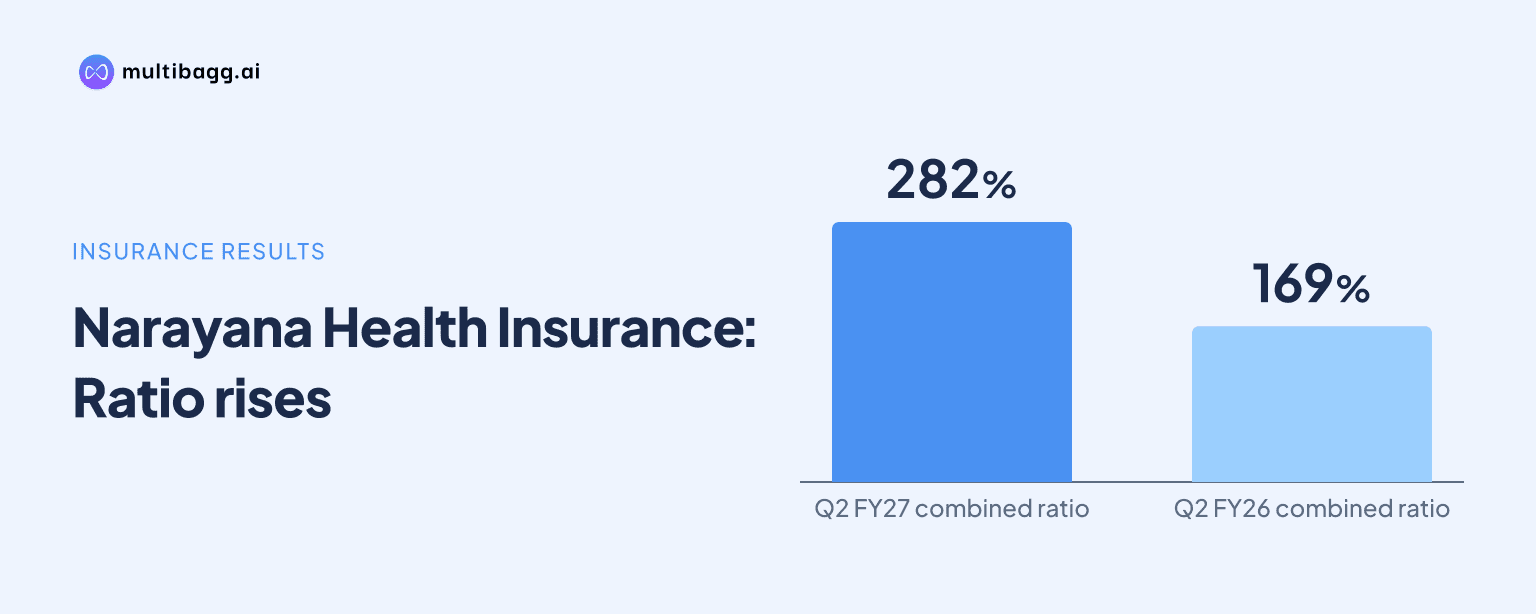
Narayana Health Insurance (NHIC) posted a Rs 15.1 crore loss after tax in Q2 FY27, compared with a Rs 4.2 crore loss a year earlier. Its combined operating ratio rose to 282% from 169%, as net incurred claims reached Rs 21.1 crore and total operating expenses increased to Rs 9.3 crore.
Know Narayana Hrudayalaya inside out
Results, valuation, peers and who's buying, in one view.
Why did NHIC report a Q2 FY27 loss?
NHIC reported a Rs 15.1 crore loss after tax in Q2 FY27, widening from a Rs 4.2 crore loss in Q2 FY26. The financial summary records Rs 13.3 crore of net earned premium, Rs 21.1 crore of net incurred claims and Rs 9.3 crore of total operating expenses in the latest quarter.
The year-on-year loss expanded by Rs 10.9 crore, while investment income increased to Rs 2.2 crore from Rs 1.4 crore. The increase in investment income did not prevent the reported loss, as claims were Rs 7.8 crore above net earned premium in Q2 FY27, based on the rounded figures in the presentation.
How did NHIC's operating ratios change year on year?
NHIC's combined operating ratio increased by 113 percentage points to 282% in Q2 FY27 from 169% in Q2 FY26. The claims ratio, measured against net earned premium, rose to 159% from 72%, while the expense ratio, measured against net written premium, increased to 123% from 97%.
The 87-percentage-point rise in the claims ratio was the larger part of the combined-ratio movement, while the expense ratio contributed a further 26 percentage points. The two reported components total 282% in Q2 FY27 and 169% in Q2 FY26.
What happened to NHIC's claims and reserve movement?
NHIC's net incurred claims rose to Rs 21.1 crore in Q2 FY27 from Rs 2.5 crore in Q2 FY26, an increase of Rs 18.6 crore. Over the same comparison, the claims ratio increased to 159% from 72%, showing that claims rose more sharply than the reported net earned premium base.
NHIC reported a Rs 5.7 crore change in reserve in Q2 FY27, compared with a negative Rs 3.3 crore change in Q2 FY26. This shift coincided with net earned premium rising to Rs 13.3 crore from Rs 3.4 crore, but the presentation does not disclose the claim categories, policy cohorts or reserve methodology behind either movement.
The Q2 FY27 figures show claims of Rs 21.1 crore against Rs 13.3 crore of net earned premium, whereas Q2 FY26 showed Rs 2.5 crore of claims against Rs 3.4 crore of net earned premium. The comparison is reflected in the movement of the claims ratio from below 100% in Q2 FY26 to 159% in Q2 FY27.
Got a follow-up? Ask IRIS
How did NHIC's premium and expenses move in Q2 FY27?
NHIC's gross written premium increased to Rs 7.8 crore in Q2 FY27 from Rs 7 crore in Q2 FY26, while net written premium rose to Rs 7.5 crore from Rs 6.7 crore. Reinsurance premium was negative Rs 30 lakh in both quarters, so the year-on-year movement in net written premium broadly matched the Rs 80 lakh increase in gross written premium.
Total operating expenses increased by Rs 2.8 crore to Rs 9.3 crore in Q2 FY27 from Rs 6.5 crore a year earlier. This expense increase was larger than the Rs 80 lakh increase in net written premium, and the expense ratio consequently rose by 26 percentage points to 123%.
NHIC also reported net commission of Rs 30 lakh in Q2 FY27, compared with Rs 0 in Q2 FY26 after rounding. The presentation notes that figures might not equal reported numbers because of rounding, which is relevant when comparing the Rs 9.3 crore expense total with the Rs 7.5 crore net written premium figure.
What does NHIC's solvency ratio and investment income show?
NHIC reported a solvency ratio of 162% in Q2 FY27, up from 155% in Q2 FY26. The 7-percentage-point increase occurred in the same quarter as the Rs 15.1 crore loss after tax and the 282% combined operating ratio.
Investment income increased by Rs 80 lakh year on year to Rs 2.2 crore in Q2 FY27. The presentation gives this income figure alongside the loss after tax but does not provide an investment portfolio split, a capital requirement threshold or an explanation of how investment returns affected the solvency-ratio change.
The solvency ratio and underwriting ratios moved in different directions between the two reported quarters: solvency increased from 155% to 162%, while the combined operating ratio rose from 169% to 282%. These are separate measures in the financial summary, with the latter comprising the reported claims and expense ratios.
Conclusion
NHIC's Q2 FY27 results show a larger reported loss alongside a sharp deterioration in operating ratios. Net earned premium rose to Rs 13.3 crore, but net incurred claims reached Rs 21.1 crore and operating expenses were Rs 9.3 crore, producing a 282% combined operating ratio compared with 169% in Q2 FY26.
The next disclosures to watch are details behind the Rs 5.7 crore reserve change, the increase in claims from Rs 2.5 crore to Rs 21.1 crore, and the expense movement that lifted the expense ratio to 123%. The presentation does not set out a claims-remediation plan, reserve methodology or a target for the combined operating ratio.