










NGL Fine-Chem Targets Regulated Market Scale in 2028-2030
Key highlights
- NGL Fine-Chem expects regulated-market business to reach critical mass in 2028-2030.
- Europe has nine approvals from 17 CEP and ASMF filings, with all 17 approvals targeted by end-calendar 2027.
- A sponsor customer is expected to complete US filings by December 2026, after which a plant audit could be scheduled in three months to one year.
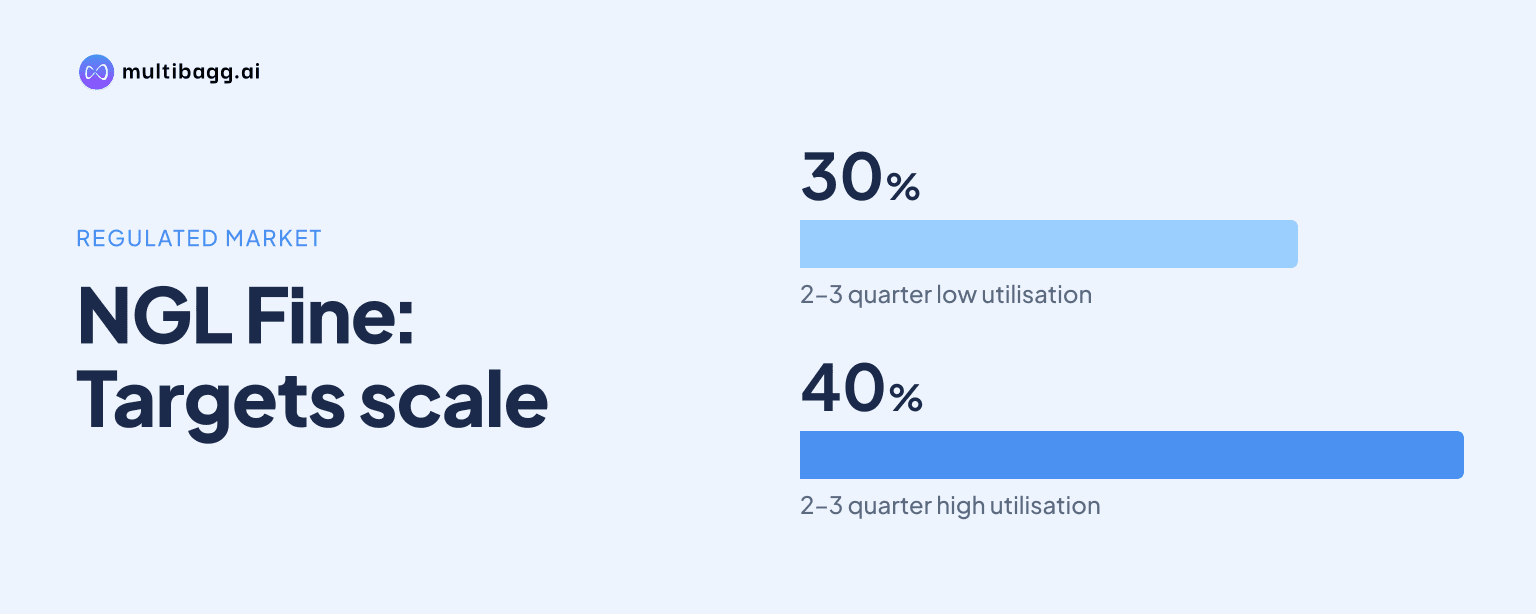
- Tarapur Phase II is targeted to reach 30% to 40% utilisation over the next two to three quarters.
powered by IRIS
NGL Fine-Chem Limited expects regulated-market business to reach critical mass between 2028 and 2030, despite having nine approvals from 17 European filings. Management said European customer onboarding takes two to three years after approval, while US sales require a sponsor customer’s expected December 2026 filing and a regulator-scheduled plant audit.
Know NGL Fine Chem inside out
Results, valuation, peers and who's buying, in one view.
When will NGL Fine-Chem's regulated-market business become meaningful?
NGL Fine-Chem expects its regulated-market business to reach critical mass during 2028 to 2030. Management gave that timetable after stating that its first European Certificate of Suitability, or CEP, approval was granted about two years ago and is only beginning to generate business in the current year. It said customer orders normally take two to three years to develop after an approval.
The timetable is later than management had initially anticipated for Europe. Responding to an analyst who cited a Rs 50 crore to Rs 60 crore European revenue target for the current year, management said customer acquisition had been slower than expected and that it might miss the target, though hopefully not by a large margin. NGL Fine-Chem did not provide a revised European revenue forecast or a FY28 target.
NGL Fine-Chem expects approvals for all 17 European filings by the end of calendar 2027. That regulatory objective does not alter the 2028-2030 commercial timetable because individual approvals, customer qualification and purchasing decisions determine when sales begin. Management said the 17 products in the programme are among its leading products by volume.
Why are European approvals not producing faster sales?
European approvals are not producing faster sales because customer onboarding takes two to three years after an approval is received. NGL Fine-Chem said its first CEP approval was granted about two years ago, but business from that product is only emerging in the current year. Management described customer acquisition as slower than usual, without identifying a problem with a specific European filing.
NGL Fine-Chem also needs to win business from established suppliers in a mature market. Management said most of its products have been off patent for a substantial period and established supply chains are already in place. Its offer can include registrations covering both Europe and the US, an integrated manufacturing chain and, for some customers, a pricing advantage, although management said price is not the sole deciding factor.
NGL Fine-Chem is pursuing portfolio breadth rather than setting a three- to five-year market-share target. Management said customers may be unwilling to change suppliers for only one product because compliance requirements are substantial. The company is targeting smaller firms as well as the top five or 10 companies, while saying it remains too early to quantify potential market share.
Got a follow-up? Ask IRIS
What must happen before NGL Fine-Chem can sell in the US?
NGL Fine-Chem cannot sell into the US until its plant is audited after a sponsor customer completes its filings and the regulator finishes the applicable review. The company has filed Veterinary Master Files, or VMFs, for nine products, and management expects its one sponsor customer to complete its own filings by December 2026. That filing is expected to trigger the requirement for a plant audit.
The audit date remains outside NGL Fine-Chem’s control. Management said the agency determines when to inspect and that the interval could range from three months to one year after the customer filing. NGL Fine-Chem said it has an experienced regulatory team and consultants who audit the facility every two months, with the objective of remaining inspection-ready.
A successful plant approval could affect customer acquisition beyond the sponsor customer, according to management. It said several prospective customers supply both the US and European markets and are waiting for the US audit outcome. Management also said the US Food and Drug Administration, or USFDA, approves the plant rather than each product file, allowing NGL Fine-Chem to continue filing Drug Master Files, or DMFs, without each filing triggering another plant audit.
Can NGL Fine-Chem support regulated sales alongside existing markets?
NGL Fine-Chem says it can serve regulated-market demand and growth in its existing less-regulated markets for at least the next three years. Tarapur Phase II is operational, and management expects the recently commissioned plant to reach 30% to 40% utilisation over the next two to three quarters. Initial utilisation is expected to be driven largely by the company’s existing markets.
A substantial proportion of products being introduced at the new plant are among the 17 products filed or being filed in Europe and planned for US filings. NGL Fine-Chem will continue producing those products at existing facilities while shifting incremental requirements to Tarapur. This arrangement connects the near-term capacity ramp to current market demand while preserving capacity for future regulated-market orders.
Management said it would review the need for further capital expansion within a year if combined requirements exceed available capacity. Its near-term financial focus includes converting capacity and working-capital investment into sales and operating cash flow: inventories rose from Rs 70.28 crore at the end of March to Rs 118.38 crore at the end of September, while total borrowings increased from about Rs 108 crore at FY26-end to about Rs 122 crore.
Conclusion
NGL Fine-Chem has built a regulated-market platform with nine European approvals from 17 filings and nine US VMFs, but management’s 2028-2030 critical-mass expectation reflects the commercial work required after regulatory progress. European growth depends on prolonged customer onboarding, while US sales depend on the sponsor customer filing and a subsequent regulator-scheduled plant inspection.
The next milestones are completion of all 17 European approvals by the end of calendar 2027, the sponsor customer’s expected December 2026 filing and the timing of the US audit. Investors can also watch whether Tarapur Phase II reaches the planned 30% to 40% utilisation over the next two to three quarters while NGL Fine-Chem manages inventory and borrowing during the ramp-up.