










NGL Fine-Chem targets 30%-40% Tarapur use within three quarters
Key highlights
- NGL Fine-Chem commenced Tarapur Phase II production on September 24, 2026.
- NGL Fine-Chem targets approximately 30%-40% Tarapur Phase II utilisation within two to three quarters.
- Q2 FY27 revenue rose 32% year-on-year to Rs 158.71 crore and EBITDA margin reached 17.68%.
- Inventory increased to Rs 118.38 crore at September-end from Rs 70.28 crore in March.
powered by IRIS
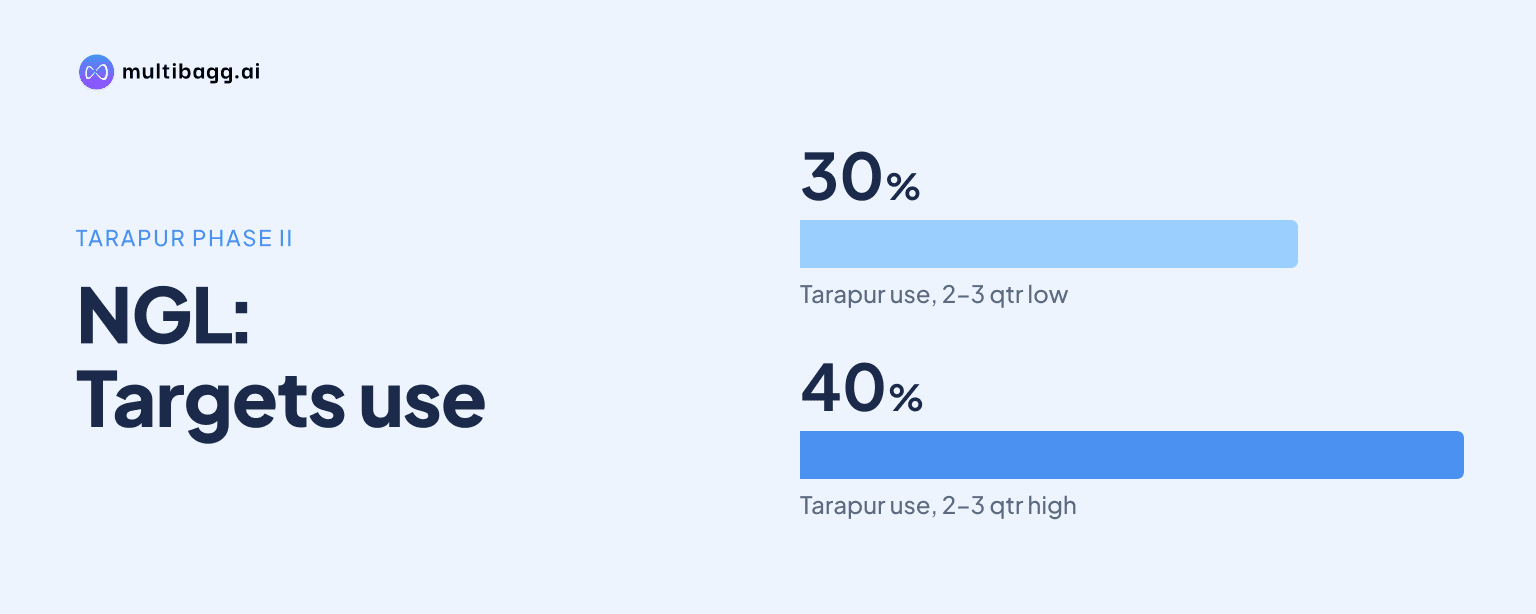
NGL Fine-Chem Limited expects Tarapur Phase II to reach approximately 30%-40% utilisation within two to three quarters of production starting on September 24, 2026. Management said the ramp will initially bring staffing, depreciation and finance costs ahead of the plant’s full revenue contribution, creating near-term margin pressure.
Know NGL Fine Chem inside out
Results, valuation, peers and who's buying, in one view.
When did NGL Fine-Chem commission Tarapur Phase II?
NGL Fine-Chem commenced production at Tarapur Phase II on September 24, 2026, completing commissioning of the greenfield project. Management described the facility as operational and able to manufacture existing products as well as products in NGL Fine-Chem’s development pipeline.
The plant began operations after revenue from operations reached Rs 158.71 crore in Q2 FY27, up 32% year-on-year and 14% from Q1 FY27. Management said the increase was primarily volume-led, supported by demand across the product portfolio and markets, while the expanded Tarapur capacity provides room to meet further demand.
Tarapur Phase II follows Phase I, which was commissioned in the prior year and has supplied part of the current demand increase. Management said Phase I had contributed significantly to NGL Fine-Chem’s ability to ramp sales in FY27, but did not disclose separate revenue, capacity or utilisation figures for either Tarapur phase.
What utilisation does NGL Fine-Chem expect at Tarapur Phase II?
NGL Fine-Chem expects Tarapur Phase II utilisation to reach approximately 30%-40% over the next two to three quarters. Management said actual utilisation will depend on customer demand, product mix and the pace of production ramp-up, and it did not provide a specific FY28 utilisation forecast.
The near-term plan is to use the plant mainly for existing, less regulated markets, where management said volume growth has been good. NGL Fine-Chem intends to move part of the production requirement for these products to the new facility to retain market share and meet customer requirements, although management said this would occupy only part of the plant.
An analyst said 30%-40% utilisation could translate into roughly Rs 150 crore of incremental revenue. Management did not confirm that calculation, reiterating instead that the utilisation range depends on demand, mix and ramp-up speed; it said the business was broadly on track with its earlier outlook as demand had recovered substantially.
Management said Tarapur Phase II should be able to accommodate both existing-market requirements and future regulated-market business for at least the next three years. If demand exceeds that capacity, NGL Fine-Chem said it would review the position within a year and decide whether another capital expansion is needed.
How will the Tarapur Phase II ramp affect NGL Fine-Chem earnings?
NGL Fine-Chem expects margins to face pressure during the first two to three quarters of the ramp because fixed plant costs, depreciation and finance costs will arise before the facility makes its full revenue contribution. Management said higher utilisation should spread fixed operating costs over a larger production base, while the pace of improvement will depend on realisations and operating efficiency.
Q2 FY27 operating profitability improved before the full effect of new-project costs. Earnings before interest, tax, depreciation and amortisation, or EBITDA, rose 64% year-on-year to Rs 28.06 crore, and the EBITDA margin increased to 17.68% from 14.27% a year earlier and 16.73% in Q1 FY27.
Profit after tax was Rs 16.25 crore in Q2 FY27, below Rs 18.40 crore in Q1 FY27, even as EBITDA rose approximately 20% sequentially. Management attributed the difference partly to other income declining to Rs 1.20 crore from Rs 7.43 crore and depreciation increasing to Rs 6.55 crore from Rs 5.25 crore; Q1 also benefited from inventory gains and favourable foreign-exchange movements.
Management said about 50% of staffing for the new plant was in place as of the November 12, 2026 call, with the remaining 50% to be added. It did not anticipate a huge increase in manpower costs from that point, but said operating expenses would rise and margins would need to be assessed as the facility scales.
Got a follow-up? Ask IRIS
What costs and working-capital factors could affect the ramp?
NGL Fine-Chem’s ramp-up will also be shaped by inventory, logistics and operating-cost movements. Inventories increased to Rs 118.38 crore at the end of September from Rs 70.28 crore at the end of March, and management identified working-capital discipline as a priority as production and sales rise.
Management said inventory has increased for the past five quarters after NGL Fine-Chem moved from manufacturing to order to manufacturing to stock around a year earlier. It also built stocks of key raw materials with long delivery lead times because of anticipated disruption linked to unrest in the Gulf region.
Net cash from operating activities was Rs 35.80 crore in H1 FY27, while net investing outflows were Rs 44.05 crore as the expansion was completed. Total borrowings were approximately Rs 122 crore at the end of September, compared with Rs 108 crore at the end of FY26, making conversion of capacity and working capital into sales and operating cash flow a stated management focus.
Fuel and distribution costs have added to the cost considerations. Management said NGL Fine-Chem uses gas as fuel at several plants and that transportation costs had nearly doubled over the preceding six months because of the Gulf War, while expressing hope that logistics costs would normalise as geopolitical conditions improve.
How quickly can regulated markets add to Tarapur Phase II?
NGL Fine-Chem sees regulated markets as a medium-term opportunity rather than an immediate utilisation driver. Animal-health active pharmaceutical ingredients, or APIs, account for approximately 95% of revenue in FY27, and management said the immediate focus is on existing markets alongside regulatory filings and customer requirements.
In Europe, NGL Fine-Chem has started transferring registrations to the new Tarapur facility and targets completion of the overall programme by the end of calendar year 2027. Management cautioned that completing transfers differs from receiving individual product approvals and customer orders, which determine the timing of commercial sales.
For the United States, NGL Fine-Chem has filed veterinary master files for nine products, while its customer is expected to complete related filings by December 2026. Management said the timing of a US Food and Drug Administration inspection and subsequent commercialisation remains subject to the regulator, customer requirements and satisfactory reviews.
Management said European business develops gradually: the Certificate of Suitability for its first filing was granted about two years ago, and some business is emerging in FY27. It expects regulated-market business to reach critical mass between 2028 and 2030, which is why the initial 30%-40% utilisation is expected to rely mainly on existing markets.
Conclusion
Tarapur Phase II gives NGL Fine-Chem additional manufacturing flexibility as Q2 FY27 revenue reached Rs 158.71 crore and EBITDA margin rose to 17.68%. The key near-term test is whether the company can reach 30%-40% utilisation within two to three quarters while absorbing incremental plant costs and improving the conversion of its Rs 118.38 crore inventory into sales and operating cash flow.
Investors should watch existing-market volume growth, margin movement through the transition and working-capital control after Rs 44.05 crore of H1 FY27 investing outflows. Management’s disclosed milestones include customer filings in the US by December 2026, completion of European registration transfers by the end of 2027, and a possible capacity review within a year if demand exceeds the facility’s ability to serve both market categories.