










Oriental Aromatics Limited Q2 Profit Rises 52% on Growth
Key highlights
- Oriental Aromatics reported Q2 FY27 standalone net profit of ₹10.24 crore, up 52% year-on-year.
- Standalone revenue from operations rose 17% to ₹314.03 crore in Q2 FY27.
- Consolidated net profit increased to ₹5.79 crore from ₹0.74 crore in Q2 FY26.
- Standalone inventories increased by ₹63.18 crore in H1 FY27, while operating cash flow was negative ₹2.09 crore.
powered by IRIS
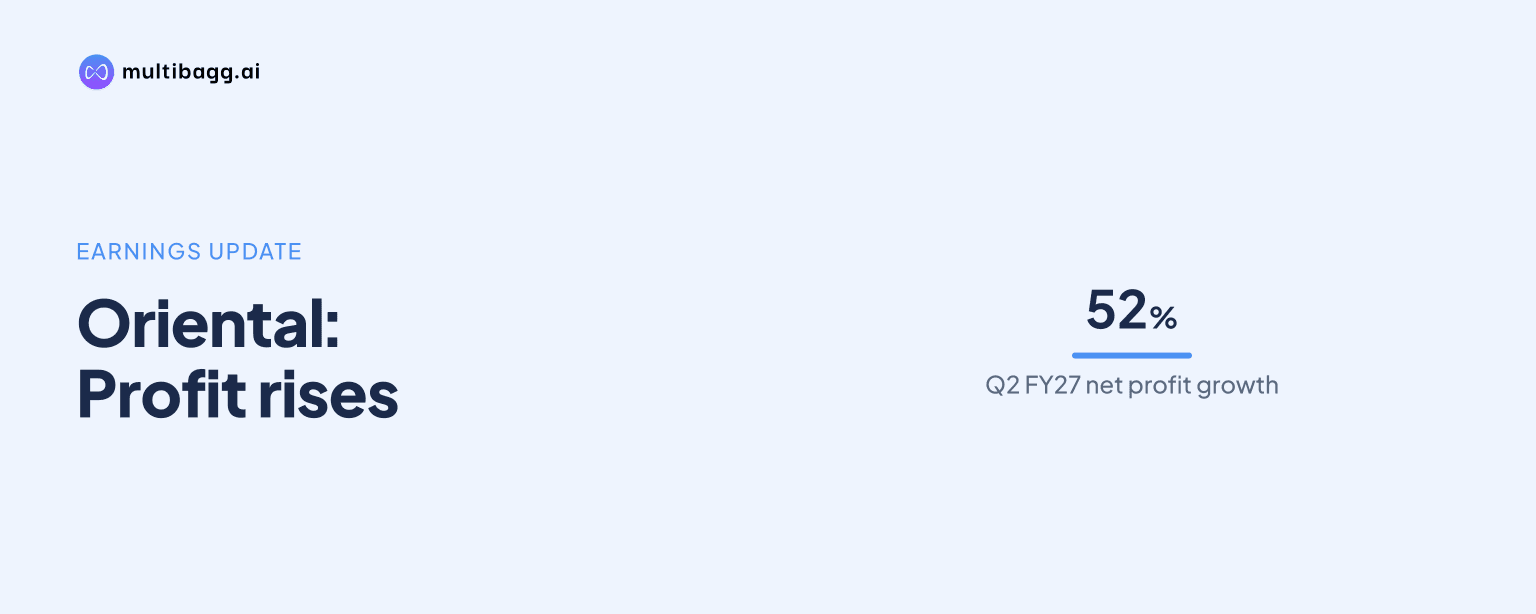
Oriental Aromatics Limited reported a 52% year-on-year increase in standalone net profit to ₹10.24 crore in Q2 FY27, supported by 17% revenue growth to ₹314.03 crore for the quarter ended September 30, 2026. The result highlights stronger standalone operating performance, although group-level profit and operating cash flow remained under pressure.
Know Oriental Aromatics inside out
Results, valuation, peers and who's buying, in one view.
What did Oriental Aromatics report for Q2 FY27?
Oriental Aromatics reported standalone net profit of ₹10.24 crore for the September quarter, compared with ₹6.74 crore in Q2 FY26. Revenue from operations increased to ₹314.03 crore from ₹269.06 crore a year earlier. The company attributed the improvement to robust revenue growth and better operating margins.
The Mumbai-based fine chemicals manufacturer released its unaudited standalone and consolidated financial results after its board meeting on November 4, 2026. The figures cover the second quarter of FY27 and show expansion in both the top line and profit on a standalone basis.
The rise in profit was faster than the increase in revenue. Standalone net profit grew 52% year-on-year, while revenue increased 17%. This indicates that the company retained a greater portion of its revenue as profit during the quarter, consistent with its disclosure of improved operating margins.
How did consolidated results compare with standalone performance?
Oriental Aromatics recorded consolidated revenue of ₹318.20 crore in Q2 FY27, up from ₹271.33 crore in Q2 FY26. Consolidated net profit rose to ₹5.79 crore from ₹0.74 crore in the previous-year quarter, marking a substantial improvement from the low base.
However, consolidated profit was lower than the standalone profit of ₹10.24 crore. The gap means the group-level result, which includes subsidiary operations, was weaker than the parent company's standalone performance during the quarter. The information provided does not include entity-wise profitability, so it does not establish the specific contribution of Oriental Aromatics & Sons Limited or PT Oriental Aromatics.
The difference remains relevant for investors because consolidated figures capture the financial outcome of the broader group. Revenue at the consolidated level exceeded standalone revenue by about ₹4.17 crore, but this additional group revenue did not translate into a higher consolidated profit than the parent company's standalone result.
What do the key Q2 FY27 financial figures show?
Oriental Aromatics delivered year-on-year growth across the principal revenue and profit measures in Q2 FY27, although the scale of the profit improvement differed between standalone and consolidated accounts. The following table converts all reported figures into crore rupees for direct comparison.
The quarterly result follows a year in which Oriental Aromatics reported consolidated revenue from operations of ₹1,030.78 crore in FY26. In Q1 FY27, consolidated revenue stood at ₹259.81 crore. These earlier figures provide context for the company's revenue base, while the September-quarter disclosure provides the latest reported performance.
Got a follow-up? Ask IRIS
Why is working capital important in this result?
Working capital is an important qualification to the reported profit growth because Oriental Aromatics disclosed a sizeable rise in inventories during the first half of FY27. On a standalone basis, inventories increased by ₹63.18 crore during the half-year, which absorbed cash generated from operations.
As a result, standalone net cash flow from operating activities was negative ₹2.09 crore for the half-year. Profit reported under accounting rules and cash generated from business operations can differ, particularly when funds are tied up in inventory, receivables or other working-capital items.
The inventory movement does not by itself explain the reason for the build-up, and the disclosed information does not specify whether it was linked to demand, raw-material procurement, production planning or another factor. But it is a material operational data point because cash conversion will remain relevant alongside revenue growth and margin performance.
What are the next disclosed events for Oriental Aromatics?
Oriental Aromatics has scheduled an institutional investor conference call at 2:00 PM IST on November 5, 2026, to discuss its Q2 and H1 FY27 financial results. The company said senior management, including Chairman Dharmil Bodani and Chief Financial Officer Girish Khandelwal, will participate in the call.
The board also approved the appointment of Ms. Amruda V. Nair as an Additional Director in the capacity of Non-Executive Independent Director, effective November 4, 2026. Separately, the company's trading window had been closed from October 1, 2026 in connection with approval of the quarterly results.
The conference call is the next formal opportunity for investors to seek details on the revenue mix, operating margins, group-level profitability and the working-capital position. The results announcement itself does not provide management guidance or a target for future quarters.
Conclusion
Oriental Aromatics Limited's Q2 FY27 standalone result showed a 52% increase in net profit and 17% revenue growth, pointing to improved operating performance at the parent company. Consolidated revenue also rose, but consolidated profit of ₹5.79 crore remained below standalone profit, while the inventory increase contributed to negative standalone operating cash flow for the half-year.
Investors will watch the November 5, 2026 earnings call for management's explanation of the standalone-consolidated profit difference and the ₹63.18 crore inventory increase. Any comments on cash conversion, subsidiary performance and margin sustainability will add context to the reported quarterly growth.