










PG Electroplast confirms FY28 incentives of Rs 105-110 crore
Key highlights
- PG Electroplast confirmed FY28 incentives of Rs 105-110 crore on October 28, 2026.
- PG Technoplast is expected to book about Rs 60 crore of PLI next year.
- PG Technoplast’s state incentive is expected to be Rs 28-30 crore annually for 10 years.
- NGM has committed close to Rs 500 crore, while its Maharashtra incentive filing could start yielding support after 1.5 to two years.
powered by IRIS
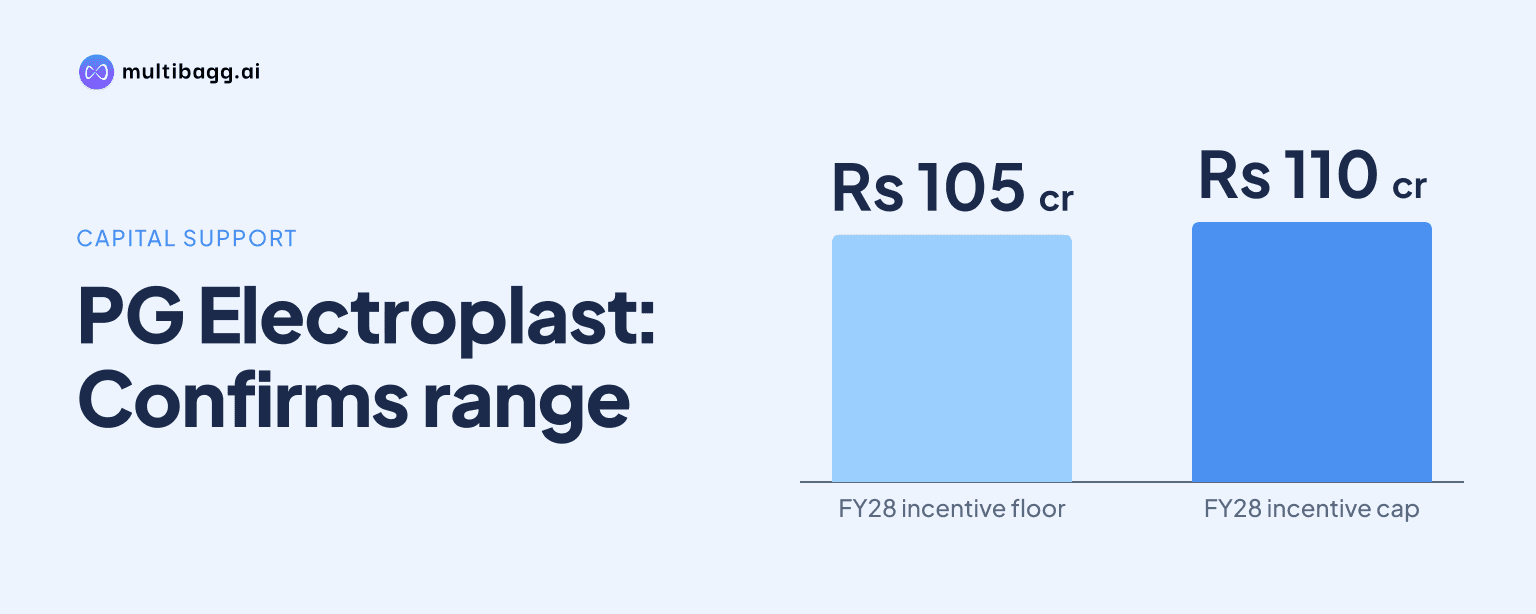
PG Electroplast Limited said on October 28, 2026, that FY28 incentives are expected at Rs 105-110 crore, after management confirmed an analyst’s calculation combining Production Linked Incentive (PLI) amounts at PG Technoplast and NGM with PG Technoplast’s Rs 28-30 crore annual state incentive.
Know PG Electroplast inside out
Results, valuation, peers and who's buying, in one view.
What incentives does PG Electroplast expect in FY28?
PG Electroplast expects FY28 incentives of Rs 105-110 crore, a range management confirmed directly during the October 28, 2026 earnings call. The estimate combines PLI-related booking at PG Technoplast and Next Generation Manufacturing, or NGM, with the annual state incentive available to PG Technoplast.
The disclosed components indicate why FY28 is above the recurring state-support amount alone. Management cited about Rs 60 crore of PLI at PG Technoplast, about Rs 20 crore at NGM and Rs 28-30 crore of annual state incentive at PG Technoplast. Those stated components total Rs 108-110 crore, while management confirmed the broader Rs 105-110 crore range rather than providing a detailed reconciliation to its lower end.
The FY28 amount should not be read as entirely recurring operating support because it includes PLI booking. By contrast, the Rs 28-30 crore PG Technoplast state incentive was described as an annual amount continuing for 10 years, giving it a different duration and recognition profile from the PLI-related amounts.
How is PG Electroplast timing its PLI bookings?
PG Electroplast said PG Technoplast should book about Rs 60 crore of PLI next year because the current year is the last year for sales under the relevant arrangement. Management distinguished between the final qualifying sales year and the following year’s incentive booking, making the timing important for reported income.
The company did not provide a quarterly split of the approximately Rs 60 crore PG Technoplast amount. It did state, however, that the incentive would be received next year, while the sales linked to the programme are in their last year. That leaves the FY28 range as the clearest company-confirmed annual indicator rather than a quarterly forecast.
Management also said its fourth quarter typically reports better margins because of the way PLI is booked. Alongside seasonal sales and operating leverage, this booking pattern led management to say it hoped for slightly better second-half margins than in the first half of the year, without quantifying the specific margin contribution from PLI.
The timing issue also separates incentive recognition from underlying business activity. PG Electroplast said company-wide costs are expected to rise more in line with volume growth of about 20-25%, rather than sales growth, because commodity pass-through is contributing to revenue growth. PLI booking is therefore an additional factor in reported margins and does not describe manufacturing volumes.
What is NGM’s PLI and state-incentive timeline?
NGM’s PLI eligibility runs for three years because it applied in the third round, according to PG Electroplast. Management described Rs 15 crore as an incentive expected in the current year, about Rs 20 crore for the following year and another Rs 20 crore in the final year, which it referred to as 2029.
The NGM PLI sequence is smaller and more spread out than the approximately Rs 60 crore PG Technoplast amount. PG Electroplast described the NGM programme as a three-year arrangement, whereas the PG Technoplast amount was tied to a final sales year and subsequent booking. The Rs 20 crore NGM amount is part of the incentive mix management associated with FY28.
NGM has not yet filed for a Maharashtra government incentive scheme, management said. PG Electroplast has committed close to Rs 500 crore in NGM, and management said the state-incentive process could start after about 1.5 to two years once the company begins filing for it.
No annual rupee value for the possible NGM Maharashtra incentive was disclosed on the call. The company’s confirmed Rs 105-110 crore FY28 estimate should therefore be separated from this prospective support, which depends on filing and the stated 1.5-to-two-year timeframe.
Got a follow-up? Ask IRIS
Which state incentive is recurring for PG Electroplast?
PG Electroplast said PG Technoplast’s state incentive should be about Rs 28-30 crore every year for the next 10 years. This was the only recurring state-support amount quantified by management, and it forms a defined base within the wider FY28 incentive range.
The state incentive at PG Technoplast differs from its approximately Rs 60 crore PLI amount in both duration and timing. Management described the state incentive as continuing annually for 10 years, while it described the PLI amount as being booked next year after the final year of relevant sales.
NGM’s possible Maharashtra benefit has a different status from PG Technoplast’s quantified annual support. The company has committed close to Rs 500 crore to NGM but has yet to file under the Maharashtra scheme, so management did not specify either an annual incentive amount or a 10-year duration for NGM.
This distinction matters when comparing periods. The FY28 estimate of Rs 105-110 crore includes time-specific PLI amounts in addition to Rs 28-30 crore of recurring PG Technoplast state support, whereas any NGM state benefit remains unquantified and is not presented as a confirmed FY28 contributor.
How could incentive booking affect PG Electroplast’s reported margins?
PG Electroplast said the fourth quarter typically has better margins because PLI is booked in that period. Management also said seasonal sales are usually higher in the second half, allowing operating leverage to contribute alongside the PLI booking pattern, although it did not disclose a specific fourth-quarter margin target.
Other factors could move reported profitability independently of incentives. Management said higher commodity prices are increasing inventory investment and interest costs, even as it works to optimise working capital. It expects second-half interest cost not to increase significantly from first-half levels after capital expenditure had been paid off.
The company also explained that commodity pass-through can reduce margin percentages even if per-unit manufacturing economics are unchanged. For air conditioners, management said the bill of material had risen from about Rs 1.40 lakh two years ago to nearly Rs 18,500 currently, while the amount earned for making an air conditioner remained the same.
That explanation means a higher FY28 incentive total cannot on its own indicate the direction of percentage margins. The call identifies PLI booking, seasonal sales, commodity pass-through, volume growth of about 20-25% and working-capital interest costs as separate mechanisms affecting reported financial results.
Conclusion
PG Electroplast’s Rs 105-110 crore FY28 incentive estimate combines a time-specific PLI booking profile with a recurring state-support stream. About Rs 60 crore at PG Technoplast and about Rs 20 crore at NGM were discussed alongside PG Technoplast’s Rs 28-30 crore annual state incentive, while the company also said PLI booking usually supports fourth-quarter margins.
The next disclosed item to watch is NGM’s filing under the Maharashtra incentive scheme, which management said could begin producing support after about 1.5 to two years following a commitment of close to Rs 500 crore. Investors can also monitor fourth-quarter reporting, when management said PLI booking typically affects margins, and whether FY28 recognition aligns with the confirmed Rs 105-110 crore range.