










Pine Labs Limited remains over 32% below its listing price
Key highlights
- Pine Labs traded at ₹157.70 on November 6, 2026, versus its ₹242 listing price.
- Pine Labs listed at a 9.5% premium to its ₹221 IPO issue price on November 14, 2025.
- Nearly ₹17,000 crore worth of Pine Labs shares became eligible for trading after the six-month lock-in expiry.
- DII ownership rose to 29.57% and FII ownership rose to 13.18% in the latest quarter.
powered by IRIS
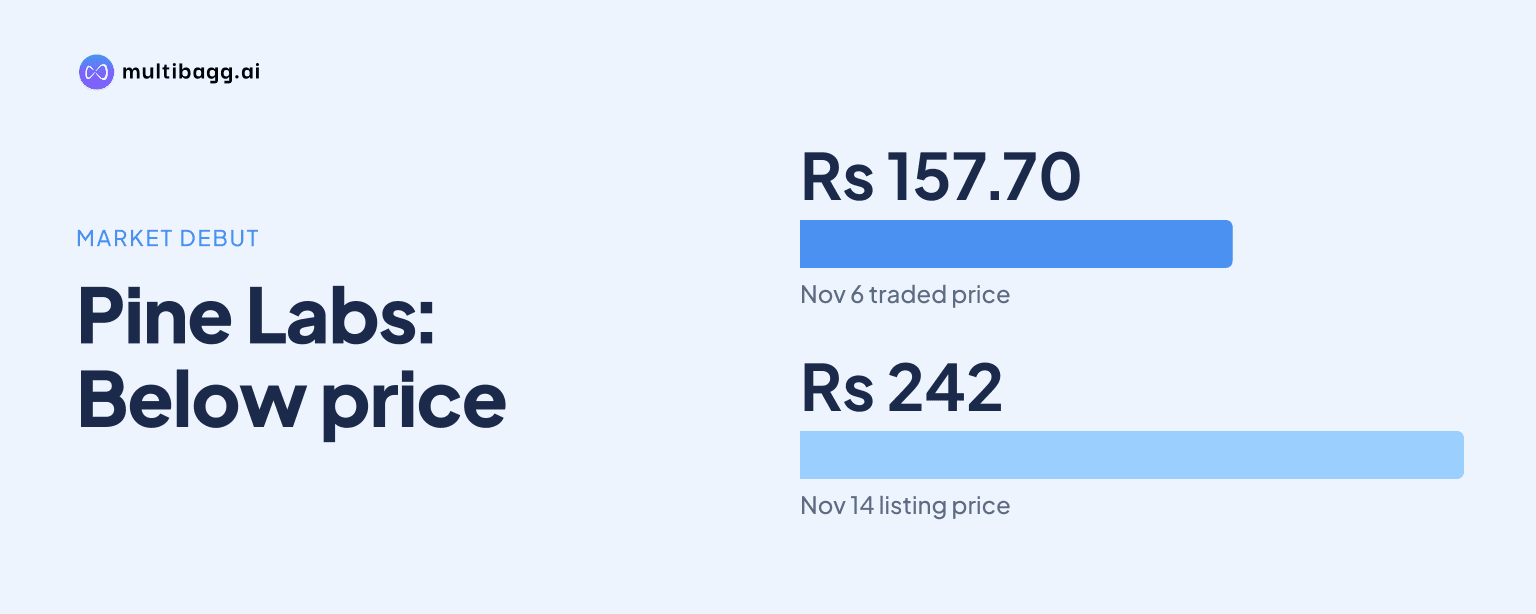
Pine Labs Limited traded at ₹157.70 on November 6, 2026, more than 34% below its ₹242 November 2025 listing price, after a six-month IPO lock-in expiry had earlier triggered heavy selling. The decline also places the stock below its ₹221 final issue price.
Why has Pine Labs fallen below its listing price?
Pine Labs has fallen below its listing price because selling pressure intensified when its six-month IPO lock-in period ended, making nearly ₹17,000 crore worth of shares eligible for trading. The stock fell more than 10% intraday during that episode, with investors focusing on the potential increase in tradable supply.
The selling was visible on May 13, 2026. After closing at ₹188.01 in the previous session, Pine Labs opened at ₹184.94 and fell to an intraday low of ₹167.10. By 1:01 PM, it was near ₹164, down about 12% for the session and nearly 32% below the ₹242 listing price.
The subsequent quoted price of ₹157.70 on November 6 indicates that the shares remained under pressure after that event. A separate stock-report snapshot showed a ₹163.82 share price and a 34.70% decline since the IPO, underlining the difference between the issue price, listing price and prices recorded on different dates.
How did Pine Labs shares trade after the IPO?
Pine Labs listed on the BSE and NSE on November 14, 2025, at ₹242, a 9.5% premium to its ₹221 final issue price. The ₹3,900-crore IPO drew strong qualified institutional buyer demand, with the QIB portion subscribed 3.97 times.
The listing-day premium did not translate into sustained gains. The shares touched a 52-week high of ₹284, but later moved below both the listing price and the issue price. The available price points show the scale of the reversal.
The distinction between the two IPO benchmarks matters for investors. At around ₹162.48, the stock was described as approximately 26.5% below the ₹221 issue price, while a price near ₹164 was roughly 32% below the ₹242 listing level. At ₹157.70, the decline from the listing price is greater still.
Got a follow-up? Ask IRIS
What do ownership changes show about Pine Labs?
Pine Labs' latest quarterly ownership data shows domestic institutional investors increased their stake to 29.57%, while foreign institutional investors raised theirs to 13.18%. Public shareholding declined to 57.24%, and promoter holding was unchanged from the previous quarter.
These changes show that institutional ownership rose even as the stock price weakened. However, the data alone does not establish why individual investors bought or sold, nor does it remove the supply concerns that emerged when lock-in restrictions expired.
Pine Labs provides digital payments and issuing solutions for merchants, consumer brands, enterprises and financial institutions in India and internationally. The company was incorporated in 1998 and has its registered office in Haryana, while its headquarters are identified as Noida in the available company background.
What are the market forecasts and valuation signals for Pine Labs?
Forecasts for Pine Labs have been revised lower in some areas, with the consensus price target cut to ₹194 from ₹206 and the FY27 earnings-per-share estimate reduced to ₹2.16 from ₹2.75. The revenue forecast was described as steady at ₹32.4 billion.
The available forecast data also indicates net income is expected to grow 140% next year, compared with a 22% growth forecast for India's diversified financial industry. These are estimates rather than reported results, and their relevance will depend on whether the company meets the projected earnings and revenue trajectory.
Investors are also tracking use of the IPO proceeds. A Q3 FY26 monitoring report said Pine Labs had utilised ₹610.76 crore out of ₹2,080 crore in IPO proceeds. The pace and purpose of further utilisation remain relevant because the IPO combined a fresh issue with an offer for sale.
Conclusion
Pine Labs' share-price decline reflects a sharp reversal from its November 2025 debut premium, with lock-in expiry supply becoming a major near-term trigger for selling. The shares have remained below the issue price and materially below the listing price despite higher reported institutional holdings in the latest quarter.
The next focus is whether Pine Labs can support the FY27 revenue forecast of ₹32.4 billion and the revised EPS estimate of ₹2.16. Investors will also watch further deployment of the remaining IPO proceeds and any additional changes in consensus price targets or shareholding patterns.