










PPAP FY26 profit depended on ₹49.8 crore exceptional item
Key highlights
- PPAP reported FY26 consolidated profit of ₹43.2 crore, including a ₹49.8 crore exceptional item.
- PPAP’s FY26 pre-exception profit before tax was ₹0.5 crore, down from ₹8.9 crore in FY25.
- PPAP’s FY26 revenue rose to ₹567.1 crore, while EBITDA declined to ₹51.5 crore.
- PPAP’s FY26 operating cash flow was ₹33.4 crore, versus ₹52.2 crore in FY25.
powered by IRIS
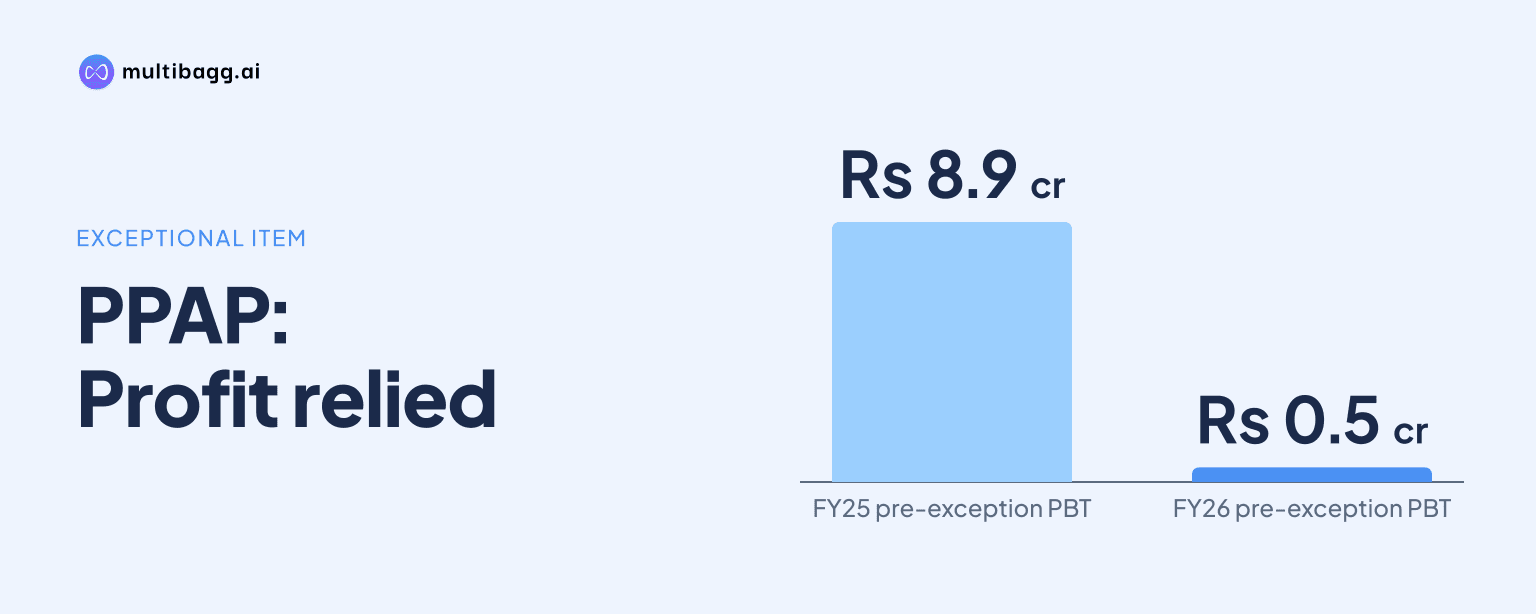
PPAP’s FY26 consolidated profit was ₹43.2 crore, but the result included a ₹49.8 crore exceptional item and pre-exception profit before tax was ₹0.5 crore. The item lifted reported profit before tax to ₹50.3 crore, while profit before tax and exceptional items was ₹8.4 crore below FY25’s ₹8.9 crore.
Know PPAP Automotive inside out
Results, valuation, peers and who's buying, in one view.
What explains PPAP’s FY26 consolidated profit?
PPAP’s reported FY26 consolidated profit was shaped by a ₹49.8 crore exceptional item because profit before tax and exceptional items was ₹0.5 crore. Adding the exceptional item produced reported profit before tax of ₹50.3 crore. After tax expense of ₹7.1 crore, PPAP reported profit for the year of ₹43.2 crore and earnings per share of ₹30.61.
Reported profit before tax increased by ₹41.4 crore from ₹8.9 crore in FY25 to ₹50.3 crore in FY26. However, profit before tax and exceptional items declined by ₹8.4 crore from ₹8.9 crore to ₹0.5 crore over the same period. The consolidated profit and loss statement records no exceptional item for FY25, FY24, FY23 or FY22.
The presentation does not state the nature, recipient or accounting components of the ₹49.8 crore exceptional item in the consolidated profit and loss statement. It therefore quantifies the item’s effect on FY26 profit but does not provide a basis for assessing recurrence. Reported profit after tax margin was 7.6% in FY26, compared with 1.3% in FY25.
How did PPAP’s operating earnings change in FY26?
PPAP’s operating profitability declined in FY26 despite revenue growth, with earnings before interest, tax, depreciation and amortisation (EBITDA) falling to ₹51.5 crore from ₹57.2 crore and EBITDA margin decreasing to 9.1% from 10.3%. Revenue from operations increased by ₹13.1 crore to ₹567.1 crore. Gross profit rose by ₹12.4 crore to ₹249.3 crore, while gross profit margin increased to 44.0% from 42.8%.
Employee expenses increased by ₹13.5 crore to ₹114.0 crore in FY26, and other expenses rose by ₹4.6 crore to ₹83.8 crore. Together, those increases exceeded the ₹12.4 crore increase in gross profit and coincided with a ₹5.7 crore decline in EBITDA. Cost of goods sold was ₹317.8 crore, ₹0.7 crore above FY25’s ₹317.1 crore.
Below EBITDA, depreciation increased by ₹1.1 crore to ₹35.5 crore and finance cost rose by ₹0.9 crore to ₹17.3 crore. Other income was ₹1.6 crore against ₹1.3 crore in FY25, while PPAP’s share of profit from its joint venture declined to ₹0.3 crore from ₹1.3 crore. These movements were reflected in the decline in pre-exception profit before tax to ₹0.5 crore.
PPAP’s FY26 pre-exception profit before tax was positive but below both FY25’s ₹8.9 crore and reported FY26 profit before tax of ₹50.3 crore. Across the five reported years, pre-exception profit before tax was ₹0.1 crore in FY22, followed by losses of ₹5.1 crore in FY23 and ₹8.1 crore in FY24, then profit of ₹8.9 crore in FY25 and ₹0.5 crore in FY26. The record shows varied pre-exception profitability before the FY26 exceptional item.
Got a follow-up? Ask IRIS
What do PPAP’s cash flow and balance sheet show?
PPAP generated net cash from operating activities of ₹33.4 crore in FY26, down from ₹52.2 crore in FY25, while reported profit before tax increased to ₹50.3 crore. Cash generated from operations before direct taxes was ₹43.1 crore, compared with ₹53.9 crore a year earlier. Working-capital changes used ₹8.4 crore in FY26, compared with ₹3.7 crore in FY25.
Investing activities used ₹40.5 crore in FY26, up from ₹35.4 crore in FY25 and above the ₹33.4 crore operating cash inflow. Financing activities provided ₹8.3 crore, against an outflow of ₹17.2 crore in FY25. Cash and cash equivalents ended FY26 at ₹2.6 crore, compared with ₹1.5 crore a year earlier, after a net increase of ₹1.1 crore.
Consolidated total assets rose by ₹173.7 crore to ₹741.3 crore at March 2026. Current assets increased to ₹348.9 crore from ₹176.0 crore, including current investments of ₹92.6 crore, trade receivables of ₹103.8 crore and inventories of ₹96.7 crore. Inventories increased by ₹35.6 crore and receivables rose by ₹31.3 crore during the year.
Current borrowings increased to ₹159.8 crore at March 2026 from ₹104.4 crore, while non-current borrowings declined to ₹40.9 crore from ₹61.7 crore. Combined borrowings were therefore ₹200.7 crore, compared with ₹166.1 crore at March 2025. Total current liabilities rose to ₹340.7 crore from ₹198.4 crore, including trade payables of ₹100.2 crore and other current liabilities of ₹64.2 crore.
Conclusion
PPAP’s FY26 accounts distinguish reported profit from pre-exception performance. Consolidated profit for the year was ₹43.2 crore, but profit before tax and exceptional items was ₹0.5 crore. Revenue rose to ₹567.1 crore and gross margin increased to 44.0%, while EBITDA declined to ₹51.5 crore and EBITDA margin fell by 1.2 percentage points to 9.1%.
The unresolved issue is the nature and potential recurrence of the ₹49.8 crore exceptional item, which the supplied consolidated statement does not specify. The next reported results can also show whether operating cash flow, which declined to ₹33.4 crore in FY26, changes alongside inventories of ₹96.7 crore, receivables of ₹103.8 crore and current borrowings of ₹159.8 crore.