










Premier Explosives targets 20% gross margin amid pressure
Key highlights
- Premier reported Q2 FY27 EBITDA margin of 11.9%, up from 5.7% in Q1 FY27.
- Management said imported flare components reduced margins after a prior-year flares-plant accident halted internal component production.
- Premier said bulk and industrial explosives are supplied at negative margins and expects about Rs 80 crore of bulk-explosives revenue in FY27.
- Premier's order book stood at Rs 164.20 crore in October 2026, with about 96% in defence.
powered by IRIS
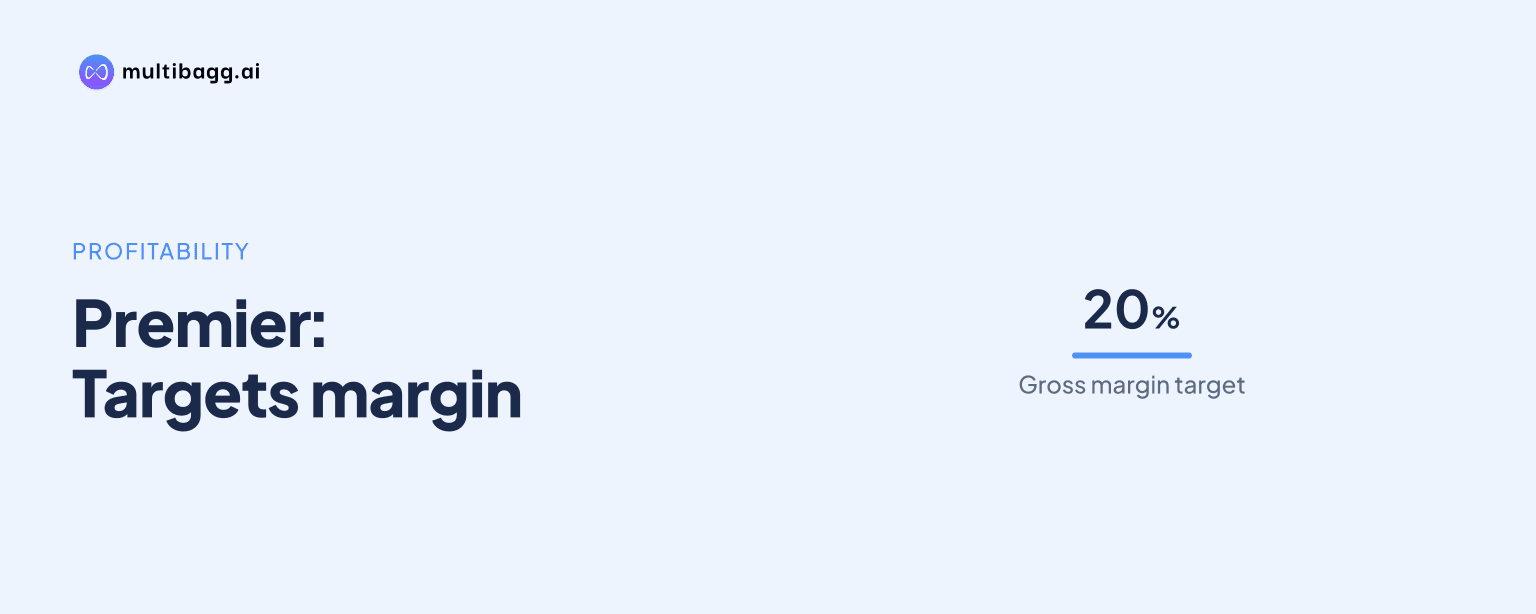
Premier Explosives said it is targeting at least a 20% gross margin after imported flare components, negative-margin industrial explosives and fixed-price service contracts compressed profitability; in Q2 FY27, EBITDA margin rose to 11.9% from 5.7% in Q1 FY27 as revenue increased 42% sequentially to Rs 14.53 crore.
Know Premier Explosives inside out
Results, valuation, peers and who's buying, in one view.
Why did Premier's gross margins decline?
Premier said bulk and industrial explosives were being supplied at negative margins, directly weighing on product-level profitability. Management also identified long-term service contracts, each lasting 10 to 11 years, as a separate constraint because prices were fixed when tenders were accepted while expense growth did not match the contracts’ price-escalation clauses.
The pressure also came from the defence product mix, particularly flares. Premier said an accident at its flares plant in the prior year stopped internal production of flare components, requiring it to use imported components instead. Management said the replacement of internally made components with imports reduced margins, but it did not disclose the cost difference or a gross-margin percentage for Q2 FY27.
Supply disruption compounded the higher component cost. Premier said overseas components had not arrived on time, delaying deliveries of defence products. However, management said supply conditions had improved during the previous two months, with imported components beginning to arrive and supplies made in the preceding month and planned in the current month.
How did Premier's operating profitability change in Q2 FY27?
Premier's operating profitability improved sequentially in Q2 FY27 as revenue and execution recovered, although first-half profitability remained below the prior-year level. Revenue from operations increased 42% quarter on quarter to Rs 14.53 crore in Q2 FY27 from Rs 10.26 crore in Q1 FY27, while EBITDA, or earnings before interest, tax, depreciation and amortisation, rose 193.2% sequentially to Rs 1.72 crore.
The Q2 FY27 EBITDA margin of 11.9% was 3.2 percentage points above 8.7% in Q2 FY26 and 6.2 percentage points above Q1 FY27. Management attributed the improvement to stronger operating leverage and better absorption of operating costs after execution accelerated. Profit after tax was Rs 1.20 crore, down 33% year on year from Rs 1.79 crore but up 295.1% sequentially from Rs 30.30 lakh.
The first-half figures show that the Q2 recovery did not fully offset the disruption in Q1 FY27. H1 FY27 revenue rose 13.8% year on year to Rs 24.78 crore, but EBITDA fell 15.9% to Rs 2.31 crore and EBITDA margin declined to 9.3% from 12.6% in H1 FY26. Profit after tax fell 54.8% to Rs 1.50 crore from Rs 3.32 crore, and the profit-after-tax margin was 6.1%.
Got a follow-up? Ask IRIS
What gross-margin level is Premier targeting?
Premier is targeting a gross margin of at least 20%, according to its chief financial officer’s response to an analyst’s question on future quarters and the next financial year. Management did not provide a deadline for that target or present it as formal financial guidance, and it said the result would depend on the products supplied.
During the same exchange, management referred to a 20% to 25% range while discussing product margins and said defence margins would be slightly higher than the overall average. The discussion did not provide a reconciled segment-by-segment margin model, however, and management also referred to 25% as an average overall figure. The clearest disclosed target was therefore gross margin of at least 20%.
A reduction in the use of imported flare components could affect the path to that target, based on management’s explanation of the prior-year plant accident and recent improvement in component receipts. Premier did not state when internal flare-component production would fully replace imports. Margin recovery therefore remains linked to imported-component availability, delivery timing and the mix of defence, explosives and services revenue.
Which businesses and contracts are affecting Premier's margin mix?
Premier's industrial explosives and services operations are affecting margin mix even though defence accounts for most of the order book. The company expects about Rs 80 crore of bulk-explosives revenue in FY27 from its Singareni supply arrangement, which was extended under the existing order. Management said future growth depends on Singareni issuing a new request for proposal, or RFP, and Premier participating in the tender.
Premier's outstanding order book was Rs 164.20 crore as of October 2026, with about 96% from defence and the balance from explosives and services. That mix provides visibility on defence execution, but it does not remove the margin effects from loss-making industrial explosives or service contracts with fixed tender prices and escalation clauses that have not kept pace with costs.
Execution timing may also affect the revenue mix in FY27. Premier said it had applied for an extension on a Rs 75 crore July 2023 countermeasures order and expected to complete it in the current financial year once the extension was received. It also said about Rs 270 crore remained on an October 2025 countermeasures order and expected completion before the FY27 end, subject to the requested extension.
Conclusion
Premier's explanation for margin pressure is specific: industrial explosives carry negative margins, 10- to 11-year service contracts have limited price escalation, and imported flare components replaced interrupted in-house output after the prior-year plant accident. Q2 FY27 EBITDA margin improved to 11.9% as revenue reached Rs 14.53 crore, but the H1 FY27 EBITDA margin of 9.3% remained below 12.6% a year earlier.
The next issues to watch are whether overseas flare components continue arriving on schedule, whether the countermeasures orders are completed by the FY27 end, and whether export licences permit production against export orders. Management said export licences are processed order by order and normally take three to four months after complete buyer documentation is submitted, making approvals relevant to production and revenue timing.