










Prizor targets 60-70% FY27 growth as supply limits sales
Key highlights
- Prizor reported H1 FY27 revenue of Rs 106.5 crore, up 153.5% from Rs 42 crore in H1 FY26.
- Prizor management targets 60-70% FY27 revenue growth, subject to raw-material procurement capacity.
- Prizor's H1 FY27 EBITDA rose 162.4% to Rs 25.1 crore and EBITDA margin reached 23.6%.
- Prizor raised Rs 119.45 crore through a preferential equity issue approved on 27 August 2026.
powered by IRIS
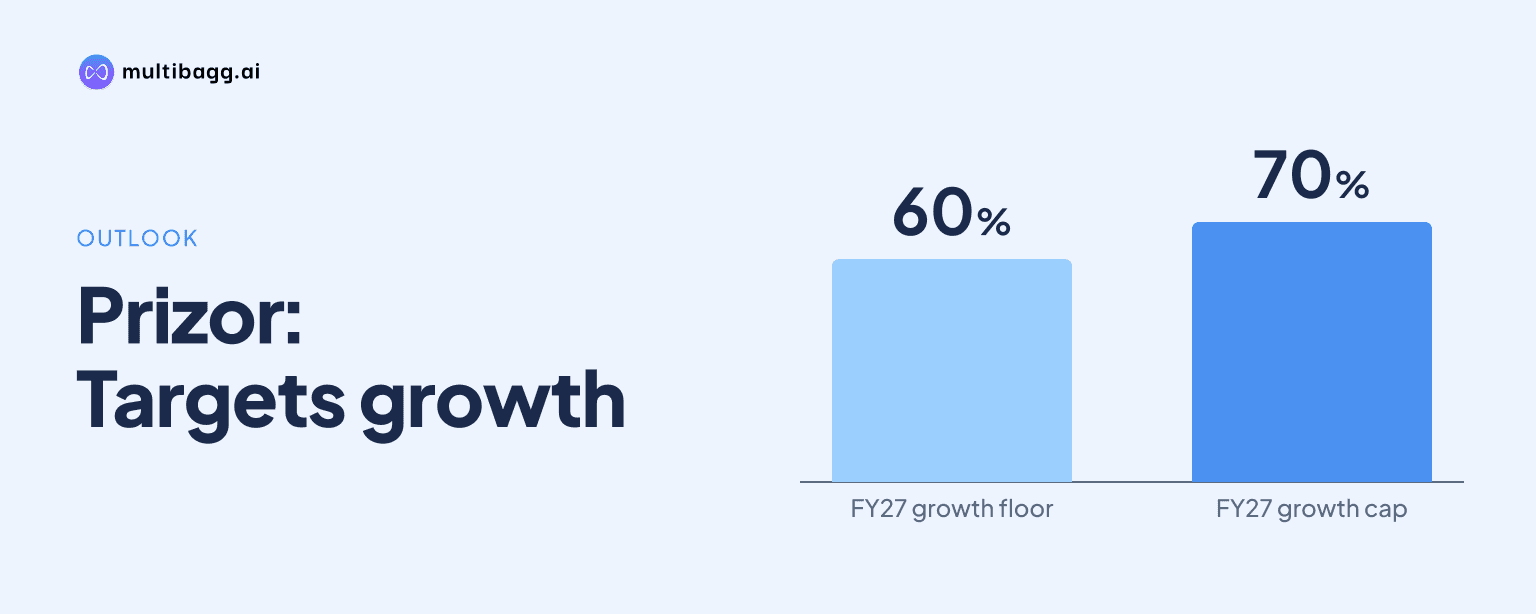
Prizor Viztech Limited targets 60-70% revenue growth in FY27 after H1 FY27 revenue rose 153.5% to Rs 106.5 crore, but management says shortages of flash memory and other raw materials could restrict supply despite demand. Management called the range conservative because procurement plans, rather than demand, set the current limit.
Know Prizor Viztech inside out
Results, valuation, peers and who's buying, in one view.
What growth is Prizor targeting in FY27?
Prizor is targeting 60-70% revenue growth for FY27, with management saying it is confident of achieving at least that range under current procurement plans. Management confirmed the target was for the full financial year after an analyst asked about the interpretation of its H1 FY27 performance, when revenue reached Rs 106.5 crore.
Management said it is currently targeting 60% growth and could achieve 60-70% as its pipeline develops and market infrastructure is built. For FY28 and FY29, management said it expected approximately 60-70% growth over the next few years, while making clear that supply availability remains relevant to delivery of that expectation.
Why could supply limit Prizor's FY27 sales?
Prizor says demand is not the constraint on FY27 growth; the limiting factor is managing the supply of raw materials, including flash memory, through procurement. Management highlighted that Q3 is the start of the peak selling season and Q4 is the highest-sales quarter, whereas Q1 and Q2 are relatively weak.
Management said global shortages of flash memory and other raw materials led it to use a conservative 60-70% growth range. It added that revenue could exceed that range if supply-side constraints ease, but it did not disclose required flash-memory volumes, supplier commitments or the revenue effect of any shortfall.
Prizor separately distinguished its system-on-chip procurement position from the broader component issue. Management said it has two system-on-chip solutions with BIS-ER certification and is discussing products under development with three system-on-chip companies, leading it to say it does not expect procurement problems for that component.
How does H1 FY27 performance frame Prizor's target?
Prizor reported H1 FY27 revenue of Rs 106.5 crore, up 153.5% from Rs 42 crore in H1 FY26, and said the six-month result equalled 72% of its entire FY26 revenue. The first-half growth rate was therefore above management's 60-70% full-year target, which reflects its stated caution on raw-material procurement.
Earnings before interest, tax, depreciation and amortisation (EBITDA) rose 162.4% to Rs 25.1 crore, while profit after tax increased 159.4% to Rs 15.3 crore. The comparison shows profitability grew slightly faster than revenue during H1 FY27, supported by a higher gross margin and increased in-house value addition at Gandhinagar.
Prizor's CCTV business accounted for 96% of H1 FY27 revenue, while display products contributed the remaining 4%. This revenue mix means execution against the FY27 target depends predominantly on the availability of components and raw materials needed for the CCTV portfolio.
Got a follow-up? Ask IRIS
Can Prizor maintain its H1 FY27 margin range?
Prizor expects H2 FY27 margins to remain near the H1 FY27 range because management said its policy is to pass higher input costs on to selling prices. Gross margin was 31.7% in H1 FY27, up about 150 basis points from 30.2% in H1 FY26, which management attributed to higher in-house value addition at Gandhinagar.
EBITDA margin expanded by 80 basis points to 23.6% in H1 FY27, above Prizor's cited historical range of 21-23%. Employee expense was Rs 4.8 crore for a workforce of 238 people, or about 4.5% of revenue, while other expenses were Rs 3.9 crore following spending on branches, dealer programmes and brand building.
The stated pass-through policy is management's view of how Prizor handles higher costs rather than an assurance of future pricing outcomes. Finance cost increased to Rs 2.5 crore from Rs 1.3 crore in H1 FY26 as working-capital borrowing rose, while management said EBITDA covered interest more than nine times and profit after tax margin increased 30 basis points to 14.4%.
How is Prizor funding procurement and capacity needs?
Prizor raised Rs 119.45 crore through a preferential equity issue approved by its board on 27 August 2026, involving about 13.63 lakh equity shares. Management said the capital is intended to reduce short-term borrowing, fund working capital, and provide flexibility for capacity, certification and backward-integration investment.
As of 30 September 2026, before including the preferential-issue proceeds, Prizor reported net worth of Rs 89.6 crore, gross borrowings of Rs 58.3 crore and a debt-to-equity ratio of 0.65 times. It disclosed long-term borrowings of Rs 17.5 crore and short-term borrowings of Rs 14.8 crore, alongside working-capital investment of Rs 58.7 crore and trade receivables of Rs 51 crore.
Receivable days improved to about 87 days from about 95 days in FY26, while inventory days declined to about 101 days from about 123 days. Operating cash flow was Rs 4.6 crore in H1 FY27 after a working-capital increase of more than Rs 30.3 crore; Prizor also invested Rs 10.4 crore in capacity and product development during the half.
Conclusion
Prizor's FY27 growth target is based on demand that management says is available, but delivery depends on securing flash memory and other raw materials during the seasonally important Q3 and Q4 period. H1 FY27 revenue rose 153.5% to Rs 106.5 crore, while EBITDA margin reached 23.6%, giving the company a higher first-half base even as it frames guidance around procurement capacity.
The next developments to watch are component availability through Q4, deployment of the Rs 119.45 crore preferential-issue proceeds into working capital and capacity, and progress on supply-chain plans. Management also said IndieSemic was almost ready and expected testing and production to begin by December 2028.