










Prizor Viztech Limited targets SoC testing by December 2028
Key highlights
- Prizor expects Indigenous SoC testing and production with IndieSemic to begin by December 2028.
- Prizor said PCB, SoC and IoT components together represent approximately 40% of CCTV value.
- Prizor reported 45% of first-half financial year 2027 revenue from IP cameras and 55% from analog and HD cameras.
- Prizor estimated its current working-capital cycle at 120 to 150 days after reporting 171 days at the half-year closing.
powered by IRIS
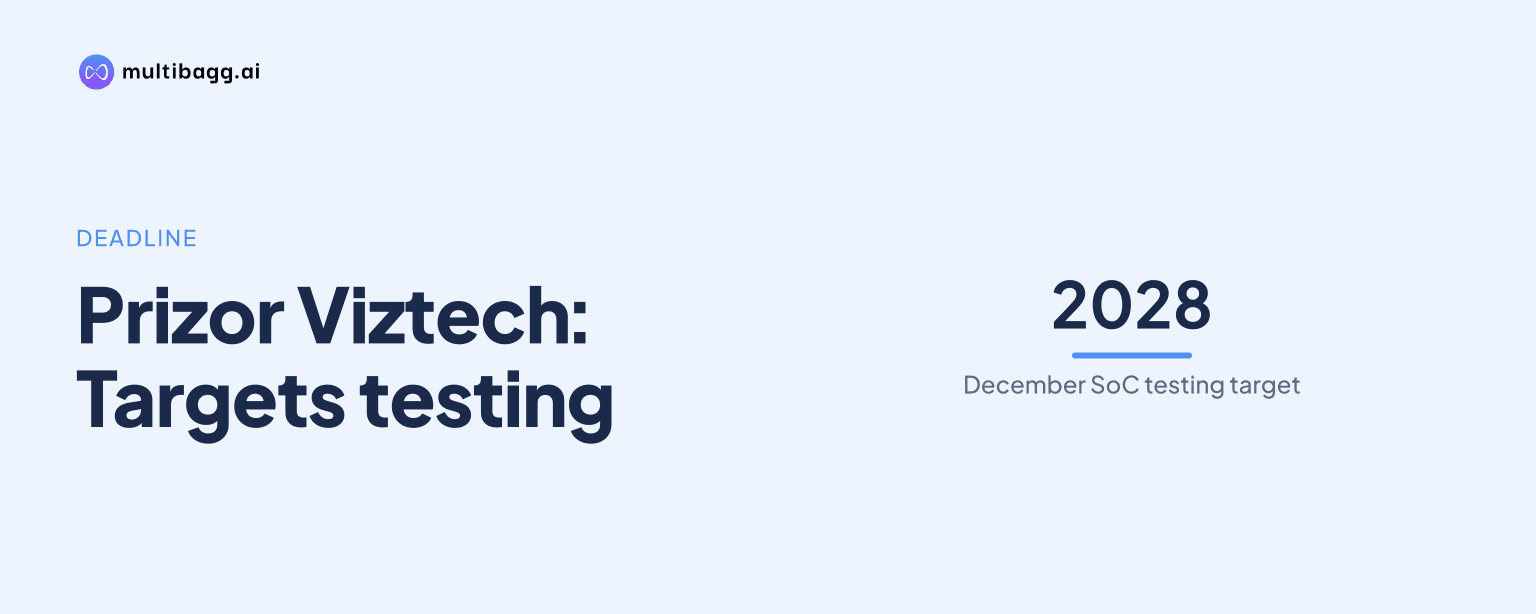
Prizor Viztech Limited expects testing and production of an Indigenous system-on-chip programme with IndieSemic to begin by December 2028, extending its move from assembly into key CCTV electronics that management said, together with printed circuit boards and Internet of Things components, account for about 40% of CCTV value.
Know Prizor Viztech inside out
Results, valuation, peers and who's buying, in one view.
When will Prizor begin IndieSemic SoC testing and production?
Prizor said testing and production with IndieSemic should begin by December 2028. Management described the programme as “almost ready” when asked about the timeline for potential chip manufacturing in India, but did not provide intermediate milestones, production capacity, investment spending or an expected revenue contribution before that date.
The 2028 timetable is part of a longer transition from sourcing components to bringing more of the CCTV product stack under company control. Management said the system-on-chip, or SoC, printed circuit board, or PCB, and Internet of Things, or IoT, elements are key CCTV components and collectively account for approximately 40% of product value. The call did not separate the SoC’s individual share within that 40% component group.
The programme concerns an Indigenous SoC rather than a second consumer brand. When asked about adding a new brand for another price segment, Prizor said it had no such plan and would continue with one brand. It said its Prime Series is its economical range for channel sales, while its Plus Series is intended for special projects and premium customers.
How far has Prizor moved beyond CCTV assembly?
Prizor said it has moved beyond its position before 2025, when it was primarily an assembler. After starting its factory, the company began manufacturing a significant part of its products itself, including camera housings and PCBs, while product design is now handled in-house.
Management said Prizor’s PCB design is available in source-code form and entirely developed in-house, giving the company “100% control” over that design. It also said Prizor manufactures complete products itself and is not dependent on another country, including neighbouring countries, for the complete product. Management did not quantify what proportion of a camera’s bill of materials is currently made internally.
The comparison is between a business management described as assembly-led before 2025 and its current model, which includes housings, PCB capability and product design. The planned SoC step would target the electronics group that management estimates at approximately 40% of CCTV value, though the operating and financial outcome remains subject to the December 2028 plan.
Got a follow-up? Ask IRIS
How is Prizor securing SoC supply before 2028?
Prizor said it does not expect future SoC procurement issues because it already has two certified SoC solutions and is discussing the product under development with three SoC companies. This near-term sourcing approach is separate from the IndieSemic programme that management expects to reach testing and production by December 2028.
Management also said Prizor has direct arrangements with four SoC companies. The call did not explain whether those four arrangements include the three companies involved in discussions on the product under development, so the figures cannot be treated as separate supplier counts.
Supply availability remains an operating consideration across the business. Management said demand was not the issue, while procurement of raw materials from global markets remained challenging because of flash-memory shortages. It said its plans use conservative numbers and performance could exceed them if supply constraints ease, but did not disclose a flash-memory procurement target.
The wider supply position has also affected working capital. Management said the half-year closing showed a 171-day working-capital figure, compared with 90 days in financial year 2026, because Prizor built inventory in response to supply concerns and sales rise through a quarter. It estimated the current working-capital cycle at 120 to 150 days, acknowledging that it has lengthened from the prior-year level.
What advantages does Prizor cite against new CCTV entrants?
Prizor cited four operating pillars: manufacturing, distribution, procurement and a market in which to sell products. It said it will soon complete 10 years in the industry, has an established distribution network, and has direct arrangements with four SoC companies. Management contrasted this with a new entrant that may start with basic cameras while Prizor develops cameras with artificial intelligence, or AI, features.
The company also cited warranty and after-sales service as elements of its position. Management said new brands need time to establish manufacturing, distribution, procurement and dealer networks, estimating that this could take three, four or five years. This was management’s view of market development, rather than a quantified forecast of Prizor’s market share.
Prizor said market rankings would become clearer after the seasonally stronger third and fourth quarters. Management described the first and second quarters as weak and said the festival season and third-quarter and fourth-quarter results would show which companies are in the top five and top 10. It said Prizor is gaining market share and is optimistic about entering the top five, but did not claim a current ranking.
Product-mix data show Prizor’s current camera categories. In the first half of financial year 2027, management said IP cameras contributed 45% of revenue and analog and HD cameras contributed 55%. It also said approximately 30% of revenue came from government-related business through distributors, to whom Prizor raises invoices, rather than from direct government sales.
Conclusion
Prizor’s December 2028 IndieSemic timetable sets out the intended next stage of an integration programme that management says has already brought camera housings, PCB capability and product design in-house. Its significance lies in the electronics group that management estimates accounts for approximately 40% of CCTV value, although the call did not disclose capacity, cost or revenue figures for the proposed SoC production.
The next disclosed milestones are the planned December 2028 start of testing and production and the nearer-term publication of third-quarter and fourth-quarter results, which management said should clarify industry rankings during the peak season. Prizor’s ability to manage flash-memory procurement and its working-capital cycle, estimated at 120 to 150 days, also remains relevant as inventory is built to address supply constraints.