










RedTape reaches 756 stores as franchisees fund expansion
Key highlights
- RedTape reached 756 stores in 369 cities after adding 49 EBOs and five shop-in-shops in Q2 FY 2027.
- Franchisees fund store capital expenditure, while RedTape retains billing, reported revenue and inventory risk.
- RedTape pays franchisees a fixed 25% margin, from which they cover rent, staff and other store expenses.
- Q2 FY 2027 EBITDA rose 8.2% to Rs 89 crore and PAT rose 27.3% to Rs 36 crore.
powered by IRIS
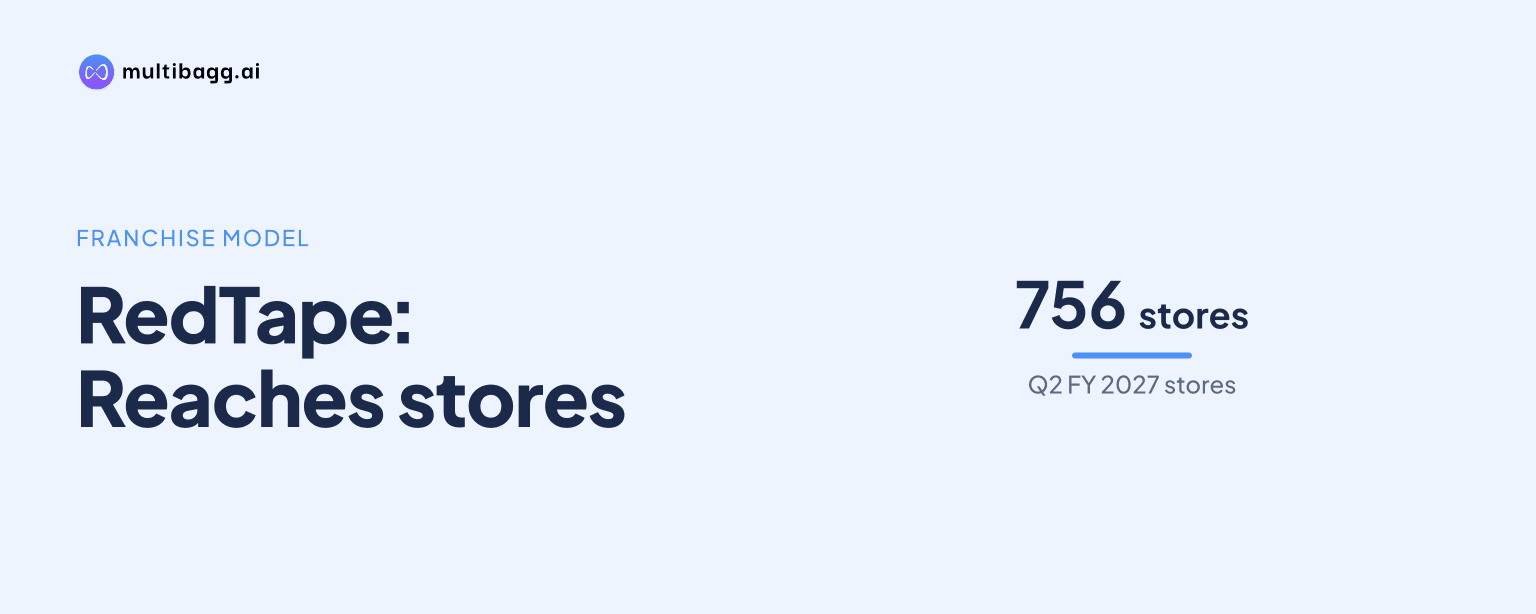
RedTape Limited reached 756 stores across 369 cities in Q2 FY 2027 after adding 49 exclusive brand outlets and five shop-in-shops, with franchisees funding capital expenditure under its franchise format while RedTape retains customer billing, reported revenue and inventory risk.
Know Redtape inside out
Results, valuation, peers and who's buying, in one view.
How did RedTape reach 756 stores?
RedTape reached 756 stores in 369 cities during Q2 FY 2027 by adding 49 exclusive brand outlets, or EBOs, and five shop-in-shops. Management said franchise stores remained a significant part of the network at the end of September, supporting entry into more markets while keeping the retail model relatively capital-light for RedTape.
The store rollout continued alongside RedTape's marketplace and direct website operations. Online sales accounted for about 31% of Q2 FY 2027 revenue, compared with about 22% in Q1, and management described its historical mix as about 30% online and 70% retail. The Q2 change brought online contribution closer to that historical mix while the physical network increased.
RedTape.com also expanded within the digital channel. Website sales rose to Rs 31.9 crore in Q2 FY 2027 from Rs 3.9 crore in the corresponding quarter a year earlier, an increase of Rs 28 crore. Management said the website provides a direct consumer route alongside marketplaces and that the next task is to make stores, marketplaces and the website work more closely together.
How does RedTape's franchise store model work?
RedTape operates three retail formats, and franchisees fund the store capital expenditure in the franchise format. The franchisee invests in the outlet, provides a security deposit to RedTape and receives inventory from the company, while the company-owned and company-operated, or COCO, model places store capital expenditure and management with RedTape.
RedTape retains the customer-facing sales infrastructure in both formats. Management said the billing system, software and Goods and Services Tax registration are in RedTape's name, meaning retail sales are recorded in its top line. Customers receive a RedTape bill whether an outlet is company-managed or franchisee-managed.
The franchisee receives a fixed 25% margin and must meet rent, capital expenditure, interest, depreciation, staff costs and other operating expenses from that amount. Management said inventory risk always remains with RedTape, so the company retains exposure to stock even when a franchisee funds the opening and manages local operating costs.
A third format is used for a very limited number of stores. RedTape owns these outlets but assigns staff or operations management to a third party, including in markets such as Kerala and Assam where management cited local-language considerations. The company did not disclose the number of stores under this arrangement.
What does the store expansion mean for RedTape's revenue mix?
RedTape's retail network remains its larger reported sales channel, with retail historically accounting for about 70% of revenue and online accounting for about 30%. Management said retail has been the main contributor to its margin structure, while franchise-funded outlets allow RedTape to add locations without financing the capital expenditure for every store.
Q2 FY 2027 revenue was Rs 474 crore, down 3.5% year on year, despite the 54 additions comprising EBOs and shop-in-shops. Management attributed part of the comparison to the Big Billion Days sale moving from September in the previous year to October in the current year, shifting associated sales from Q2 into Q3.
The product mix remains centred on footwear, which accounted for 63% of Q2 FY 2027 revenue. Apparel and accessories made up the remainder, supported by shared sourcing, merchandising and distribution capabilities. Management said footwear receives new product drops almost every month, while apparel has about two summer drops and one winter drop each year.
RedTape said it is not directly engaged in wholesale and distribution. It appoints licensees to promote and sell specific brands at arm's length, and management said that business does not appear on RedTape's books. This leaves retail and online channels as the principal contributors to reported revenue.
Got a follow-up? Ask IRIS
Did RedTape improve profit while expanding its network?
RedTape improved profitability in Q2 FY 2027 even as revenue declined 3.5% year on year. Gross profit increased 15.7%, gross margin reached 45.4%, and earnings before interest, tax, depreciation and amortisation, or EBITDA, rose 8.2% to Rs 89 crore. EBITDA margin expanded by 204 basis points to 18.9%.
Profit after tax, or PAT, increased 27.3% year on year to Rs 36 crore in Q2 FY 2027. For the first half, revenue was broadly stable at Rs 955 crore, while EBITDA grew 12.4% and PAT rose 22.7%. Management attributed the improvement to sourcing, channel management and cost work while it continued investing in distribution and channels.
Management linked retail productivity to the margin outcome. It said retail same-store sales growth was in the high single digits and that fixed costs can provide greater operating leverage when comparable-store sales increase. It also said e-commerce had returned to 31% of Q2 revenue while RedTape sought to prevent online sales from eroding margins.
What will RedTape focus on in the second half of FY 2027?
RedTape said it will focus on network productivity, brand building and pricing and margin discipline during the seasonally stronger second half of FY 2027. The period includes festive and winter demand as well as the Big Billion Days event that shifted into Q3, making sales timing relevant to the next quarterly comparison.
Management said Diwali had shifted by 19 days from the prior year, extending the lean period and reducing the peak selling period by the same duration. It said October shopping numbers looked good and expressed hope for a bumper Q3, but did not provide a revenue target, store-opening target or forecast for the remainder of FY 2027.
Conclusion
RedTape's expansion structure combines wider retail reach with a division of operating responsibilities: franchisees fund outlet capital expenditure and local expenses through a fixed 25% margin, while RedTape records customer sales and carries inventory risk. The model operated alongside a 31% online revenue mix in Q2 FY 2027 and a 63% footwear contribution to quarterly revenue.
The next period to watch is Q3 FY 2027, when the shifted Big Billion Days sale and festive demand will affect the revenue comparison. Management's disclosed plan is to improve store productivity, coordinate stores with digital channels, and maintain pricing and margin discipline; it has not disclosed a further network-size target or a format-wise split of its 756 stores.