










Rossell Techsys Limited Reports ₹900 Crore Q2 FY27 Order Book
Key highlights
- Rossell Techsys reported an order book of about ₹900 crore as of September 30, 2026.
- Rossell Techsys secured approximately ₹430 crore of fresh orders in H1 FY27.
- Rossell Techsys reported Q2 FY27 fresh order inflows of around ₹190 crore.
- Rossell Techsys submitted bids aggregating approximately ₹1,350 crore.
powered by IRIS
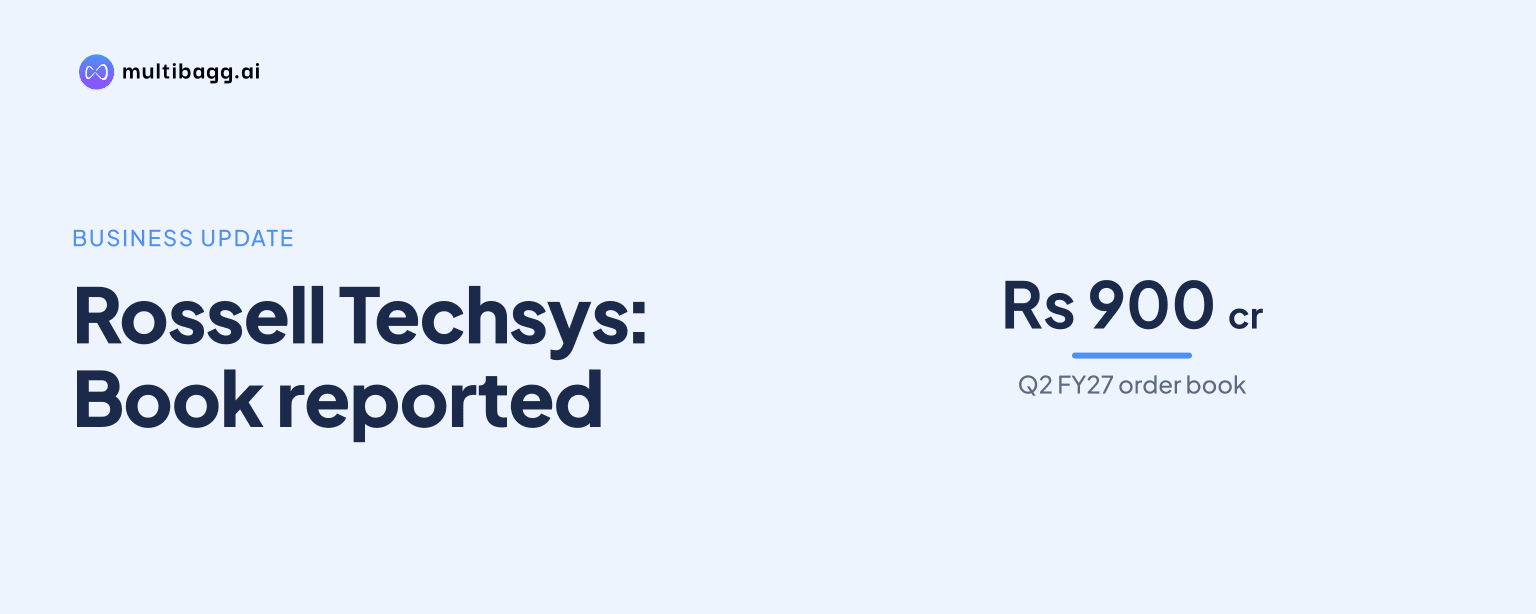
Rossell Techsys Limited reported an order book of about ₹900 crore as of September 30, 2026, after securing approximately ₹430 crore of fresh orders in the first half of FY27. The aerospace and defence manufacturer also disclosed a bid pipeline of about ₹1,350 crore, highlighting execution requirements over the coming years.
Know Rossell Techsys inside out
Results, valuation, peers and who's buying, in one view.
What did Rossell Techsys report in Q2 FY27?
Rossell Techsys reported operational momentum in Q2 FY27, with its presentation placing the order book at ₹900 crore on September 30, 2026. The company also indicated that fresh order inflows during the quarter were approximately ₹190 crore.
For the first half of FY27, Rossell Techsys said it had secured fresh orders worth around ₹430 crore. These orders spanned aerospace and defence, semiconductor and industrial activities, according to the business-performance disclosures. The company submitted bids aggregating about ₹1,350 crore, which represents potential work rather than confirmed business.
A separate earnings-call summary put the confirmed order book at ₹910 crore and said it would need to be executed over about 2.5 years. The small difference from the ₹900 crore presentation figure appears to reflect rounded disclosures. The company also referred to strategic agreements worth ₹3,100 crore to be executed over five years.
How is the company building its aerospace and defence business?
Rossell Techsys operates in engineering and manufacturing for aerospace and defence, producing systems and components for these sectors. Its stated capabilities include electrical panel products and sub-assemblies, test solutions, rework and aftermarket services for military aerospace and defence platforms.
The company has also added maintenance, repair and overhaul, or MRO, capability. Chief Executive Officer Senthal B said this positions Rossell Techsys to pursue work as an MRO service partner in India. He said discussions were under way with large companies and that the capability was enabling aftermarket opportunities for Boeing and other US companies.
The CEO said results from these discussions were expected in Q3 and Q4, without disclosing contract values or naming counterparties. Therefore, these opportunities should not be treated as part of the confirmed order book until the company makes a formal disclosure.
What recent orders support Rossell Techsys's pipeline?
Rossell Techsys disclosed on May 6, 2026 that it had received a repeat order from a major overseas defence customer for manufacturing electrical wire harnesses. The contract is to be executed within eight to 12 months, but its value was kept confidential.
The company said the order was awarded by an international defence-sector entity. It also confirmed that neither its promoters nor promoter group had an interest in the awarding entity and that the transaction was not a related-party transaction. The disclosure said the order was expected to support international presence and revenue growth, though it did not quantify the financial contribution.
Historical disclosures show that Rossell Techsys has been building its order pipeline over time. In Q3 FY25, it reported record total revenue of ₹75.99 crore, up 48% from the preceding quarter, and said additional order booking of ₹50 crore had taken its open order book to ₹750 crore. That quarter's performance was attributed to project deliveries, contract wins and partnerships with aerospace and defence customers in India, Israel, the US and Europe.
Got a follow-up? Ask IRIS
What does the order book mean for investors and operations?
The reported ₹900 crore order book offers visibility into contracted work, but delivery is central to converting that work into revenue. The earnings-call summary specifically identified execution as a risk because the confirmed order book of ₹910 crore is scheduled over about 2.5 years and strategic agreements of ₹3,100 crore extend over five years.
Order-book figures and strategic agreements should be assessed separately. Confirmed orders represent business already awarded, whereas bids submitted and discussions related to MRO or aftermarket work remain prospective. Likewise, the source material does not disclose the value of the overseas wire-harness repeat order, so its direct contribution cannot be calculated.
The stock had separately drawn market attention after Kotak Mutual Fund acquired a 5% stake in Rossell Techsys. The reported transaction involved more than 18.47 lakh shares at an average price of ₹900 each and was valued at nearly ₹166 crore. A report said the share rose 16% after that stake acquisition, but the supplied information does not link that market move to the Q2 FY27 operational update.
How does Rossell Techsys compare with its earlier disclosures?
Rossell Techsys had earlier reported a confirmed order book of around ₹800 crore as of June 30, 2026. The approximately ₹900 crore figure reported for September 30 points to a higher level of confirmed work over the following quarter, while fresh Q2 inflows of about ₹190 crore provide context for the change.
The company's disclosures have used different labels, including open order book, confirmed order book and strategic agreements. At March 31, 2025, one company overview cited an open order book above ₹2,750 crore along with strategic long-term agreements exceeding ₹2,500 crore. These figures should not be directly compared with the ₹900 crore confirmed order-book figure without accounting for the differing definitions used in the disclosures.
Conclusion
Rossell Techsys has reported a meaningful FY27 pipeline, led by about ₹430 crore of H1 fresh orders, a ₹900 crore order book at September 30, 2026 and bids of around ₹1,350 crore. The data supports revenue visibility, but the pace of manufacturing and delivery will determine how quickly the confirmed backlog is converted into reported financial performance.
The next disclosed points to watch are the company's Q3 and Q4 updates on MRO and aftermarket discussions, as indicated by its CEO, and any formal conversion of submitted bids into orders. Investors can also monitor order-book movement and execution progress against the roughly 2.5-year timeline cited for the confirmed backlog.