










Indian rupee strengthens as Brent crude drops below $90
Key highlights
- The rupee closed at 93.90 per US dollar in one market report, its best level since April.
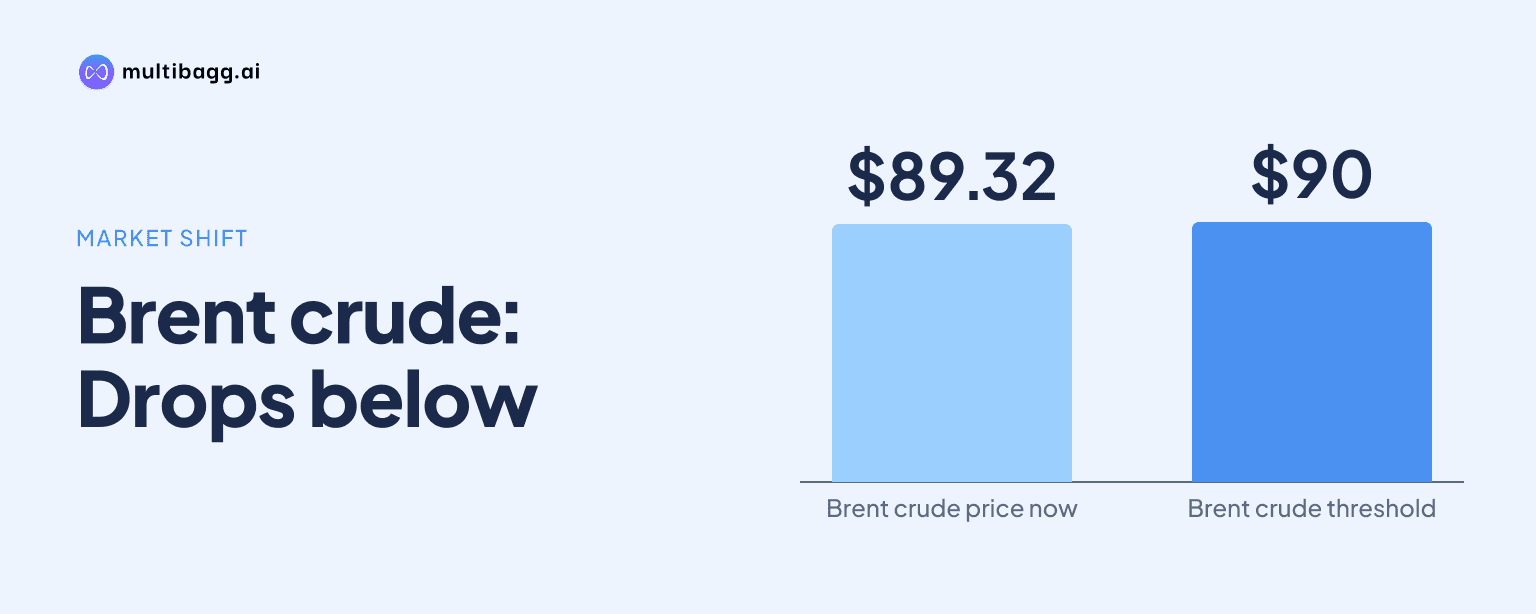
- Brent crude fell 3% to $89.32 a barrel, below $90 for the first time since August.
- Brent futures tumbled about 13% last week, according to market commentary.
- Net FPI inflows so far in November were reported at around $6.4 billion.
powered by IRIS
The Indian rupee strengthened to 93.90 per US dollar, its best level since April in one market report, as Brent crude fell below $90 a barrel and foreign portfolio flows improved. Lower oil costs reduce India’s dollar demand for imports, while a softer dollar and reported Reserve Bank of India dollar sales added support.
Why is the rupee gaining against the US dollar?
The rupee is gaining because the sharp decline in crude oil prices has eased a major source of dollar demand from Indian importers. Market reports also cited renewed foreign investment in domestic equities, a softer Dollar Index and expectations that easing tensions in West Asia could lower oil’s geopolitical risk premium.
The currency closed at 93.90 per dollar during the week in one report, while other updates placed the closing level around 93.91, 93.93 and 93.94. It had moved as high as 93.74 in early trade in one session. These levels marked a six- to six-and-a-half-month high, with reports describing the rupee as being at its strongest since April 22.
How do lower crude prices support the rupee?
Lower crude prices support the rupee because India imports nearly 90% of its oil requirements. When oil becomes cheaper, oil importers need fewer US dollars to pay for purchases, reducing pressure on the currency and providing relief to the import bill.
Brent crude was reported at $89.32 a barrel after a 3% fall, the lowest level since August. Other market updates put Brent at $98.17 a barrel, showing that prices changed across reporting periods, but all pointed to a broad correction. Brent futures were said to have tumbled about 13% last week and declined nearly 8% so far this week.
Cheaper oil can also improve the inflation outlook and ease pressure on the current account. For listed companies with substantial fuel costs, lower crude prices may support operating profits, although the extent of any benefit depends on their fuel exposure and pricing decisions.
What role are foreign portfolio flows playing?
Foreign portfolio inflows are adding support by increasing the supply of dollars in the domestic market. Investors returned to Indian equities during the period, with one report saying foreign investors bought nearly $3 billion of shares during the week.
NSDL data cited in market commentary showed net FPI inflows of around $6.4 billion so far in November. Another update said FPI investment in FAR government securities had risen by nearly ₹8,000 crore as the rupee strengthened and Indian bond yields eased. These flows have reinforced the benefit from softer oil prices.
Got a follow-up? Ask IRIS
Can the rupee’s advance continue?
The rupee’s advance can continue if crude remains softer, foreign investors sustain purchases and the Dollar Index stays subdued. Market commentary said a breakout above 94.20 had improved the near-term outlook, with 93.40 cited as a potential next level after any minor correction towards 94.40-94.50.
However, the support is not automatic or permanent. Dollar strength, overseas portfolio flows and underlying demand for dollars can still determine the currency’s direction. A rise in oil prices or a reversal in foreign inflows could quickly weaken the current tailwinds.
What should equity investors take from the move?
Equity sentiment has improved alongside the rupee because lower oil prices can reduce import costs and support the inflation outlook. Companies with high fuel expenses may see improved operating conditions, while a lower oil bill is broadly positive for an economy dependent on crude imports.
That said, the currency move alone does not establish a uniform benefit across stocks or sectors. The reported rally in domestic equities has also reflected foreign inflows and easing geopolitical uncertainty, so investors will need to distinguish between the broad macro effect of crude prices and company-specific earnings exposure.
Conclusion
The rupee’s move below 94 per dollar reflects a favourable combination of falling crude prices, renewed foreign inflows and a weaker dollar. With India importing nearly 90% of its crude requirement, the correction in oil directly reduces a key source of dollar demand and offers broader relief to the import bill and inflation outlook.
The next signals are whether Brent remains below the levels reported, whether FPI buying continues after around $6.4 billion of November inflows, and whether the Dollar Index stays soft. Market commentary identifies 93.40 as a possible target after the break above 94.20, but sustained gains depend on those conditions holding.