








SEBI GMP advisory changes pre-listing signals, not listing gains

Find your next multibaggerBe a Pro Investor
Research stocks and track your picks on the go. Download the app.
Key highlights
- SEBI issued its IPO GMP advisory on 23 November 2026.
- SEBI advised registered intermediaries and market participants to stop publishing or circulating unofficial GMP figures.
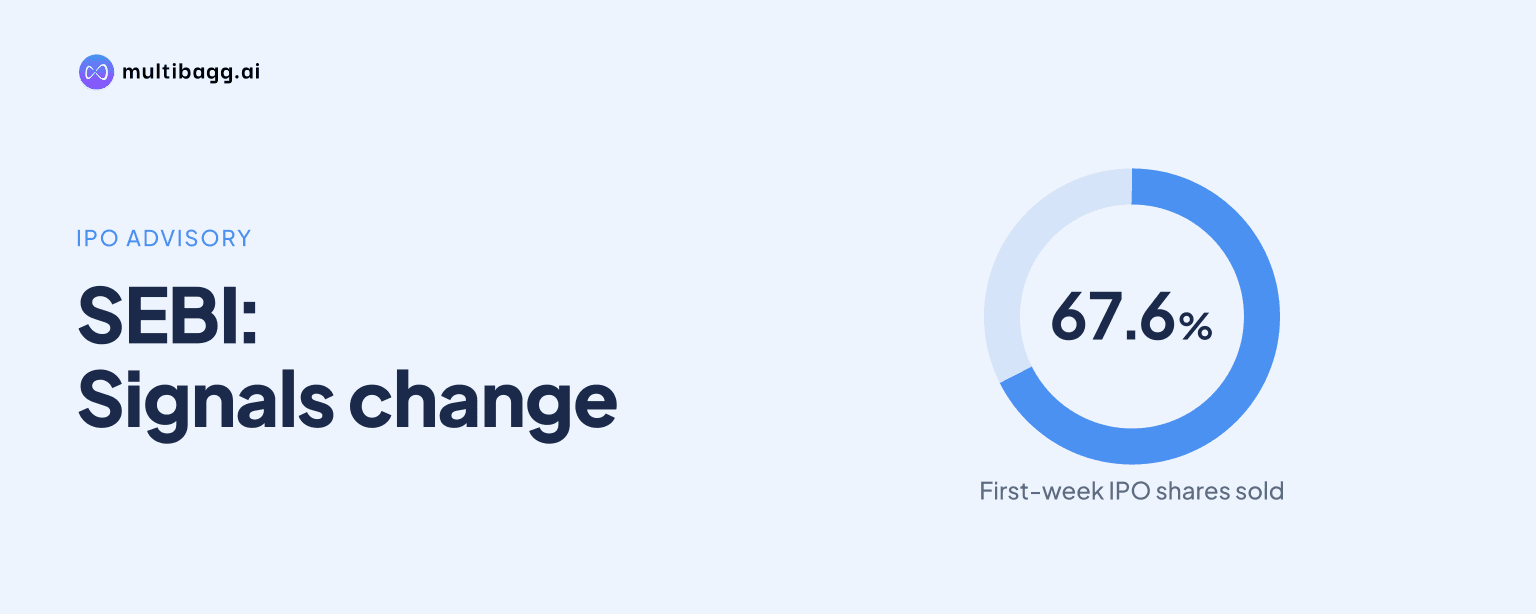
- Individuals sold 67.6 percent of allotted shares within a week when first-week IPO returns exceeded 20 percent in SEBI's study.
- NII oversubscription fell from 38 times to 17 times after the April 2022 changes cited in SEBI's study.
powered by IRIS
The Securities and Exchange Board of India (SEBI) changed the pre-listing discussion around IPOs on 23 November 2026 by advising registered intermediaries and market participants to stop circulating unofficial grey market premium figures, but IPO listing gains will still be determined by actual buying and selling demand after shares begin exchange trading.
What did SEBI's GMP advisory say?
SEBI advised registered intermediaries and market participants to refrain from publishing, displaying, circulating or broadcasting grey market premium, or GMP, figures for upcoming IPOs. The advisory covers websites, digital platforms, email, SMS and social media, based on the information shared around the 23 November 2026 communication.
The regulator also cautioned investors not to treat GMP as an indicator of an IPO's likely listing price or expected return. GMP is an unofficial pre-listing premium at which IPO shares are quoted before they become tradable on a recognised stock exchange. The advisory focuses on publication and circulation of these unregulated figures, rather than changing the IPO application or allotment process.
Will IPO listing gains disappear without GMP figures?
No, IPO listing gains will not disappear because GMP figures are no longer published or circulated by the covered participants. A share's opening and subsequent traded price are determined by buying and selling demand once it lists on the stock exchange.
The factors discussed by investors before an IPO - including valuation, institutional interest, market sentiment and business fundamentals - continue to matter to demand. A high GMP did not guarantee a positive listing before the advisory, and a low GMP did not necessarily signal weak fundamentals. Removing a widely followed unofficial indicator changes how expectations are communicated, not the market mechanism that produces a listing price.
Why were retail investors focused on IPO listing gains?
Retail investors were focused on listing gains because early returns have been closely associated with decisions to sell allotted shares. A SEBI Department of Economic and Policy Analysis study, published in September 2024 and covering IPOs listed from April 2021 to December 2023, found that individuals sold 67.6 percent of allotted shares within a week when first-week returns exceeded 20 percent.
That compared with 23.3 percent when the first-week return was negative. For retail-category investors, the study reported a 0.7 correlation between the first-week listing gain and the proportion of allotments sold within a week. These figures show why the realised return after listing, rather than an unofficial pre-listing quote alone, can influence selling behaviour.
Got a follow-up? Ask IRIS
What does SEBI's research show about IPO flipping?
SEBI's research shows that high early returns have been associated with higher exits by investors after allotment. The context provided with the study also cites an estimated ₹15,000 crore of first-week selling, although the study's data ends in December 2023 and does not describe current market behaviour.
The same research discussed changes introduced in April 2022, when NII allotment moved from pro-rata allocation to a lottery system and the category was split by ticket size. RBI also capped NBFC funding of IPO bids. Following those changes, NII oversubscription fell from 38 times to 17 times, while the one-week exit rate for big-ticket NIIs dropped from about 70 percent to about 25 percent.
How should investors assess an IPO after the GMP advisory?
Investors should assess an IPO without treating an unofficial GMP quote as a forecast of listing-day returns. SEBI's caution is specific: GMP figures are unofficial, unverified and unregulated, and they cannot guarantee an eventual listing price or post-listing performance.
The advisory may reduce the prominence of a single informal pre-listing signal across broker and market-participant channels. It does not establish that average listing gains will rise or fall. The impact on independent publishers and informal online conversations remains dependent on how the guidance is implemented, while exchange demand remains the direct determinant of the listed share price.
Conclusion
SEBI's 23 November 2026 advisory removes the publication and circulation of an unofficial IPO expectation marker from registered intermediary and market-participant channels. It does not remove the possibility of listing gains or alter the fact that investors can sell after listing based on actual returns and prevailing exchange demand.
Investors should watch how the advisory is implemented across websites, digital platforms and social-media communications. The unresolved issue is the practical effect on informal GMP discussions, while future IPO listings will continue to show whether valuation, institutional interest and broader market conditions support demand at the start of trading.

