










Siyaram Silk Mills revenue rises 15.3% as Q2 profit falls 13.9%
Key highlights
- Siyaram Silk Mills reported Q2 FY27 revenue of ₹813.6 crore, up 15.3% year-on-year.
- Q2 FY27 net profit declined 13.9% year-on-year to ₹74.5 crore.
- Operating margin fell 90 basis points to 14.3% in Q2 FY27.
- Siyaram raised FY27 revenue-growth guidance to 14%-15% and targets 70 retail stores.
powered by IRIS
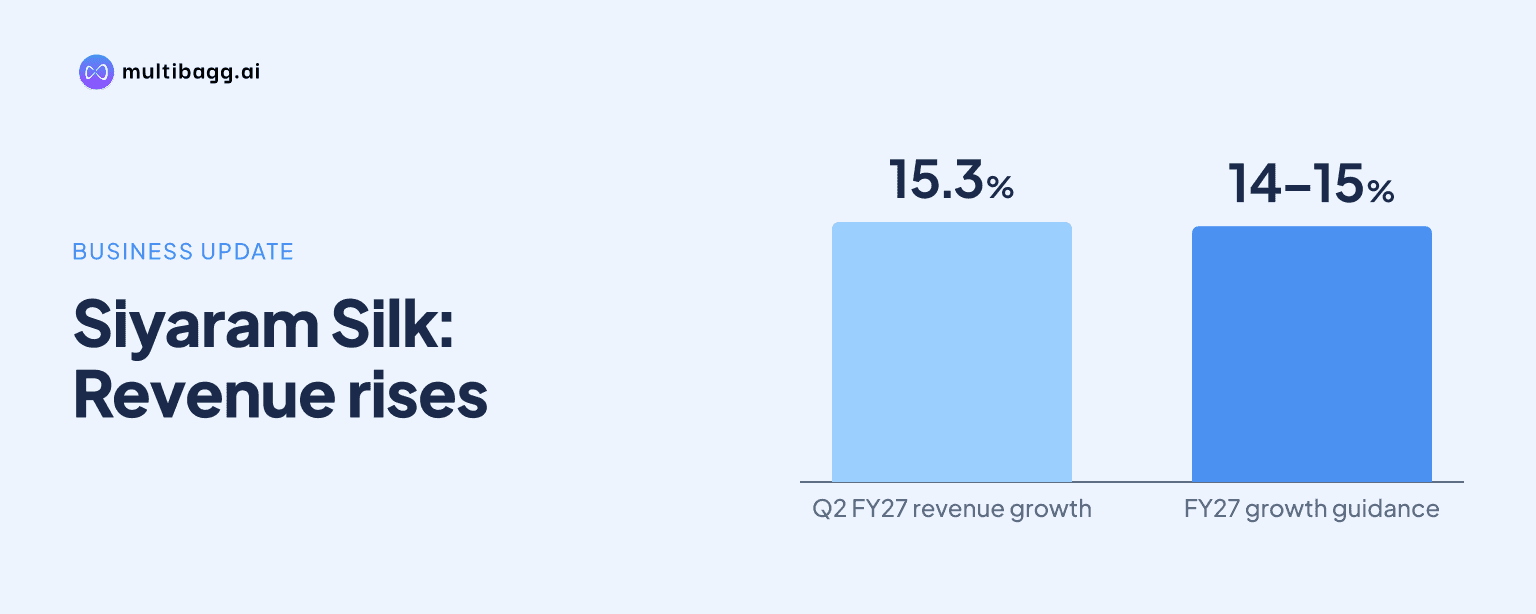
Siyaram Silk Mills Limited reported Q2 FY27 revenue of ₹813.6 crore, up 15.3% year-on-year, but net profit fell 13.9% to ₹74.5 crore as operating margins narrowed and other income declined.
Know Satyam Silk Mills inside out
Results, valuation, peers and who's buying, in one view.
What were Siyaram Silk Mills' Q2 FY27 results?
Siyaram Silk Mills reported higher sales for the quarter ended September 2026, while profitability declined from the corresponding quarter a year earlier. Consolidated revenue rose to ₹813.6 crore from ₹705.6 crore in Q2 FY26. Net profit declined to ₹74.5 crore from ₹86.5 crore, while earnings per share fell to ₹16.42 from ₹19.11.
The company’s separately reported total income was ₹827 crore in Q2 FY27, compared with ₹719 crore in the year-ago quarter, representing growth of 15.1%. Its operating profit increased 8.2% year-on-year to ₹116.1 crore. The lower pace of operating-profit growth relative to revenue resulted in a margin decline.
Why did Siyaram Silk Mills' profit decline despite revenue growth?
Siyaram’s net profit declined despite sales growth because operating profitability and other income were weaker than in the previous year. The operating margin declined by 90 basis points to 14.3% from 15.2%. In the broader result presentation, EBITDA margin was reported at 15.8%, compared with 16.8% a year earlier, with the company citing rising raw-material costs and gradual price pass-throughs.
Other income fell 60.9% year-on-year to ₹14.6 crore from ₹37.2 crore. This affected profit before tax, which declined 14.1% to ₹98.7 crore from ₹115 crore. Other income accounted for 14.7% of profit before tax in Q2 FY27, down from 32.4% in Q2 FY26.
Finance cost increased 34.7% to ₹12 crore from ₹8.9 crore. Employee cost rose 4.0% to ₹58.9 crore, while other expenses increased 2.7% to ₹221 crore. These movements show that the company retained revenue growth, but the mix of operating costs, finance costs and lower non-operating income constrained profit growth.
How did Siyaram Silk Mills perform in the first half of FY27?
Siyaram reported H1 FY27 total income of ₹1,293 crore, an increase of 15.6% from ₹1,118 crore in the corresponding half of the previous year. H1 EBITDA rose 11.3% year-on-year to ₹170 crore, while profit after tax declined 5.9% to ₹86 crore.
The September quarter was substantially stronger than the June quarter on a sequential basis. Revenue rose 82.6% from ₹446 crore in Q1 FY27 to ₹814 crore in Q2 FY27. Operating profit increased from ₹18.1 crore in the June quarter to ₹116 crore in the September quarter, and net profit rose from ₹11 crore to ₹74.5 crore.
The quarterly pattern reflects the importance of the festive period for the textile and apparel business. The company said strong festive demand and a recovery in Tier-2 and Tier-3 markets supported its revised outlook. However, the year-on-year reduction in margins remains relevant because raw-material costs have not been fully passed on through prices.
Got a follow-up? Ask IRIS
What is Siyaram Silk Mills' FY27 outlook and retail plan?
Siyaram raised its FY27 revenue-growth guidance to 14%-15% from its earlier estimate, citing festive-season demand and improving demand from smaller cities. The updated guidance followed the company’s Q2 investor call held on October 28, 2026, after the board approved the quarterly and half-yearly financial results.
Retail expansion remains part of the company’s operating plan. Siyaram had 61 outlets, comprising 38 ZECODE stores and 23 DEVO stores. It is targeting 70 stores across the two formats during FY27. The retail business contributed about ₹65 crore to revenue in H1 FY27.
ZECODE’s network is focused mainly on Bengaluru, Hyderabad and Chennai in South India. DEVO is concentrated in Delhi NCR, Uttar Pradesh, Punjab and Rajasthan. The company has described this approach as clustered expansion, which allows it to add stores within selected regional markets rather than pursuing a dispersed national rollout.
How did the results affect Siyaram Silk Mills investors?
The market reaction cited after the October 27, 2026 results announcement was negative, with the stock declining 4.3% to ₹460.4. The decline followed a quarter in which revenue and operating profit increased, but net profit, EPS and operating margin declined year-on-year.
For investors, the results present two measurable trends. Revenue growth of more than 15% and the upgraded FY27 guidance point to continued demand momentum, while the fall in margins and profit highlights the effect of cost pressures and lower other income. The interim dividend of ₹4 per equity share, equal to 200% of the ₹2 face value, was also declared by the board.
Conclusion
Siyaram Silk Mills delivered a stronger Q2 FY27 topline, with revenue rising 15.3% to ₹813.6 crore, but the gain did not translate into higher net profit. Margin contraction, higher finance cost and a sharp reduction in other income contributed to a 13.9% decline in net profit to ₹74.5 crore.
The next reported milestones are the company’s progress towards its 14%-15% FY27 revenue-growth guidance and its target of 70 ZECODE and DEVO stores. Investors will also track whether raw-material costs and price pass-throughs allow Siyaram to stabilise operating margins in subsequent quarters.