










Saregama India Limited Q2 Revenue Rises 37% to ₹314.3 Crore
Key highlights
- Saregama India reported Q2 FY27 revenue from operations of ₹314.3 crore, up 37% year on year.
- Adjusted EBITDA rose 39% to ₹118 crore, while operational PBT increased 43% to ₹85.8 crore.
- Music revenue grew 35% to ₹251.3 crore and music EBITDA rose 37% to ₹154 crore.
- Saregama India has outlined a ₹1,200 crore content investment plan for FY28 through FY30.
powered by IRIS
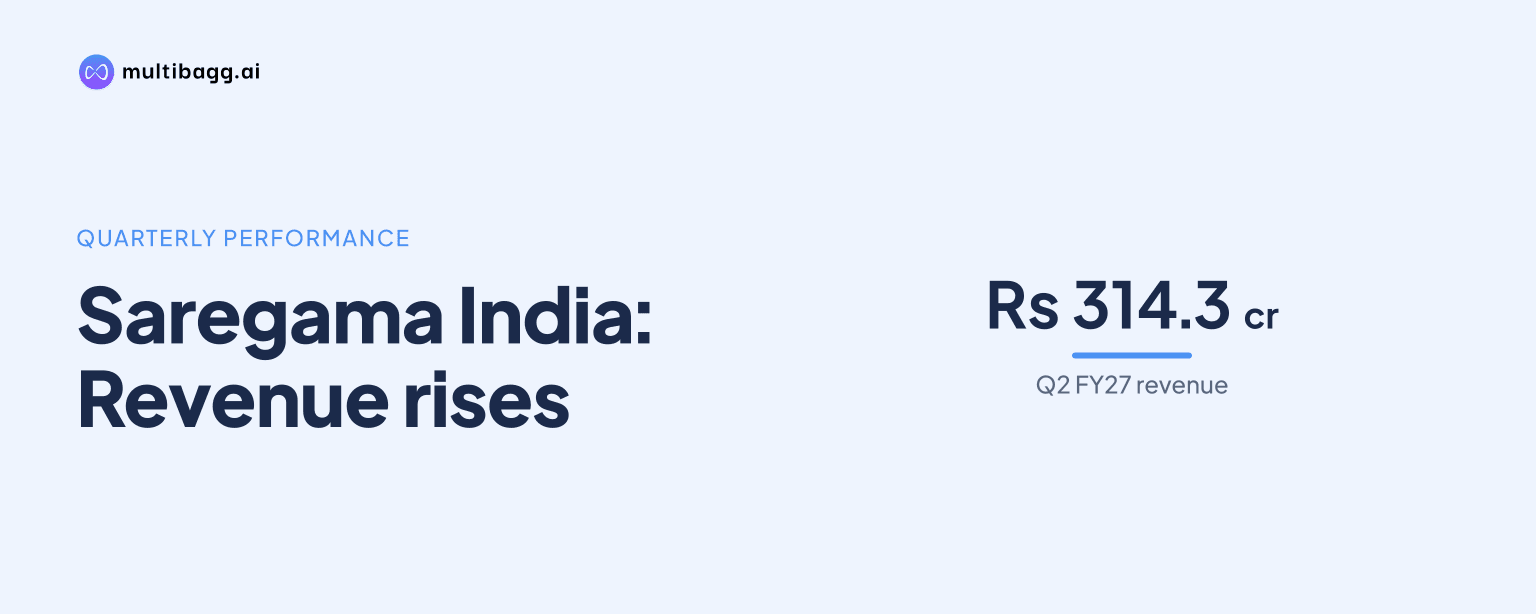
Saregama India Limited reported revenue from operations of ₹314.3 crore in Q2 FY27, up 37% year on year, as its music business grew 35% to ₹251.3 crore and adjusted EBITDA increased 39% to ₹118 crore. The quarterly performance places music content and licensing at the centre of the company’s reported growth.
Know Saregama India inside out
Results, valuation, peers and who's buying, in one view.
What did Saregama India report for Q2 FY27?
Saregama India reported revenue from operations of ₹314.3 crore for the quarter, compared with ₹230.0 crore in the corresponding period a year earlier. Adjusted EBITDA rose 39% year on year to ₹118 crore, while operational profit before tax increased 43% to ₹85.8 crore.
The company reported a 38% adjusted EBITDA margin for the quarter. Consolidated profit for the period stood at ₹64.2 crore, up 46.6% year on year, and diluted earnings per share were ₹3.36. Revenue also increased 19% sequentially, while adjusted EBITDA was 5% higher than the preceding quarter.
Management discussed the results on its earnings call held on November 4, 2026. Vikram Mehra, Managing Director, said the quarterly figures reflected revenue from operations of ₹314.3 crore, adjusted EBITDA of ₹118 crore and operational PBT of ₹85.8 crore.
The reported performance was helped by the music vertical, newer content moving into higher-contribution periods, and related expansion in artist management, live events and brand partnerships. The company also said older-film licensing revenue was recognised upfront during the quarter, which is relevant when assessing quarterly comparisons.
How did the music and video businesses perform?
Saregama India’s combined music revenue rose 35% year on year to ₹251.3 crore, making it the largest contributor to quarterly revenue. Music EBITDA increased 37% to ₹154 crore, while the company cited a 46% net margin for the vertical.
The company attributed music growth to new content and improved operating leverage. Its catalogue, licensing and retail activities form the base of this business, while management also highlighted artist management, brand partnerships and live events as areas of expansion.
Live events doubled according to the earnings summary, although no absolute revenue figure was provided. Management said it is shifting from artist-dependent concerts towards intellectual-property-led formats such as Unforti and HaHaKar, with the stated aim of reducing volatility and building longer-term pricing power.
By comparison, video revenue declined 16% year on year to ₹18 crore. Other income fell 55%, showing that the quarter’s reported growth was primarily led by the core music operations rather than by video or non-operating income.
Got a follow-up? Ask IRIS
What guidance and investment plans has management disclosed?
Saregama India reiterated its expectation of 20% to 23% compound annual growth in music revenue and an EBITDA margin of 60% to 65% for the music business. These are management targets, not reported quarterly outcomes, and will depend on content performance, licensing demand and execution in newer businesses.
The company has outlined a ₹1,200 crore content investment plan for FY28 through FY30. Management also indicated that content-spend growth could be held at roughly 10% annually beyond FY27. Content investment is central to a music catalogue business because fresh releases can generate licensing, streaming and other revenues over multiple years.
The Q2 content charge was ₹37.5 crore, up 15% year on year. This charge is important for investors because reported profitability reflects both revenue generated from the catalogue and the accounting cost associated with content investment.
Management said paid music subscriptions are growing faster than advertising-based listening. It also noted that pricing could become an additional growth driver in India over the next two to three years, though no specific pricing action or financial impact was disclosed.
Why do these quarterly numbers matter to investors?
The results show that Saregama India’s music operations accounted for about four-fifths of reported quarterly revenue, based on the disclosed segment figures. The 35% rise in music revenue, alongside 37% growth in music EBITDA, indicates that the segment drove both the top-line increase and the improvement in operating profitability.
For investors, the distinction between recurring catalogue monetisation and event-led or project-led revenue remains relevant. Licensing and subscription-linked demand may have different revenue patterns from live events, while video performance was weaker in the reported quarter. The decline in video revenue to ₹18 crore illustrates the uneven contribution across business lines.
The company’s first-half figures also provide context. H1 FY27 revenue was ₹577.9 crore, compared with ₹436.8 crore a year earlier, while consolidated profit for the period was ₹116.1 crore. These figures show that the Q2 gain followed a stronger first-half revenue run rate, although quarterly results can be affected by content-release timing and licensing recognition.
No specific share-price movement was quantified in the material provided. Market participants will therefore focus on whether music growth, content charges and the planned investment programme remain consistent with management’s medium-term revenue and margin guidance.
Conclusion
Saregama India delivered a stronger Q2 FY27, with revenue rising 37% to ₹314.3 crore, adjusted EBITDA increasing 39% to ₹118 crore and music revenue advancing 35% to ₹251.3 crore. The figures underline the importance of the music catalogue and new-content pipeline to the company’s operating performance, while video remained a smaller and declining contributor during the quarter.
The next areas to watch are the execution of the ₹1,200 crore content investment plan for FY28 to FY30, the pace of music revenue growth against the stated 20% to 23% CAGR target, and progress towards the guided 60% to 65% music EBITDA margin. Investors will also track the company’s comments on subscription growth, pricing and the development of IP-led live events.