










SKP targets 50%-70% ball plant utilisation within quarters
Key highlights
- Two ball customers each indicated demand equal to 25% of SKP's ball-plant capacity.
- SKP targets 50%-70% ball-plant utilisation within one to three quarters.
- Roller equipment ordered during the past two quarters is expected to take three to six months for delivery and installation.
- SKP said exports contribute about 5% of revenue and it targets about 10% over three to four years.
powered by IRIS
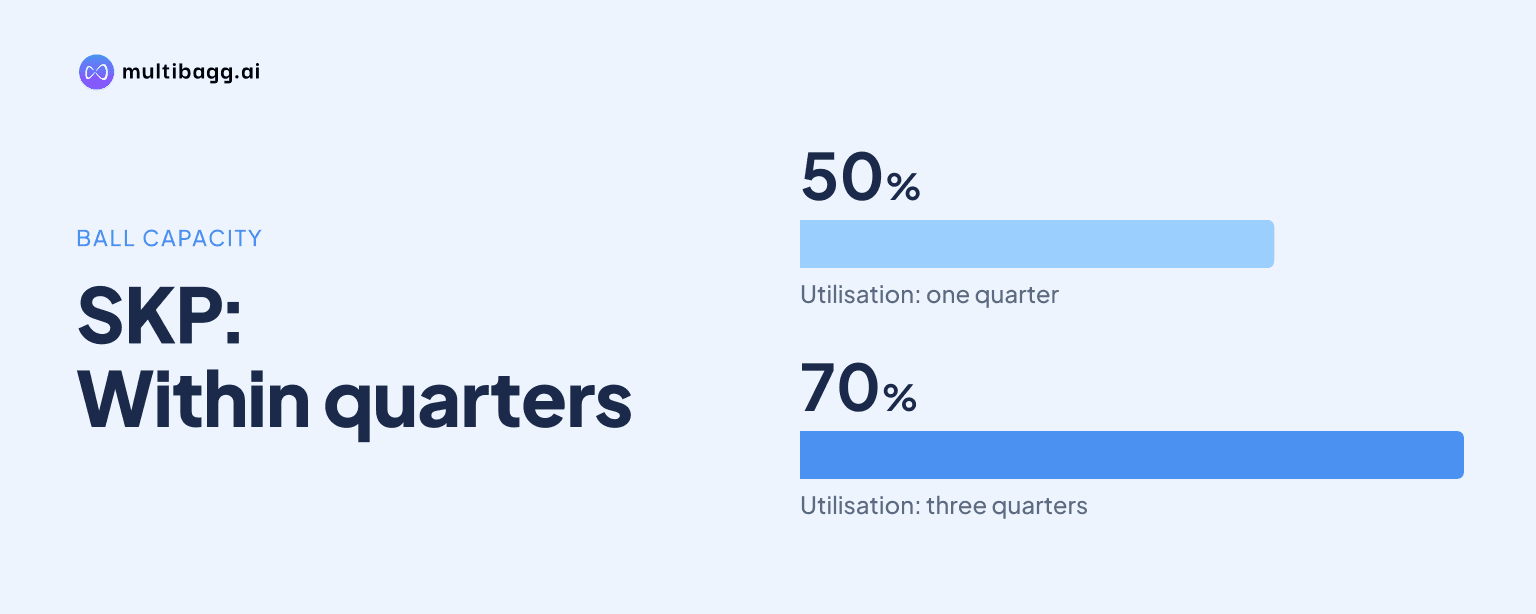
SKP Bearing Industries Limited is targeting 50%-70% ball-plant utilisation within one to three quarters after one bearing company and one automotive company each indicated demand equal to 25% of capacity. SKP said products are approved and commercial terms settled, while audits, initial supplies and customer reviews must precede bulk deliveries.
Know SKP Bearing Industries inside out
Results, valuation, peers and who's buying, in one view.
What have the two ball customers indicated to SKP?
SKP said the two customers have each indicated demand equivalent to 25% of ball-plant capacity, or 50% in total. One customer is a bearing company and the other is an automotive company, giving the prospective ramp exposure across two end-market categories rather than one customer type.
Management said the bearing-company customer is among the major bearing companies in India, without naming it. It also said the company plans its customer base with industry balance in mind, and separately disclosed that no top customer represented more than 20% of revenue in the prior year.
The 50% indication is not equivalent to an immediate full-capacity order. Management described the commitments as the starting level for a supply relationship in which customers initially allocate a smaller part of their requirement and can subsequently increase their share of business.
What must happen before SKP begins bulk ball supplies?
SKP said audits, procedural work and smaller supplies must occur before bulk deliveries begin. Management said the products were approved and commercials settled, but characterised the next stage as auditing followed by small supplies and then bulk supplies.
Management said the relevant approvals had been received very recently, about one month before the call. It described the industry as having high entry and exit barriers, which helps explain why product approval does not automatically produce a full-volume ramp in the same period.
SKP said customers first assess quality, delivery and supply sustainability at smaller volumes before reviewing whether to raise the share of business. Some customer applications also require field approvals, adding a further step to the timeline for higher plant utilisation.
A separate automotive localisation discussion remains unresolved. Management said that customer imports a major share of its requirement from outside India and found SKP's commercial proposition viable, but the customer must obtain internal approval for the change before returning to SKP.
When does SKP expect ball plant utilisation to reach 50%-70%?
SKP is targeting 50%-70% ball-plant utilisation in one to two quarters, with three quarters as the maximum timeframe it stated. Management said the range reflects both the two customers that indicated 25% each and the company's efforts to allocate capacity among other customers.
When asked whether the two accounts could ramp over four or five quarters, management said it thought this could happen by FY28. That answer reflects the staged nature of qualification and supply expansion, whereas the one-to-three-quarter range is management's nearer-term utilisation objective.
SKP did not disclose installed ball-plant capacity in tonnes, current ball-plant utilisation, expected ball revenue or incremental earnings before interest, tax, depreciation and amortisation, or EBITDA, from the ramp. During a question on potential revenue from Indian plants at 190 to 200 tonnes of capacity, management said it would calculate the figure, but no calculation was given before the call ended.
Management said initial ball projects had started ramping and that utilisation had increased in H1 FY27, the half year ended September 2026. It did not quantify the current utilisation level, making the 50%-70% range a forward target rather than a reported operating result.
Got a follow-up? Ask IRIS
How does the ball ramp differ from SKP's roller expansion?
SKP said roller capacity has increased in some areas and that this contributed to higher utilisation and production volume. The roller vertical remains in expansion mode, however, because capacity additions are being made in stages rather than through one large expansion.
Orders for certain major roller capital goods were placed over the past two quarters, and management expects the equipment to take three to six months to arrive and be installed. This makes the roller programme dependent partly on equipment delivery and installation, unlike the ball programme, where the principal issue is customer qualification and the conversion of approvals into recurring supply.
The company said it was not yet operating roller capacity at its fullest level because some parts of the expansion remain incomplete. In contrast, the ball plant has settled and is now being targeted for growth, according to management's presentation for H1 FY27.
What does SKP's wider customer plan show about the ramp?
SKP said it is pursuing ball allocations beyond the two customers that each indicated 25% of capacity. Management said the company supplies major bearing companies and automotive companies, while prospective ball capacity will be allocated across customers rather than concentrated solely in the two disclosed accounts.
The company also said no industry segment represented more than 20% in the revenue breakdown discussed on the call. That disclosure refers to industry mix, while management separately said no top customer exceeded 20% of revenue in the prior year, distinguishing customer concentration from sector concentration.
Exports account for about 5% of revenue, and management targets about 10% over the coming three to four years. It said this export target concerns new and existing customers and excludes the French subsidiary, so the target is separate from the domestic ball-plant utilisation plan.
SKP said its France operation remains cash negative but management expects a break-even in the fourth quarter, based on discussions and larger volume commitments from customers for the next calendar year. Management also said it had added two to three customers in France, including a luxury-watch customer acquired during the last two quarters.
Conclusion
The two disclosed ball customers could form a 50% capacity base because each has indicated demand equal to 25% of the plant, but the outcome remains subject to audits, smaller deliveries, field approvals where required and customer performance reviews. SKP's 50%-70% target within up to three quarters is therefore management's operational objective, not reported utilisation or a disclosed full-capacity contract.
The next indicators are whether small supplies convert to bulk orders and whether the two customers raise their share of business after reviewing quality, delivery and sustainability. Management also disclosed roller equipment delivery and installation over three to six months, a fourth-quarter France break-even target, and an export target of about 10% of revenue within three to four years.