










SKP Adds Rolex as Its French Unit Targets FY27 Q4 Break-Even
Key highlights
- SKP said its French business added Rolex and two to three customers in the past two quarters.
- Management is targeting FY27 Q4 break-even for the French business, which remained cash negative during the call.
- SKP said no top customer contributes more than 20% of revenue.
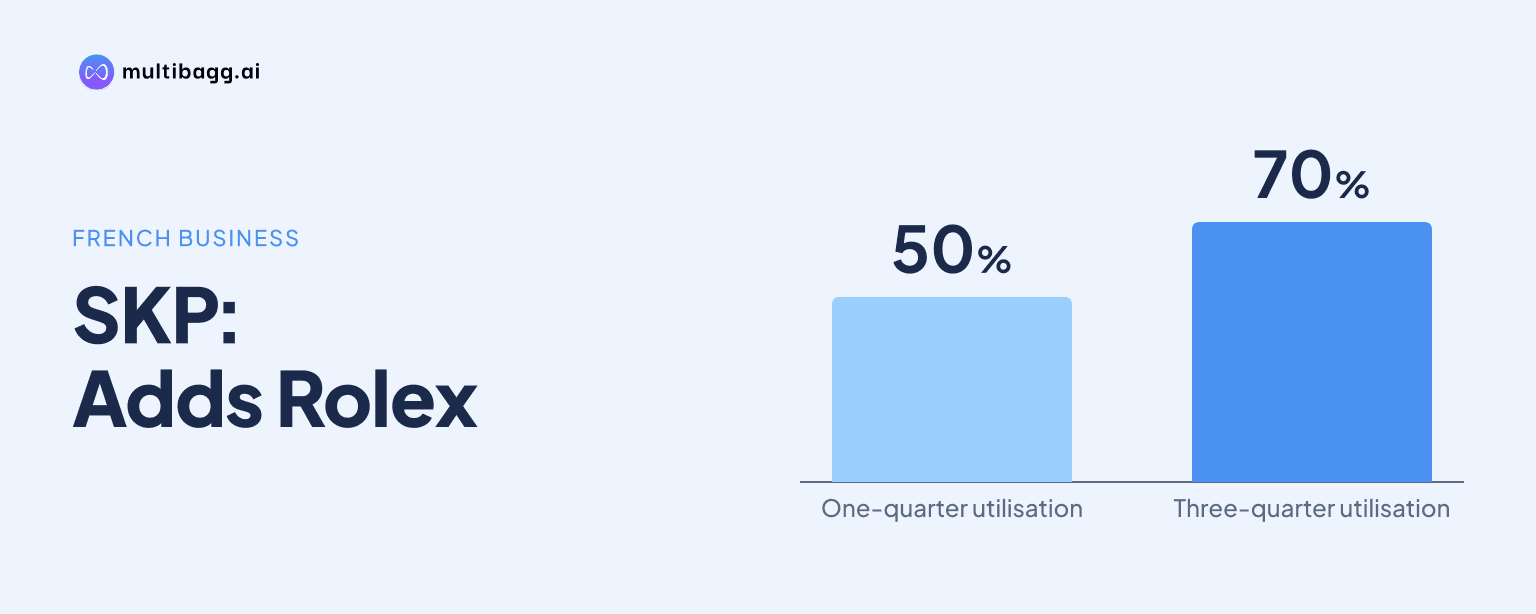
- Management expects ball-plant utilisation of 50% to 70% within one to three quarters.
powered by IRIS
In the past two quarters, SKP Bearing Industries Limited added Rolex and two to three customers to its French business, supporting management’s FY27 Q4 break-even target for an operation that remained cash negative during the Q2 and H1 FY27 call. Management cited higher customer volume commitments, larger incoming orders and lower production costs.
Know SKP Bearing Industries inside out
Results, valuation, peers and who's buying, in one view.
How did SKP add Rolex in France?
SKP said Rolex was among two to three customers added by its French business during the past two quarters. Management disclosed the name after an analyst asked how the French customer base had changed from the previous year, describing Rolex as an example of the confidence placed in SKP. The call did not disclose the contract value, product volume, pricing, duration or the components supplied to Rolex.
The customer disclosure is relevant because the French unit was still cash negative when SKP held its Q2 and H1 FY27 call. Management said the operation combines Indian raw-material sourcing and tooling development with manufacturing in France, a structure it said enables cost control. It added that European customers are seeking suppliers that can provide competitive costs alongside quality and delivery as costs in Europe have increased.
What supports SKP’s FY27 Q4 break-even target in France?
SKP is targeting break-even for the French business in FY27 Q4, according to management. In an earlier response on the same call, management said the quarter ending December was expected to be the last period before turnaround, with a zero cash-flow position expected around January. The subsequent direct response specified FY27 Q4, making the timing a management target rather than a reported result.
Management linked its confidence to annual customer-order processes in Europe, where it said next calendar-year orders are generally finalised one quarter in advance. It said pricing, volumes and other discussions begin in September and October, and that most existing French customers had increased their business commitments. SKP said it had already started receiving much larger orders for the next calendar year, while several prospective customers remained in discussions.
Cost reduction is the second part of the French break-even plan. Management said the break-even threshold had changed after production-cost reductions, but it did not provide an updated threshold or quantify the savings. The outcome therefore depends on increased customer volumes materialising and on the lower production costs described by management continuing through FY27 Q4.
Why does SKP need higher French volumes?
SKP said consolidated margins will be below the margin levels of its Indian operations because the French business has a different cost structure, although France is expected to add larger volumes. The near-term aim for the French unit is therefore higher throughput and break-even, rather than matching standalone Indian profitability. The Rolex and other customer additions are evidence of commercial activity, but not a disclosed measure of revenue or earnings.
Management said it had expected the French takeover to require a gestation period of two to three years. It added that a turnaround in the third or fourth year would be an achievement, while characterising the acquisition cost as zero or negligible. The call did not disclose the acquisition date, French revenue, operating loss, capacity utilisation or cash requirement, so the financial scale of a turnaround cannot be calculated from the transcript.
SKP said the slowdown in France and Europe may create customer openings because customers are under cost pressure. Management described the slowdown as significant and said customers were looking for suppliers that can provide sustainable products at competitive prices. It said this had resulted in larger shares of business from existing customers and new customers returning, although it did not quantify those shares or identify the other new accounts.
Got a follow-up? Ask IRIS
What does the Rolex customer win not disclose?
The Rolex disclosure confirms a customer addition, but SKP did not say whether revenue from Rolex has begun or whether all production approvals have been completed. Management also did not disclose how much capacity the account may use, the order duration, or whether the other two to three customers are in watches, bearings or another end market. The evidence therefore establishes customer traction, not a quantified contribution to French sales or profit.
SKP provided broader customer-concentration context by saying no top customer contributes more than 20% of revenue. However, it did not give the combined revenue contribution of the top five customers, despite being asked for that figure. Separately, management said exports account for about 5% of revenue and targeted about 10% over the coming three to four years, with current exports coming from new and existing customers rather than the French business.
The French plan also has implications for funding. Responding to an analyst who cited debt of Rs 40 crore, management said current debt was mostly at its peak and that SKP could become debt-free within a maximum of two to three years if it does not undertake a major expansion. Management also said it would invest if business opportunities required it, so the debt-repayment timeline is conditional.
How does SKP’s Indian business compare with its French plan?
SKP said its standalone Indian business should perform better in H2 FY27 than in H1 FY27. Management attributed H1 pressure to higher petroleum-energy costs and interest rates, while saying price revisions from automotive and other customers had not yet offset those costs. It said the price-revision turnaround began in Q2 and should support better Q3 and Q4 performance in the standalone business.
The Indian growth plan also includes the ball plant, where management said two customers could initially take about 25% of capacity each. SKP expects ball-plant utilisation of 50% to 70% within one to two quarters, or at most three quarters, subject to customer approvals, testing and field approvals. This ramp is separate from the France plan, but both depend on customer approvals and phased volume increases.
Management said the ball plant would allocate capacity across more than the two initial customers. It explained that customers generally begin with a smaller portion of their requirement to assess quality, delivery and sustainability before increasing their share of business. The 50% to 70% utilisation range was therefore presented as a target based on approvals and customer ramp-up, not as achieved utilisation.
Conclusion
The French business has gained a named luxury-watch customer and two to three new accounts during the past two quarters, while existing customers have increased volume commitments for the next calendar year. Those developments provide the commercial basis for management’s stated FY27 Q4 break-even objective, but the operation was still cash negative when the call took place and no revenue contribution from Rolex was disclosed.
The next disclosure to watch is whether the French unit reaches management’s FY27 Q4 break-even target and whether customers still in discussion convert into orders. Investors can also monitor the planned ball-plant ramp to 50% to 70% utilisation within up to three quarters, and management’s conditional aim to become debt-free within two to three years if no major expansion requires further investment.