










Spandana targets Rs 1,000 crore micro-LAP book in two to three years
Key highlights
- Spandana plans to expand its micro-LAP book from about Rs 305 crore to Rs 1,000 crore in two to three years.
- Spandana has shifted its micro-LAP focus from Rs 1 lakh-Rs 5 lakh loans to Rs 5 lakh-Rs 15 lakh loans, with some cases up to Rs 20 lakh.
- Spandana indicated micro-LAP pricing of 19%-22%, LTV of about 60% and loan tenures of seven to 10 years.
- Spandana plans to reduce exclusive LAP branches from 86 to about 70-75 while operating across six states.
powered by IRIS
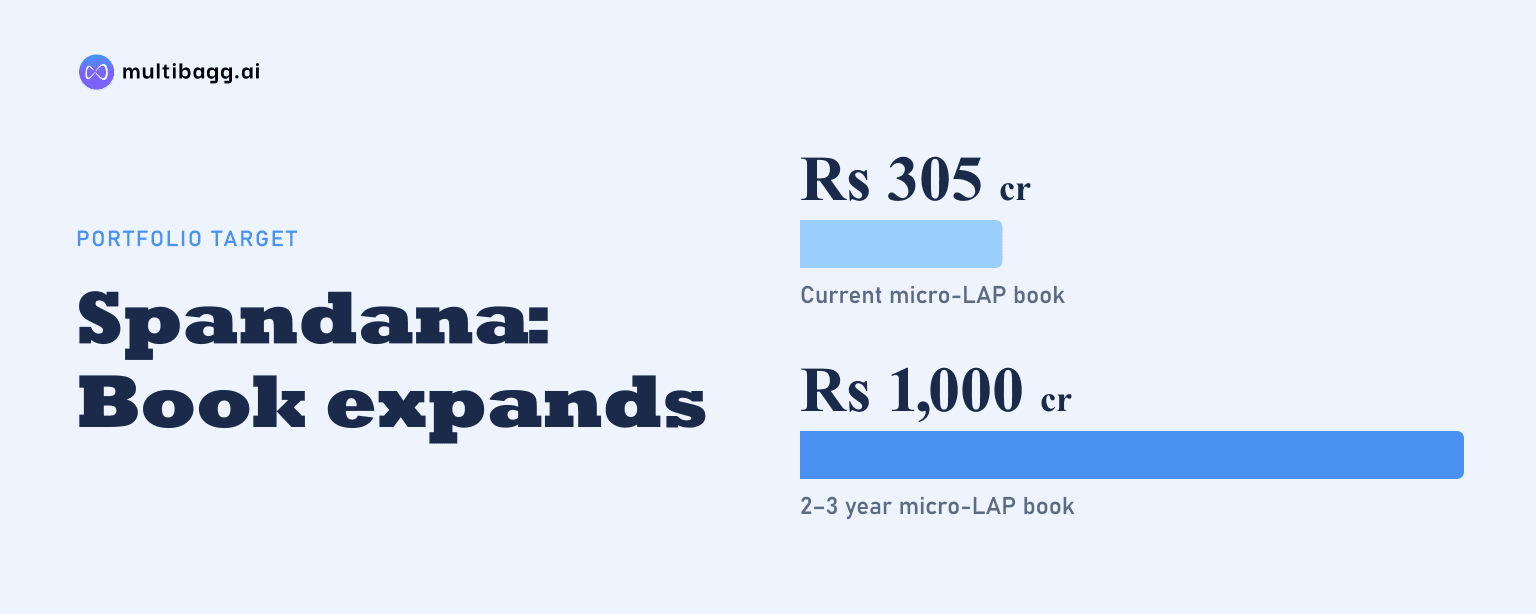
Spandana plans to grow its approximately Rs 305 crore micro loan against property, or micro-LAP, book to Rs 1,000 crore over the next two to three years by shifting its focus from Rs 1 lakh-Rs 5 lakh loans to Rs 5 lakh-Rs 15 lakh loans, with some cases reaching Rs 20 lakh.
Know Spandana Sphoorty Financial inside out
Results, valuation, peers and who's buying, in one view.
Why is Spandana moving to larger micro-LAP loans?
Spandana is moving to larger micro-LAP loans because management said its earlier Rs 1 lakh-Rs 5 lakh segment mirrored the borrower profile of its microfinance business. The new focus is Rs 5 lakh-Rs 15 lakh, with loans of up to Rs 20 lakh in some cases, which management described as serving a different customer profile from the joint liability group, or JLG, business.
The shift is part of a three-product structure planned after the merger with subsidiary Criss Finance Limited. Management said JLG would remain Spandana's core business, while individual loans would be a smaller, better-underwritten book and micro-LAP would provide a secured-lending line. Management indicated that JLG loans could represent 60%-70% of the post-merger portfolio, compared with 8%-10% for micro-LAP.
The Rs 1,000 crore ambition represents an increase of about Rs 695 crore from the current Rs 305 crore book. The target portfolio would therefore be more than three times the current level, but management did not disclose annual disbursement targets, a yearly portfolio run rate or a specific target date within the stated two-to-three-year period.
Where will Spandana grow its micro-LAP business?
Spandana plans to grow micro-LAP in six existing states rather than enter new states for at least the next year or so. Its stated footprint comprises Rajasthan and Madhya Pradesh, alongside Andhra Pradesh, Telangana, Karnataka and Tamil Nadu, and management said it would expand within these markets.
This plan changes the emphasis from adding geographies to building deeper coverage in the existing network. An analyst described the product as previously concentrated in Andhra Pradesh or that region, but management said the current micro-LAP presence covers all six states. The transcript did not provide state-level micro-LAP assets, disbursements or collection data.
Management also said it was revamping the micro-LAP team and bringing in people with affordable-housing experience rather than only micro-housing or micro-LAP experience. That staffing plan accompanies the shift to Rs 5 lakh-Rs 15 lakh loans, although the call did not disclose the number of hires, the timing of appointments or the effect on approval and collection performance.
What are Spandana's pricing, tenure and LTV limits?
Spandana said it intends to price the larger micro-LAP loans at 19%-22%, with loan-to-value, or LTV, of about 60%. Management said LTV may reach 65% in some cases, while the normal tenure will be seven to eight years and exceptions may extend the tenure to eight to 10 years.
LTV measures the loan amount as a proportion of the property value, making the stated 60% level a key underwriting parameter for the secured product. The call did not disclose average property values, average sanctioned loan sizes, realised yields, approval rates or historical delinquency in the Rs 5 lakh-Rs 20 lakh range.
The stated terms distinguish the planned portfolio from Spandana's previous Rs 1 lakh-Rs 5 lakh micro-LAP focus. Management linked that older range to the microfinance profile, whereas the revised ticket range, 19%-22% pricing and seven-to-10-year tenure are intended for the larger secured-loan customer segment.
Got a follow-up? Ask IRIS
Will Spandana distribute micro-LAP through microfinance branches?
Spandana said micro-LAP will continue to use a separate branch network rather than the same branches as its microfinance operations. It had 86 LAP branches at the time of the call and plans to reduce that number to about 70-75 over the next couple of months, while retaining exclusive LAP branches.
The planned branch count implies a reduction of 11 to 16 locations from 86. Management did not identify the branches affected, quantify expected operating-cost changes or provide employee numbers. It did state that the remaining roughly 70 branches would be dedicated to LAP activity as the company scales the Rs 305 crore book.
Once the Criss Finance Limited merger is effective, management said some Spandana branches may refer customer leads to the LAP network. This would use the broader branch base for lead generation while preserving separate LAP branches for product delivery. The call did not specify referral volumes, conversion targets or when that arrangement would begin.
How does the merger shape Spandana's secured-lending strategy?
Spandana said the merger is intended to bring together a parent that currently does 100% qualifying assets and a subsidiary that originates individual loans and micro-LAP. Management's intended post-merger mix includes JLG at 60%-70%, cash loans at about 20%, individual loans at 1%-2% and micro-LAP at 8%-10%.
The merger had a one-time accounting effect before the appointed date. Management said it reversed a deferred tax asset, or DTA, of Rs 7.9 crore because a pre-appointed-date DTA would not be available to the merged entity. It said standalone profit after tax was Rs 35 crore, compared with Rs 16 crore in the first quarter, on a standalone basis.
Management also said it had not insured loans under the Credit Guarantee Fund for Micro Units scheme so far, though it may consider doing so in the coming year. That was not presented as a confirmed programme, and the call did not link any prospective insurance decision specifically to the micro-LAP book or its Rs 1,000 crore target.
Conclusion
Spandana's plan is to add a larger secured-lending business while retaining JLG as its principal product. The move from Rs 1 lakh-Rs 5 lakh loans to Rs 5 lakh-Rs 15 lakh loans, alongside pricing of 19%-22%, LTV of about 60% and seven-to-10-year tenures, sets the operating framework for expanding micro-LAP from Rs 305 crore to Rs 1,000 crore.
The next disclosed execution markers are the reduction of LAP branches from 86 to about 70-75, the outcome of the Criss Finance Limited merger and growth across the six existing states. Management has said it does not plan to enter new states for at least the next year or so, leaving portfolio growth, staffing changes and lead referrals within the current footprint as the main matters to watch.