










SRIT India wins Rs 128.93 crore Ooredoo services contract
Key highlights
- SRIT India disclosed a Rs 128.93 crore Ooredoo QPSC contract on November 13, 2026.
- The Qatar mandate covers electronic health and pharmacy and drug-control information-system managed services.
- Hospitals, clinics, health centres and pharmacies have a two-year onboarding period.
- E-health ecosystem and national drug-control rollout operations have a three-year period.
powered by IRIS
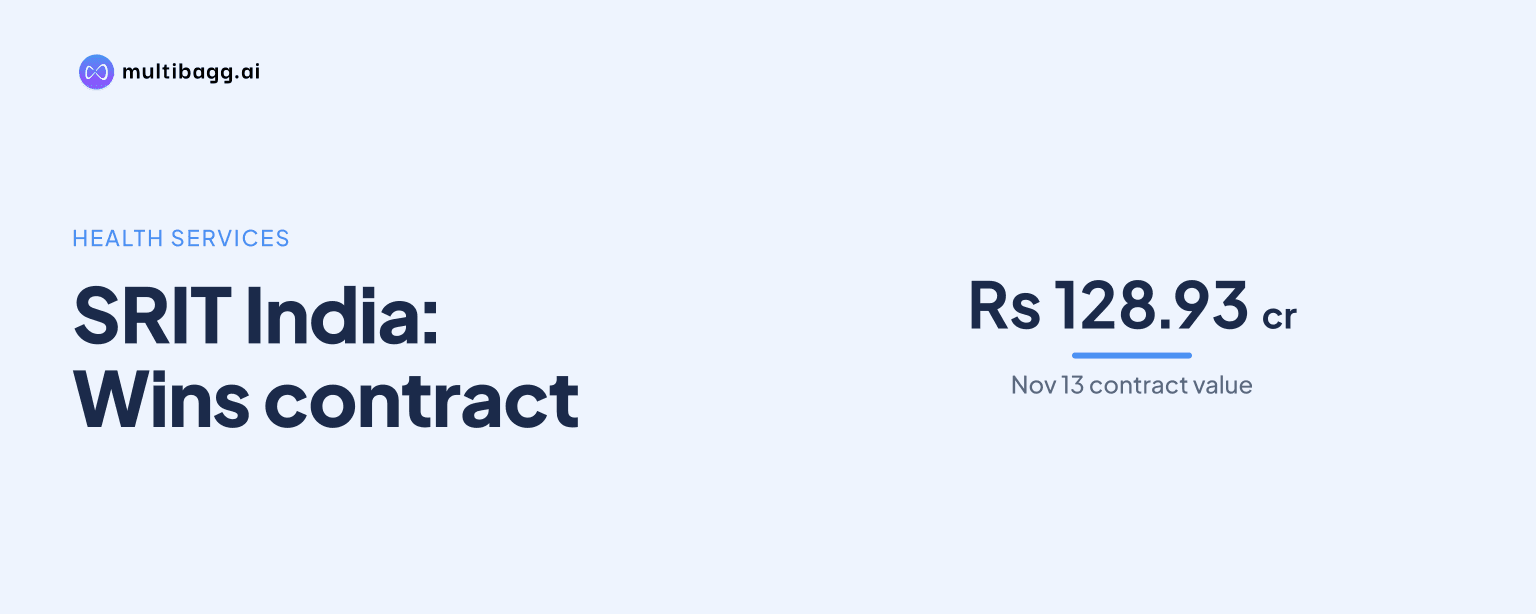
SRIT India Limited has won a Rs 128.93 crore international managed-services contract from Ooredoo QPSC for electronic health and pharmacy and drug-control information systems in Qatar, with provider onboarding set for two years and e-health ecosystem and national drug-control rollout operations set for three years. The company disclosed the order on November 13, 2026.
Know SRIT India inside out
Results, valuation, peers and who's buying, in one view.
What contract has SRIT India won from Ooredoo?
SRIT India has received an international order from Ooredoo QPSC with broad consideration of Rs 128.93 crore. The November 13, 2026 disclosure describes the contract as managed services for electronic health and information systems for pharmacy and drug-control departments. The filing does not provide a year-by-year value, payment timetable, delivery milestones or a split of the consideration between service components.
Ooredoo QPSC is identified in the disclosure as a Qatari public shareholding company, while SRIT India classifies the award as international rather than domestic. The disclosed contracting parties are Ooredoo QPSC and SRIT India's branch in Doha QFC, Qatar. The filing does not state a project start date, contract award date or a single final completion date for the Rs 128.93 crore mandate.
What services will SRIT India provide in Qatar?
SRIT India will provide managed services for electronic health and for information systems serving pharmacy and drug-control departments. The stated scope also includes onboarding hospitals, clinics, health centres and pharmacies. This gives the contract a provider-onboarding element alongside the operation of electronic-health and drug-control systems.
The filing separately identifies managed services for the e-health ecosystem and national drug-control rollout operations. SRIT India does not disclose the number of hospitals, clinics, health centres or pharmacies that will be onboarded under the two-year component. It also does not disclose service-level measures, technology platforms, staffing levels or client-acceptance conditions for the three-year operational work.
How long will the SRIT India contract run?
SRIT India has disclosed a two-year period for onboarding hospitals, clinics, health centres and pharmacies, compared with three years for the e-health ecosystem and national drug-control rollout operations. The one-year difference is the clearest comparison between the contract's disclosed workstreams. The company stated the periods by activity rather than providing one overall contract tenure.
The longer three-year period applies to ecosystem management and national drug-control rollout operations, while the two-year period applies to healthcare-provider and pharmacy onboarding. The November 13, 2026 announcement does not state whether these workstreams start simultaneously or sequentially. It also does not allocate the Rs 128.93 crore consideration between the two-year and three-year portions.
Got a follow-up? Ask IRIS
How is the Rs 128.93 crore consideration defined?
SRIT India reported Rs 128.93 crore as the broad consideration for the Ooredoo QPSC order. This is the only rupee value disclosed in the November 13, 2026 announcement. The filing does not specify whether the consideration is fixed or variable, nor does it disclose advance payments, billing frequency, retention terms or performance-linked payments.
The disclosed scope combines provider onboarding with electronic-health ecosystem management and national drug-control rollout operations. As a result, the two-year and three-year periods cannot establish a published annual value for either workstream because SRIT India provides no revenue allocation. The company also does not disclose implementation costs, margins, capital expenditure, subcontracting arrangements or revenue-recognition timing for the Rs 128.93 crore order.
Is the Ooredoo contract related to SRIT India promoters?
SRIT India said its promoters, promoter group and group companies have no interest whatsoever in Ooredoo QPSC. The company also stated that the Rs 128.93 crore order does not fall within related-party transactions. Both disclosures were included in the Regulation 30 announcement dated November 13, 2026.
The filing identifies SRIT India's Doha QFC branch as the contracting party for the Qatar work, rather than giving operational details for other SRIT India units. It does not state the branch's employee base, responsibilities, revenue share or relationship with the listed company's other operations. The disclosed role is limited to being the Qatar contracting party for Ooredoo QPSC.
What does SRIT India leave undisclosed about the order?
SRIT India confirms the Rs 128.93 crore international order, the electronic-health and pharmacy and drug-control systems scope, and service periods extending to three years. It also confirms the inclusion of hospitals, clinics, health centres and pharmacies in the two-year onboarding work. These are the principal commercial and operational terms set out in the November 13, 2026 filing.
SRIT India does not disclose a start date, completion date, project location within Qatar, implementation stages, cancellation provisions or client acceptance milestones. The filing also provides no forecast for revenue recognition in a financial year. Therefore, the stated Rs 128.93 crore value and maximum three-year service period do not establish a disclosed annual financial contribution.
Conclusion
SRIT India's Rs 128.93 crore Ooredoo QPSC order establishes an international managed-services mandate covering healthcare-provider onboarding, electronic-health ecosystem operations and national drug-control rollout work in Qatar. The key difference within the disclosed scope is that hospitals, clinics, health centres and pharmacies are assigned a two-year onboarding period, while ecosystem and national drug-control operations have a three-year period.
The next point to watch is execution of the two-year onboarding plan and the three-year e-health ecosystem and drug-control rollout operations through SRIT India's Doha QFC branch. SRIT India has not disclosed a commencement date, revenue schedule, workstream-wise consideration or implementation target, so subsequent company disclosures would be required to show progress and financial timing.