










Suprajit Q2 EBITDA rises 26.7%, ahead of revenue growth
Key highlights
- Suprajit’s Q2 FY 2026-27 consolidated operational EBITDA rose 26.7% to Rs 138.4 crore.
- Suprajit’s Q2 FY 2026-27 consolidated revenue increased 20.6% to Rs 1,135.1 crore.
- Suprajit’s Q2 operational EBITDA margin rose to 12.2% from 11.6% a year earlier.
- Suprajit’s Sep-26 first-half consolidated operational EBITDA increased 39.9% to Rs 267.2 crore.
powered by IRIS
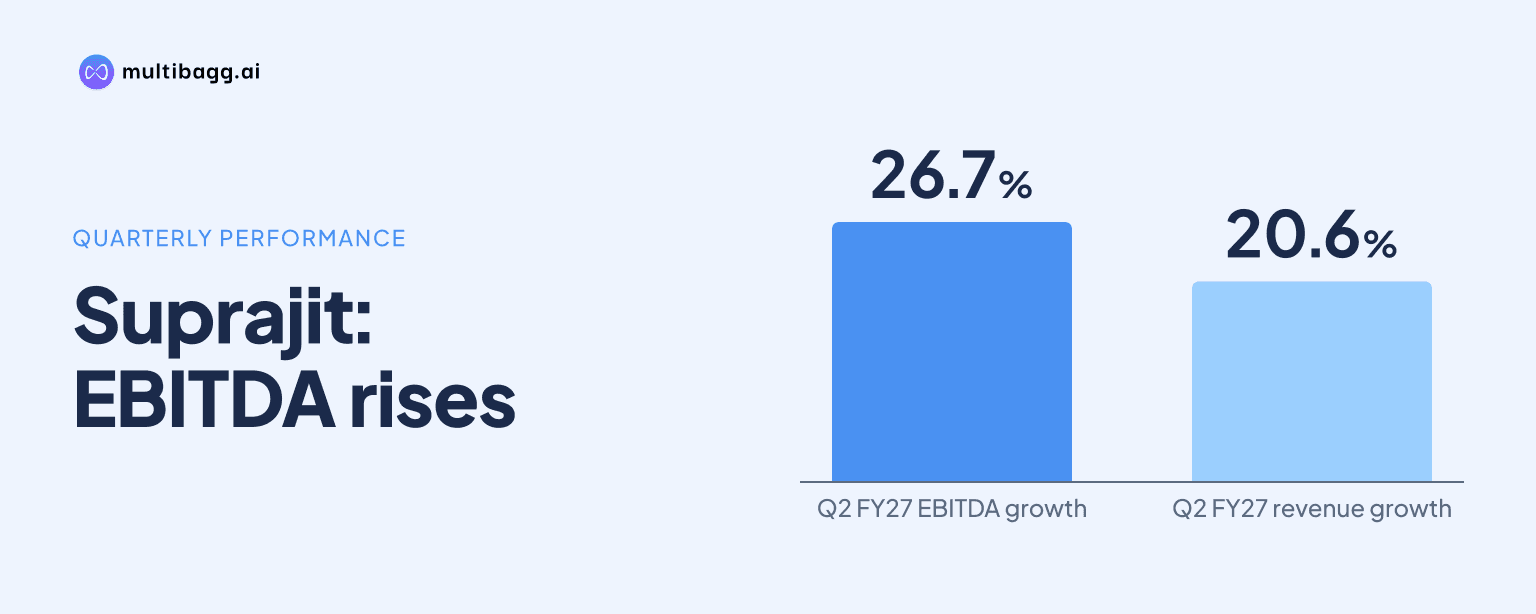
Suprajit Engineering Limited reported consolidated operational EBITDA of Rs 138.4 crore in Q2 FY 2026-27, up 26.7% year on year and faster than 20.6% revenue growth to Rs 1,135.1 crore. The EBITDA margin increased 0.6 percentage points to 12.2%, despite management identifying commodity, wage, shipping and supply-chain pressures.
Know Suprajit Engineering inside out
Results, valuation, peers and who's buying, in one view.
How did Suprajit’s Q2 operating profit compare with revenue growth?
Suprajit’s consolidated operational EBITDA grew faster than revenue in Q2 FY 2026-27, rising 26.7% to Rs 138.4 crore while revenue increased 20.6% to Rs 1,135.1 crore. In Q2 FY 2025-26, consolidated revenue was Rs 941 crore and operational EBITDA was Rs 109.2 crore. The reported comparison includes SCS in both the consolidated and GCM figures.
The difference in growth rates means operational EBITDA added Rs 29.2 crore year on year, compared with a Rs 194.1 crore increase in revenue. Operational EBITDA refers to earnings before interest, tax, depreciation and amortisation, excluding non-operational income and expenses as well as foreign-exchange gains or losses. This definition matters because the 12.2% margin is an operating measure rather than a measure of reported profit after every income and cost item.
What lifted Suprajit’s consolidated EBITDA margin in Q2?
Suprajit said margins improved at both ICM and PLE compared with Q1 of FY 2026-27, while the group’s Q2 consolidated EBITDA margin rose to 12.2% from 11.6% a year earlier. Management described the overall operating performance, including SCS, as solid for the quarter. The presentation does not quantify the separate margin change at ICM or PLE.
The company also reported double-digit quarterly revenue growth at ICM and PLE, without providing their individual revenue figures on the cited pages. GCM revenue growth was 24.3% and SED revenue growth was 50.4%, exceeding the group’s 20.6% consolidated revenue increase. These divisional growth rates indicate that the revenue expansion was not limited to one stated business area, although the presentation does not allocate the Rs 1,135.1 crore of consolidated revenue among divisions.
Management said the margin improvements at ICM and PLE were expected to continue in the current quarter. That is a management expectation rather than a reported result, and the presentation does not specify a margin target, planned price increase, cost-saving amount or timetable behind the expectation. The disclosed Q2 outcome remains a 0.6-percentage-point year-on-year margin expansion and a 26.7% increase in operational EBITDA.
Which costs and supply constraints did Suprajit identify?
Suprajit identified higher oil and commodity prices, along with inflationary trends including wages, as factors continuing to drag margins. Container shortages and higher shipping costs also created higher costs and supply constraints during the quarter. These pressures were present alongside the Q2 FY 2026-27 operational EBITDA margin of 12.2%, rather than preventing the reported increase from 11.6% in Q2 FY 2025-26.
The presentation does not assign rupee amounts to commodity, wage, container or shipping costs. It also does not state whether the 0.6-percentage-point increase in consolidated margin came from procurement changes, pricing, product mix, factory utilisation or another specific mechanism. The available evidence is therefore limited to management’s list of cost factors and the reported operating result of Rs 138.4 crore in EBITDA.
Global markets remained subdued, according to management, because of geopolitical conflicts, inflation and rising interest rates. In contrast, the overall Indian automotive sector recorded 20.2% growth, which management attributed to the lower goods and services tax, or GST, regime. Suprajit said this Indian automotive-sector growth was expected to temper in the second half because of a high base effect from the prior year.
Got a follow-up? Ask IRIS
How did Suprajit’s first-half performance compare with Q2?
Suprajit’s first-half consolidated operational EBITDA grew 39.9% to Rs 267.2 crore in Sep-26, faster than the 26.7% increase recorded in Q2 FY 2026-27. First-half revenue increased 22.2% to Rs 2,204.7 crore, while the operational EBITDA margin reached 12.1%, up from 10.6% in Sep-25. The half-year figures include SCS.
The first-half margin expansion of 1.5 percentage points was larger than the 0.6-percentage-point expansion in Q2 alone. The reported figures show that the Sep-26 half-year margin was 12.1%, slightly below the Q2 margin of 12.2%. The presentation does not supply Q1’s consolidated revenue or EBITDA in the cited pages, so it does not allow a direct calculation of the Q1 margin from the disclosed data.
What should readers watch after Suprajit’s Q2 result?
Readers should watch whether the margin gains at ICM and PLE continue in the current quarter, as management expects, while oil, commodity, wage and shipping costs remain cited pressures. The key reported starting point is a consolidated Q2 operational EBITDA margin of 12.2%, compared with 11.6% a year earlier. No numerical guidance for revenue, EBITDA or margin is provided in the presentation.
Readers should also monitor whether the Indian automotive sector’s 20.2% growth moderates in the second half as management anticipates because of the high base effect. At the same time, management described global markets as subdued amid geopolitical conflict, inflation and rising interest rates. GCM’s 24.3% and SED’s 50.4% quarterly revenue growth are the disclosed divisional indicators against which the group’s next reported revenue performance can be assessed.
Conclusion
Suprajit’s Q2 FY 2026-27 consolidated result showed operating profit growing faster than sales: operational EBITDA increased 26.7% to Rs 138.4 crore while revenue rose 20.6% to Rs 1,135.1 crore. The resulting 12.2% margin was 0.6 percentage points above the prior-year quarter, with management citing improvements at ICM and PLE alongside strong stated growth at GCM and SED.
Next, the disclosed issues are whether ICM and PLE margin improvements continue in the current quarter and whether higher commodity, oil, wage, container and shipping costs persist. Management also expects Indian automotive-sector growth to temper in the second half after 20.2% growth, while global market conditions remain affected by conflict, inflation and interest rates.