










Usha Martin targets 10,000 tonnes of plasticated LRPC output
Key highlights
- Usha Martin expects plasticated LRPC volume to rise from about 3,500 tonnes this year to close to 10,000 tonnes in two years.
- LRPC volume fell 17% to 19,000 tonnes in the first half of FY27 from 23,000 tonnes a year earlier.
- Usha Martin plans to expand plasticated-LRPC capacity from 6,000 tonnes to 11,000-12,000 tonnes annually by June next year.
- Management expects significant plasticated-LRPC order-book additions in domestic and export markets within the next two quarters.
powered by IRIS
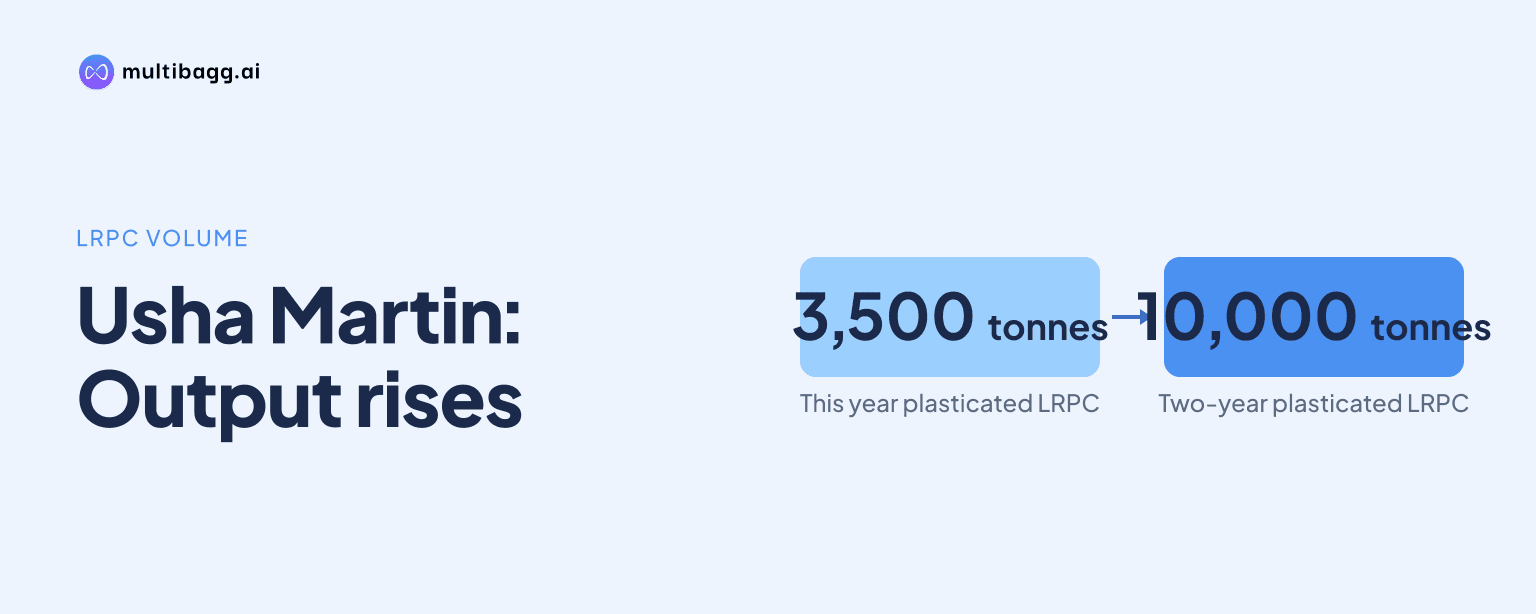
Usha Martin Limited plans to build plasticated LRPC volume to about 10,000 tonnes within two years while reducing lower-margin black LRPC, after total LRPC volume fell 17% to 19,000 tonnes in the first half of FY27 from 23,000 tonnes a year earlier. Management said the replacement strategy depends on project awards, commissioning and delivery schedules.
Know Usha Martin inside out
Results, valuation, peers and who's buying, in one view.
Why is Usha Martin replacing black LRPC with plasticated LRPC?
Usha Martin is reducing black LRPC because management said domestic prices and margins had become extremely low, leaving little value addition in the product. The company said the first-half decline was mainly in black LRPC, with monsoon conditions also affecting demand, while plasticated LRPC was progressing in line with its target.
The move is a product-mix decision rather than an exit from LRPC. Management said Usha Martin would remain in the black-LRPC market where it can secure the right floor price, but would not sell at a loss merely to preserve volume. Black LRPC accounted for the bulk of the 4,000-tonne drag on first-half volume, while total first-half volume was flat at 101,000 tonnes.
Usha Martin’s replacement product is plasticated LRPC, for which management said customer approvals are in place. The company made its first shipment to a Southeast Asian customer, which management said was accepted well, and has quoted for projects in India and export markets. Management expects the shift to build a larger plasticated-LRPC portfolio over the next two years.
How fast will Usha Martin grow plasticated LRPC volume?
Usha Martin expects to deliver about 3,500 tonnes of plasticated LRPC this year, about 7,000 to 8,000 tonnes next year and close to 10,000 tonnes in the following year. Management said those targets depend on projects being commissioned, orders being received and delivery schedules being met because the business is project-based.
The company currently has about 6,000 tonnes of annual plasticated-LRPC capacity and said it is expanding this to 11,000 to 12,000 tonnes a year by June next year. The expected 3,500 tonnes of output this year would leave capacity available before the planned expansion is completed.
Management expects significant domestic and export order-book additions within the next two quarters, based on secured approvals and active contract negotiations. It did not commit to a precise near-term LRPC sales figure because projects remain in final stages and may be delayed.
Why did Usha Martin’s LRPC volume fall in first-half FY27?
Usha Martin’s LRPC volume fell to 19,000 tonnes in the first half of FY27 from 23,000 tonnes in the corresponding prior period, a decline of about 17%. Management attributed the decrease principally to black LRPC, citing monsoon effects and domestic prices that did not provide acceptable margins.
The company distinguished that result from its wider rope and wire operations. Ropes were flat in the first half, while wires increased, and domestic wire-rope volume reached almost 13,000 tonnes in the most recent quarter. A roughly 30% volume decline in the Middle East and weaker general-purpose rope demand in export markets offset domestic and United States growth.
Usha Martin said it has LRPC capacity available but is producing conventional LRPC only when it receives an acceptable floor price. That approach can make reported LRPC volume uneven even when production capacity is available, because management is prioritising margin protection over output in a commoditised product category.
Got a follow-up? Ask IRIS
What supports Usha Martin’s plasticated LRPC plan?
Usha Martin said all plasticated-LRPC approvals are in place and customers that approved its product have begun quoting with it. The company is negotiating contracts in India and overseas, while the first Southeast Asian shipment was accepted well, according to management. Management did not disclose customer names, contract values or firm purchase orders.
The expansion forms part of annual organic capital expenditure, or capex, of about Rs 200 crore to Rs 250 crore that management expects to undertake. The same programme includes completing the elevator-rope project, expanding specialised mining ropes and adding specialised-wire capacity, so the transcript does not disclose the capex assigned specifically to plasticated LRPC.
The broader product-mix strategy is also evident in wire rope. Management said value-added products represented more than 70% of wire-rope value in the first half of FY27, although their share by volume was below 60%. Crane, elevator and mining ropes provide higher earnings before interest, tax, depreciation and amortisation, or EBITDA, contribution per tonne than general-purpose products, according to management.
What could affect Usha Martin’s two-year LRPC target?
Usha Martin’s target of 7,000 to 8,000 tonnes next year and about 10,000 tonnes the year after depends on projects being commissioned, orders being awarded and delivery schedules being met. Management said it hoped there would be no project delays, making execution timing the central unresolved factor for plasticated LRPC.
External logistics conditions also remain relevant to the company’s export operations. Management said freight rates for general-purpose ropes had risen by four to six times in some markets, although they had softened over the preceding month and a half. Higher freight costs have principally affected commodity rope, but could influence overseas project economics and customer timing.
The elevator-rope project illustrates the distinction between capacity-led and project-led expansion. Usha Martin expects its 6,000-tonne elevator-rope project to be fully commissioned by March or April and said it could add about Rs 130 crore to Rs 150 crore of revenue at average prices of Rs 2.30 lakh to Rs 2.50 lakh per tonne. Plasticated LRPC has approvals and expanding capacity, but management has not given a comparable revenue estimate because its projects remain pending.
Conclusion
Usha Martin is accepting lower black-LRPC volume rather than selling a commoditised product at a loss, while seeking to replace it with plasticated LRPC. The plan calls for output to move from about 3,500 tonnes this year to close to 10,000 tonnes in two years, with annual capacity rising from 6,000 tonnes to 11,000 to 12,000 tonnes.
The next indicators are whether meaningful plasticated-LRPC orders emerge within the next two quarters and whether the capacity expansion is completed by June next year. Management’s volume targets remain conditional on project awards, commissioning and delivery schedules, while logistics costs and overseas demand continue to affect the wider rope business.