










Valecha Engineering Ltd Reschedules Q2 FY27 Results Meeting
Key highlights
- Valecha Engineering's Q2 FY27 results meeting was rescheduled from November 13 to November 20, 2026, due to lack of quorum.
- Q2 FY27 results cover the quarter and half year ended September 30, 2026.
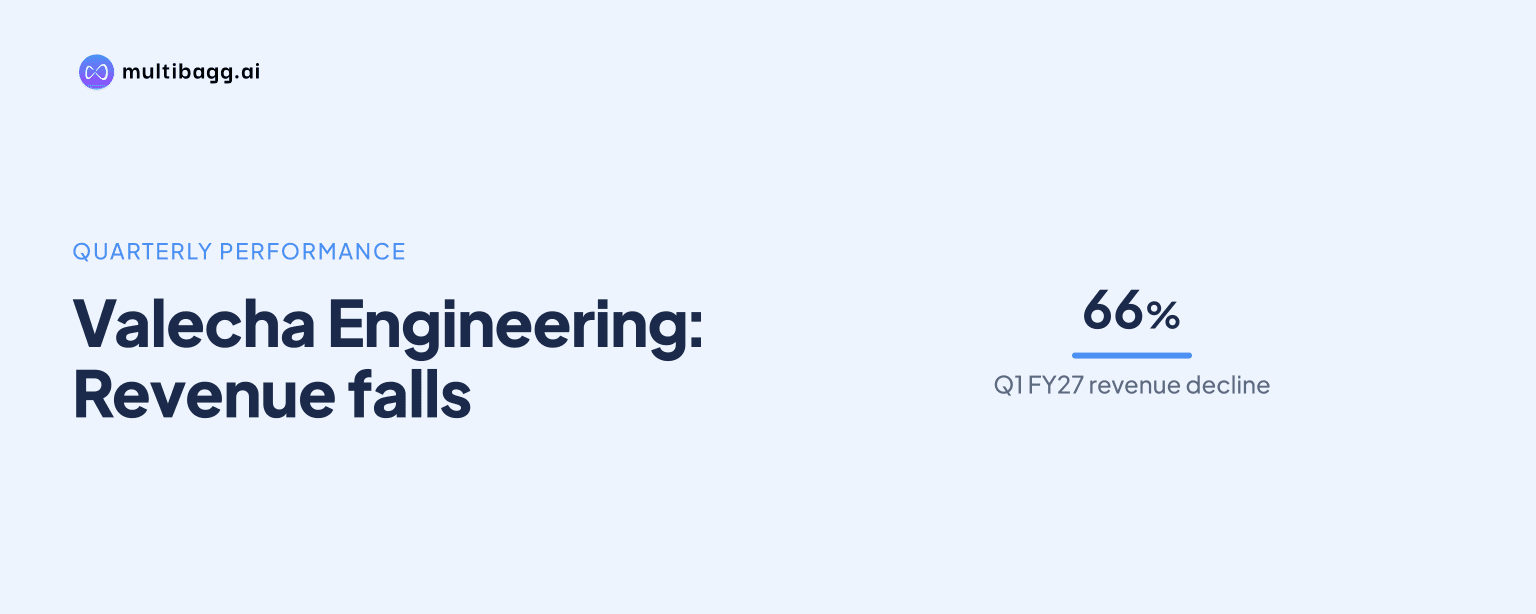
- Valecha Engineering reported Q1 FY27 consolidated revenue of ₹2.8 crore, down 66% year on year.
- Valecha Engineering reported a consolidated Q1 FY27 net loss of ₹50.4 crore and EPS of negative ₹22.36.
powered by IRIS
Valecha Engineering Ltd will consider its unaudited Q2 FY27 and half-year financial results on November 20, 2026, after its November 13 board meeting was adjourned for lack of quorum. The filing matters because Valecha Engineering reported consolidated revenue of ₹2.8 crore and a net loss of ₹50.4 crore in Q1 FY27.
Know Valecha Engineering inside out
Results, valuation, peers and who's buying, in one view.
Why was Valecha Engineering's Q2 FY27 results meeting rescheduled?
Valecha Engineering's board meeting scheduled for November 13, 2026, was adjourned because the required quorum was not present. The company had originally informed exchanges that the board would consider unaudited standalone and consolidated financial results for the quarter and half year ended September 30, 2026.
A subsequent disclosure stated that the board would reconvene on Friday, November 20, 2026. The agenda remains the approval of unaudited financial results for Q2 FY27 and the first half of FY27. The company has not filed the financial figures with the exchanges at the time of the update.
The rescheduled date is 51 days after the September quarter ended. For comparison, Valecha Engineering filed its Q1 FY27 results on August 13, 2026, or 44 days after the June quarter ended. Its Q2 FY26 results were filed on November 19, 2025, 50 days after that quarter's end.
The adjournment does not itself provide a financial update. It means investors must wait for the board's approval and the subsequent exchange filing before assessing revenue, profitability, expenses, cash-related disclosures, or any notes accompanying the September-quarter accounts.
What did Valecha Engineering report in the previous quarter?
Valecha Engineering reported consolidated revenue of ₹2.8 crore in Q1 FY27, down 66% year on year from ₹8.2 crore in Q1 FY26. Revenue was also lower than ₹11.4 crore reported in the March 2026 quarter, based on the consolidated figures presented in the company's NSE filings.
Consolidated profit before tax was a loss of ₹50.4 crore in the June 2026 quarter, compared with losses of ₹49.8 crore a year earlier and ₹93.4 crore in the March 2026 quarter. Consolidated net profit was also a loss of ₹50.4 crore, while earnings per share stood at negative ₹22.36.
The historical quarterly data also shows a low sales base in recent periods. Reported sales were ₹19 crore in March 2024, ₹9 crore in June 2024, ₹5 crore in September 2024, ₹25 crore in March 2025, ₹8 crore in June 2025, ₹10 crore in September 2025, ₹11 crore in March 2026 and ₹3 crore in June 2026.
Got a follow-up? Ask IRIS
What should investors watch in the Q2 FY27 filing?
Investors should first watch whether the September-quarter filing shows any change in revenue from the ₹2.8 crore reported in Q1 FY27. The disclosed Q1 year-on-year revenue decline of 66% makes the sales trajectory a central comparison point when the Q2 figures are released.
Profitability will be another key item. The June-quarter net loss of ₹50.4 crore followed a ₹93.4 crore loss in the March 2026 quarter. Quarterly operating data shows that interest expense was ₹51 crore in June 2026, compared with quarterly sales of ₹3 crore in the same historical table, illustrating the gap between operating scale and finance costs in that period.
The September results will also cover the first half ended September 30, 2026. This gives investors a six-month view rather than a single-quarter comparison. However, no management guidance, operational target, order-book update, dividend proposal, or outlook was included in the disclosures supplied for the November 20 meeting.
Valecha Engineering is listed on the National Stock Exchange of India under the symbol VALECHAENG. The results page indicates that a link to the filing will appear once the company submits the approved figures to the NSE.
How does the delayed board approval affect investors and the market?
The delayed approval postpones the availability of Q2 FY27 financial information but does not change the stated reporting period or the matters on the board agenda. Until the results are filed, investors do not have company-reported September-quarter revenue, profit, balance-sheet, or cash-flow figures to use in their assessments.
No share-price movement, trading data, or market reaction was provided in the source material. As a result, the available evidence supports only a procedural conclusion: the scheduled November 13 approval did not take place because of a lack of quorum, and the board was asked to take up the same results agenda on November 20.
The reporting history provides context for the timing. Valecha Engineering's Q4 FY26 results were filed 66 days after the March quarter ended, while Q3 FY26 results were filed 48 days after the December 2025 quarter ended. Q1 FY26 results were filed after 131 days, showing that filing intervals have varied across recent quarters.
For investors, the next definitive information will be the exchange-filed unaudited results and any explanatory notes issued with them. These documents will determine whether the June-quarter decline in revenue and recurring losses continued into the September quarter.
Conclusion
Valecha Engineering's Q2 FY27 results meeting was moved from November 13 to November 20 because the earlier meeting lacked a quorum. The postponement comes after a Q1 FY27 marked by consolidated revenue of ₹2.8 crore, a 66% year-on-year decline, and a consolidated net loss of ₹50.4 crore.
The immediate item to watch is the board's consideration of unaudited standalone and consolidated results for the quarter and half year ended September 30, 2026. Investors should monitor the NSE filing after the meeting for the actual Q2 figures, half-year data, and any disclosures that accompany the approved accounts.