










Raymond Limited Gets NCLT Approval to Merge Everblue Apparel
Key highlights
- Raymond Limited and its nominees hold 100% of Everblue Apparel Limited's equity share capital.
- The merger scheme has an appointed date of April 1, 2026.
- Raymond Limited will issue 0 new shares under the wholly owned subsidiary merger.
- Everblue Apparel's board approved the scheme on January 23, 2026, while Raymond approved it on January 27, 2026.
powered by IRIS
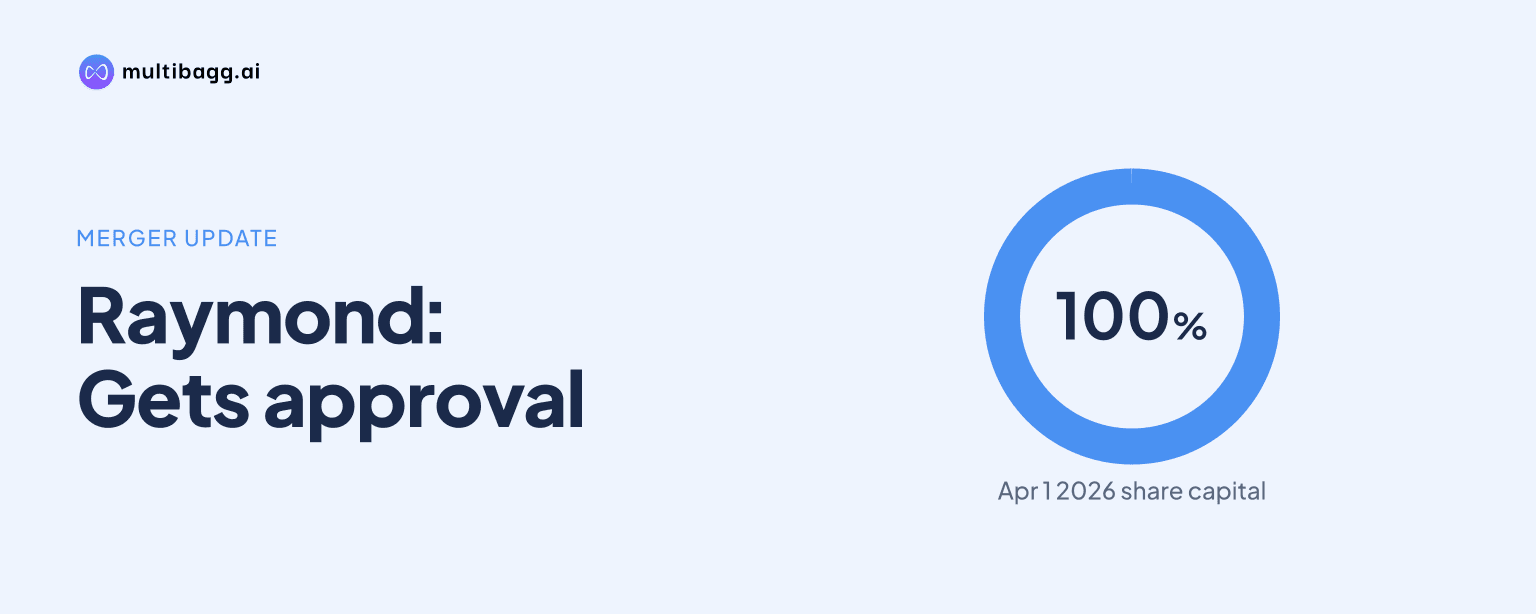
Raymond Limited has received Mumbai NCLT approval for the amalgamation of Everblue Apparel Limited, its wholly owned subsidiary, with an appointed date of April 1, 2026 and no new Raymond shares to be issued. The transaction brings Everblue Apparel's garmenting operations directly into the listed parent and removes a separate legal entity from the group structure.
Know Raymond inside out
Results, valuation, peers and who's buying, in one view.
What has the NCLT approved for Raymond Limited?
The National Company Law Tribunal's Mumbai Bench has allowed the scheme application for the merger of Everblue Apparel Limited into Raymond Limited under Sections 230 to 232 of the Companies Act, 2013. Everblue Apparel is the transferor company, while Raymond is the transferee company under the scheme.
The order paves the way for Everblue Apparel to be dissolved without winding up once the scheme becomes effective. Raymond has said the consolidation is intended to simplify the group's corporate structure, integrate the garmenting operations into the listed company, and support better use of resources and operational efficiency.
The application was recorded as C.A. (CAA) No. 96/MB/2026. The NCLT order also dispensed with meetings of shareholders and creditors in relation to the proposed amalgamation, subject to the process and notices specified by the tribunal.
Why will Raymond Limited not issue new shares?
Raymond Limited will not issue shares because it, together with its nominees, holds the entire issued, subscribed and paid-up equity share capital of Everblue Apparel. As Everblue Apparel is wholly owned, there is no outside minority shareholder interest to exchange for Raymond shares.
Under the scheme, Everblue Apparel's entire share capital will be cancelled when the arrangement takes effect. This means the merger does not change Raymond's shareholding structure through a share-swap or fresh equity issuance. It is a parent-subsidiary absorption rather than an acquisition funded with stock.
The absence of a share exchange was also central to the tribunal's decision to dispense with stakeholder meetings. The NCLT dispensed with meetings of Everblue Apparel's equity shareholders, secured creditor and unsecured creditors, as well as meetings of Raymond's shareholders and creditors.
How did the Everblue Apparel merger process unfold?
The process began with board approvals in January 2026. Everblue Apparel's board approved the scheme on January 23, 2026, and Raymond's board approved it on January 27, 2026.
The scheme specifies April 1, 2026 as its appointed date. This is the date from which the amalgamation is designated to operate under the arrangement, while the legal effectiveness of the scheme follows completion of the applicable process and filings.
In its January announcement, Raymond said the proposed merger would streamline operations, improve management focus, and create operational and financial synergies. The company had stated that the arrangement would require statutory and regulatory approvals, including NCLT clearance. The Mumbai Bench has now allowed the company scheme application.
The tribunal directed the companies to issue notices of the proposed scheme to specified unsecured creditors and regulatory authorities. The authorities named include the Regional Director, Registrar of Companies, Income Tax Department, GST authorities, Official Liquidator, BSE and NSE.
Got a follow-up? Ask IRIS
What does the merger mean for Raymond Limited's operations and investors?
The merger places Everblue Apparel's garmenting operations directly within Raymond Limited, eliminating the subsidiary layer for that business. Raymond has identified simpler group structure, stronger resource utilisation and better operational efficiency as the reasons for the consolidation.
For investors, the key structural point is that no dilution arises from the scheme because no new Raymond equity will be issued. The merger also does not involve an announced change in Raymond's ownership pattern. Its immediate relevance is therefore organisational and operational rather than a capital-raising transaction.
The available information does not provide separate financial figures for Everblue Apparel or quantify the savings or synergies expected from the integration. As a result, the approval itself establishes the legal route for consolidation but does not establish a numerical effect on Raymond's revenue, profit, cash flow or valuation.
Raymond's stated business segments include tools and hardware, auto components, precision, real estate and property development, and other activities including job processing and non-scheduled airline operations. The merger specifically concerns the apparel subsidiary's garmenting operations and should be considered within the company's broader group simplification effort.
Why is the NCLT order relevant to listed-company restructurings?
The order is relevant because mergers between a listed parent and a wholly owned subsidiary can simplify the legal structure without requiring a share-exchange ratio. Where the parent owns all of the subsidiary's equity, cancellation of the subsidiary's share capital avoids the need to issue consideration shares to external holders.
The tribunal's dispensation of meetings reflects the ownership structure described in the application, but it does not remove the notification and regulatory steps ordered by the NCLT. Notices to market institutions and government authorities retain oversight of the arrangement even though stakeholder meetings were not required.
For Raymond, the approval follows a board decision announced in January 2026. It converts the stated objective of integrating Everblue Apparel into a tribunal-approved scheme, while the appointed date provides a defined reference point for the amalgamation.
Conclusion
Raymond Limited's NCLT-approved merger with Everblue Apparel Limited consolidates the garmenting subsidiary into the listed parent without issuing fresh shares or altering the stated shareholding structure. The arrangement is designed to remove a separate corporate layer and bring the operations under one legal entity.
The next matters to watch are completion of the notices and filings directed by the NCLT, including communication with the named regulatory authorities and exchanges, and the scheme becoming effective. Raymond has not disclosed separate Everblue Apparel financial metrics or a quantified synergy target, leaving the financial impact to be assessed through future company disclosures.