










Visaka Industries Reports 17% Q1 Revenue Growth to ₹590.1 Crore
Key highlights
- Visaka Industries reported Q1 FY27 revenue of ₹590.1 crore, up 16.7% year-on-year.
- Q1 FY27 EBITDA rose 78.7% to ₹91.4 crore and margin expanded 537 basis points to 15.5%.
- Profit after tax increased 1.0% year-on-year to ₹52.7 crore, while EPS rose to ₹6.10.
- The board meeting for Q2 and H1 FY27 audited results is scheduled for November 12, 2026.
powered by IRIS
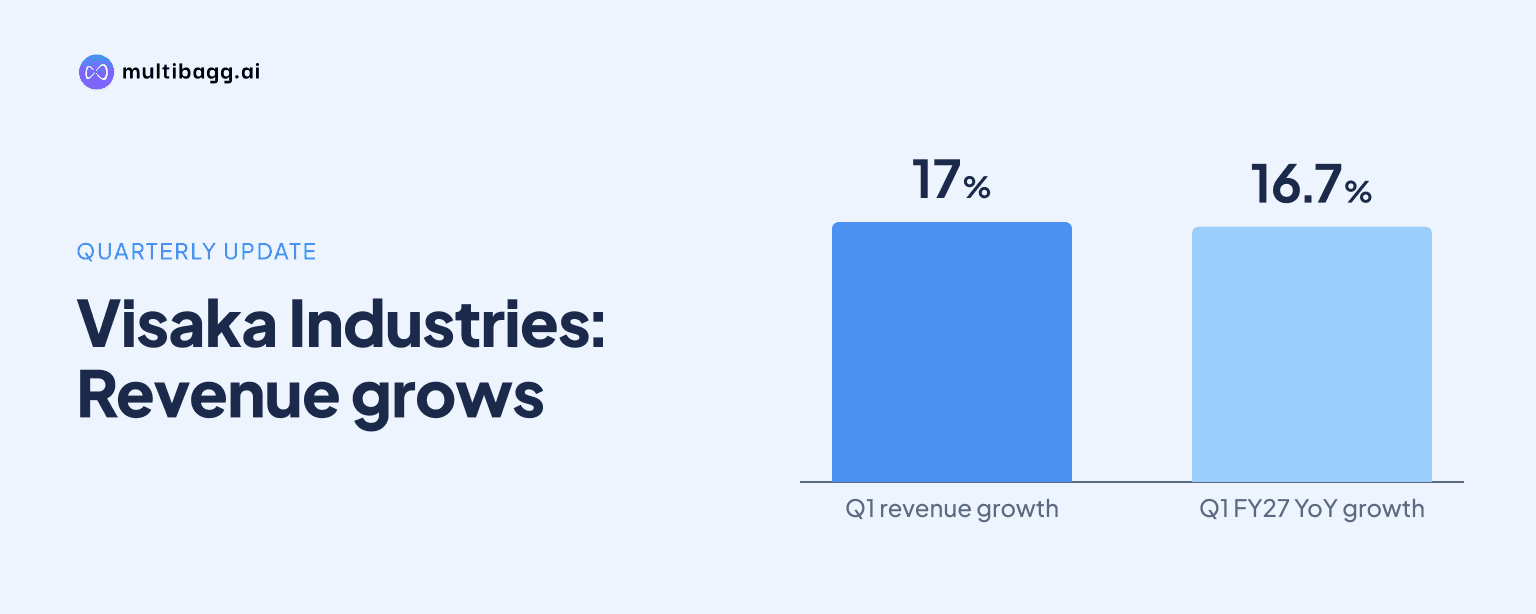
Visaka Industries Ltd reported consolidated revenue of ₹590.1 crore in Q1 FY27, up 16.7% year-on-year, while EBITDA rose 78.7% to ₹91.4 crore and net profit increased 1.0% to ₹52.7 crore. The results show a sharp improvement in operating profitability even as bottom-line growth remained modest.
Know Visaka Industries inside out
Results, valuation, peers and who's buying, in one view.
What did Visaka Industries report in Q1 FY27?
Visaka Industries reported revenue from operations of ₹590.1 crore for the quarter ended June 30, 2026, compared with ₹505.5 crore in Q1 FY26. The 16.7% year-on-year increase was supported by demand across the company's building products and textile businesses, according to the reported results.
Operating performance improved at a faster pace than revenue. EBITDA increased to ₹91.4 crore from ₹51.1 crore a year earlier, representing growth of 78.7%. EBITDA margin expanded to 15.5% from 10.1%, an improvement of 537 basis points. The company attributed the increase to higher gross margins and cost management, which helped offset higher employee and other expenses.
Profit after tax rose more slowly, increasing to ₹52.7 crore from ₹52.1 crore. Earnings per share increased to ₹6.10 from ₹6.03, a rise of 1.2%. The difference between EBITDA growth and profit growth was attributed to the absence of exceptional items that had supported earnings in the corresponding quarter of the previous year.
Why did Visaka Industries' operating margin improve?
Visaka Industries' EBITDA margin improved because gross margins rose and costs were managed more effectively during the quarter. The company reported that these gains more than offset increases in employee costs and other expenses, allowing operating profit to grow substantially faster than sales.
The margin expansion is material because the company recorded a 16.7% rise in revenue but a 78.7% increase in EBITDA. This indicates that a larger portion of quarterly revenue was retained as operating profit than in Q1 FY26. The reported margin of 15.5% was 5.37 percentage points above the 10.1% recorded in the year-earlier period.
Quarterly data also points to a stronger June 2026 period than the immediately preceding quarters shown in the available results history. Revenue was reported at ₹590 crore for June 2026, compared with ₹480 crore in March 2026, while gross profit was ₹74 crore and net profit was reported at about ₹52 crore in the quarterly snapshot.
Why was net profit growth lower than EBITDA growth?
Net profit growth was lower because Q1 FY26 included exceptional items that had boosted the comparable quarter's earnings. Visaka Industries said the absence of those items in Q1 FY27 limited the growth in profit after tax despite the significant improvement in operating performance.
The result is visible in the reported numbers. EBITDA rose by ₹40.3 crore year-on-year, but profit after tax increased by ₹0.6 crore. Investors assessing the quarter therefore need to distinguish between the operating improvement, reflected in the EBITDA and margin figures, and the year-on-year comparison in reported profit, which was affected by the prior-period exceptional items.
The company had also highlighted a 15% EBITDA margin in its Q1 FY27 investor presentation released in October. The reported quarterly result showed a 15.5% margin, compared with 10.1% in Q1 FY26. These figures place the focus on the sustainability of gross-margin and cost improvements in subsequent reporting periods.
Got a follow-up? Ask IRIS
When will Visaka Industries announce Q2 and H1 FY27 results?
Visaka Industries scheduled a board meeting for November 12, 2026, to approve audited financial results for the second quarter and half year ended September 30, 2026. The company informed the NSE about the planned meeting in a filing dated October 27, 2026.
The company also said its trading window would remain closed from October 1, 2026, until November 14, 2026, in line with insider trading regulations. The closure covers the period surrounding the consideration and approval of Q2 and H1 FY27 results.
A Q2 and H1 FY27 earnings conference call is scheduled for November 16, 2026, at 11:30 AM IST. The call is to be hosted by Go India Advisors and is expected to feature Chief Financial Officer Ramakrishna Pendyala and business strategist Dr. Vritika. The filing, made under SEBI LODR Regulation 30, includes dial-in details for shareholders and other investors.
What should investors monitor after the Q1 FY27 result?
Investors should monitor whether Visaka Industries sustains the higher EBITDA margin reported in Q1 FY27. Revenue growth, gross margins, employee expenses and other expenses will be relevant indicators because the company linked its first-quarter operating improvement to higher gross margins and better cost management.
The next confirmed disclosure is the Q2 and H1 FY27 result approval scheduled for November 12, 2026, followed by the November 16 conference call. These events are expected to provide management's updates on quarterly performance and outlook. Shareholders also have a separate deadline concerning unclaimed dividends and shares, with the company stating that unclaimed holdings could be permanently lost if not claimed by March 25, 2027.
Conclusion
Visaka Industries' Q1 FY27 result combined 16.7% revenue growth with a 78.7% increase in EBITDA and a 537-basis-point improvement in margin. Profit after tax rose only 1.0%, as the prior-year quarter had benefited from exceptional items, making the operating and net-profit trends materially different.
The immediate point to watch is the board's scheduled approval of Q2 and H1 FY27 audited results on November 12, 2026, and management's comments on the November 16 earnings call. Investors will be looking for reported evidence on revenue momentum, margin performance and the cost factors cited in the first-quarter results.