










VL E-Governance targets 70% ULPIN assignment gap nationwide
Key highlights
- VL E-Governance says 70% of land parcels nationwide remain to be assigned ULPINs.
- VL E-Governance says Aadhaar integration is complete for 2.16% of villages and is needed in 6.38 lakh villages.
- VL E-Governance says its Philippines project dematerialised 20 million land deeds across 168 offices.
- VL E-Governance cites land-record digitisation work in six Uttar Pradesh districts.
powered by IRIS
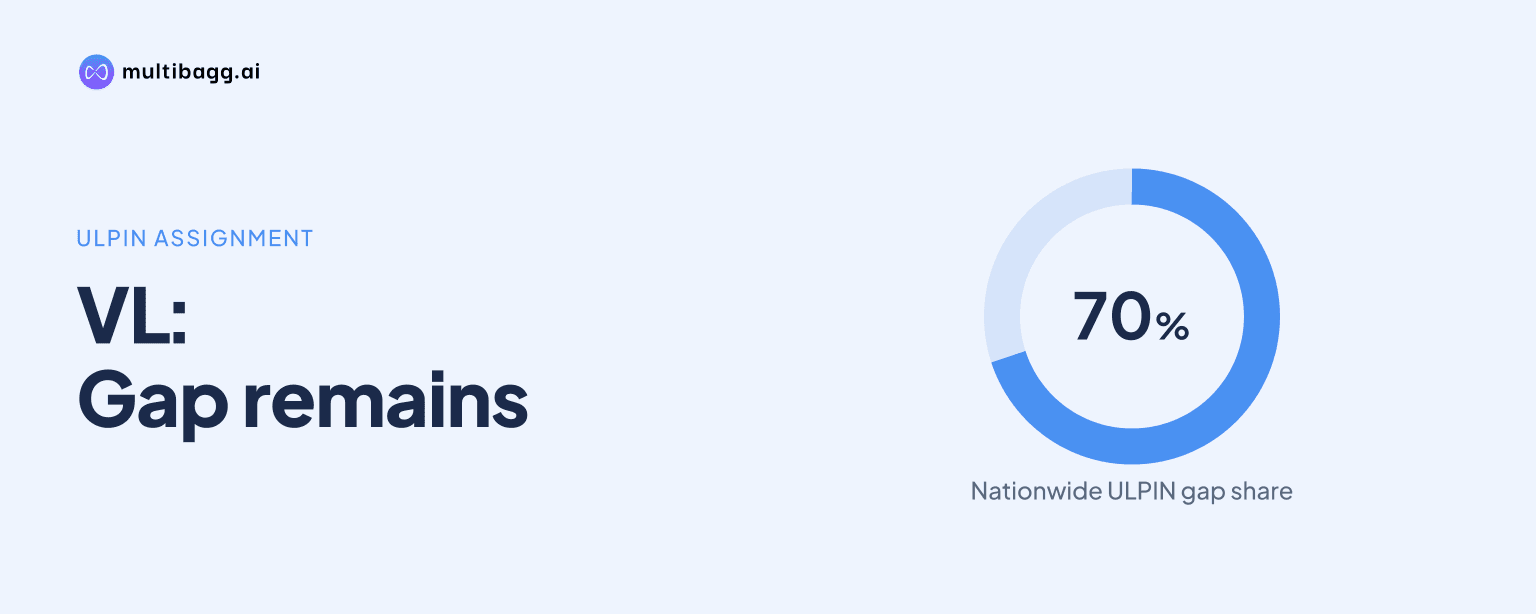
VL e-Governance & IT Solutions Limited is targeting a land-record modernisation opportunity in which 70% of land parcels nationwide still require Unique Land Parcel Identification Number assignments, according to its presentation. VL E-Governance cites its Philippines project, which it says dematerialised 20 million land deeds across 168 Registrar of Deeds offices, as relevant experience.
Know VL E-Governance & IT Solutions inside out
Results, valuation, peers and who's buying, in one view.
What is the 70% ULPIN opportunity for VL E-Governance?
VL E-Governance identifies assigning ULPINs to the remaining 70% of land parcels nationwide as a potential large-scale e-governance opportunity. The company says 30% of parcels have already received ULPINs, creating a stated gap for digitisation, data validation and database-integration work under the Digital Land Records Modernisation Programme, or DILRMP.
ULPIN is a 14-digit alphanumeric identifier for each land parcel. VL E-Governance says identification depends on a parcel's longitude and latitude coordinates, detailed surveys and geo-referenced cadastral maps. Its stated work scope includes cleaning up and validating existing records, assigning ULPINs, integrating data with state and national land-record databases, and enabling real-time tracking and updates through information-technology systems.
The disclosed 70% figure describes an addressable work gap rather than a VL E-Governance order book or revenue forecast. The presentation gives no tender value, contract award, bidding timetable or target revenue for ULPIN work. It presents the programme as one of the upcoming large-scale DILRMP projects that VL E-Governance intends to bid for.
How does Aadhaar integration widen the land-records scope?
VL E-Governance says Aadhaar integration has been completed for 2.16% of villages across India and is needed in the remaining 6.38 lakh villages nationwide. The company identifies partial implementation in pilot states including Maharashtra, Madhya Pradesh and Telangana, but does not give village counts, contract values or completion dates for those states.
The stated scope goes beyond ULPIN assignment. VL E-Governance proposes developing application programming interfaces, or APIs, for Aadhaar-based land-record authentication; deploying Aadhaar-enabled electronic know-your-customer, or e-KYC, systems for property registration; installing biometric systems in registration offices; and training state officials on related workflows.
VL E-Governance links this work to the land-record programme launched in 2008 and revamped in 2014 under the Digital India initiative. It says a recent budget announcement proposed adopting ULPINs and linking them with Aadhaar. The presentation also refers to a proposed transliteration facility across Schedule VIII languages, although it does not say VL E-Governance has received any work for transliteration, Aadhaar integration or ULPIN allocation.
What experience does VL E-Governance cite for this work?
VL E-Governance says it executed the Philippines Land Titling Computerization project, dematerialising 20 million land deeds and introducing paperless digital record keeping at 168 Registrar of Deeds offices nationwide. This is the largest quantified land-record delivery credential in the presentation and supports management's stated aim of pursuing nationwide Indian digitisation programmes.
The company also says it digitised land records for the entire Philippines and worked in six districts in Uttar Pradesh. Its project list includes computerisation of the Uttar Pradesh registration department for land and revenue records. However, the presentation does not provide dates, contract values, revenue, completion milestones or profitability for the Philippines assignment or the six Uttar Pradesh districts.
VL E-Governance further lists Election Commission computerisation, Aadhaar enrolment, National Population Register digitisation, Ministry of Corporate Affairs MCA-21 work, public-distribution-system smart cards and Passport Seva Kendra services. It says it has more than three decades of systems-integration capabilities. Management's view that VL E-Governance is among the few companies able to undertake nationwide projects is a statement of bidding capacity, not a disclosed contract award.
Got a follow-up? Ask IRIS
How does land-record digitisation fit VL E-Governance's strategy?
VL E-Governance places DILRMP-related land-record work among its e-governance bidding priorities, alongside nationwide government projects. The strategy does not classify the 70% ULPIN gap as a secured project. Instead, it identifies data validation, record cleanup, integration and updates as potential services within a national programme.
The company says it has revamped its business and strengthened its leadership team to improve project capabilities and eligibility for large government and private projects. It does not quantify leadership changes, the value of its bidding pipeline or expected income from land records. This separates the reported national digitisation gap from a confirmed commercial conversion for VL E-Governance.
Other strategic areas include electric-vehicle charging, solar projects and advanced technology. VL E-Governance says the Ministry of Heavy Industries introduced the PM e-Drive Scheme in December 2024 with an outlay of Rs 10,900 crore. It also says it signed a binding term sheet to acquire a 40% equity stake in HAL-Edgewood Technologies Private Limited, with that transaction at an advanced stage.
What would execution of the ULPIN plan require?
VL E-Governance says completing the remaining 70% of ULPIN assignments would require resolving technical integration and validation challenges. The stated delivery mechanism combines surveys, geo-referenced cadastral maps, validation of existing records, ULPIN allocation and integration with state and national databases. The presentation does not state how many parcels, villages or states VL E-Governance expects to serve.
For Aadhaar-related deployment across 6.38 lakh villages, the company identifies APIs, e-KYC systems, biometric equipment and training for state officials. These activities would involve multiple parts of the property-registration process, but the presentation provides no state-by-state rollout sequence, procurement structure, budget allocation or expected completion date.
VL E-Governance also says it may use the last-mile execution capabilities of Vakrangee Ltd through its master-franchisee and kendra network for last-mile projects. The presentation does not specify whether that network would support land surveys, Aadhaar-enabled registration, ULPIN integration or another programme component. Its disclosed plan therefore defines potential services more clearly than delivery arrangements or financial outcomes.
Conclusion
VL E-Governance presents land-record modernisation as a large uncompleted e-governance workstream, with 70% of parcels still awaiting ULPIN assignments and Aadhaar linking stated as complete in 2.16% of villages. Its claimed Philippines delivery of 20 million deeds through 168 offices and its Uttar Pradesh experience form the operational background for management's nationwide bidding position.
The next point to watch is whether VL E-Governance converts its DILRMP bidding focus into disclosed tenders, awards, contract values or rollout milestones. Management's plan covers record validation, ULPIN allocation, database integration, Aadhaar authentication, e-KYC and official training, but the presentation sets no land-record revenue target or delivery schedule.