










WABAG Creates Specialist Vertical for High-Tech Water Systems
Key highlights
- WABAG created a separate team and vertical for semiconductor, data-centre, solar and green-hydrogen water systems.
- Management said the new vertical's projects typically have a 12-to-15-month gestation period and should be turned around in about 12 months.
- WABAG said it has more than 125 patents and trademarks to support technology-led reuse-water and ultra-pure-water offerings.
- Management said individual high-tech orders are unlikely to be Rs 1,000 crore or Rs 5,000 crore, but may produce repeat orders as facilities expand.
powered by IRIS
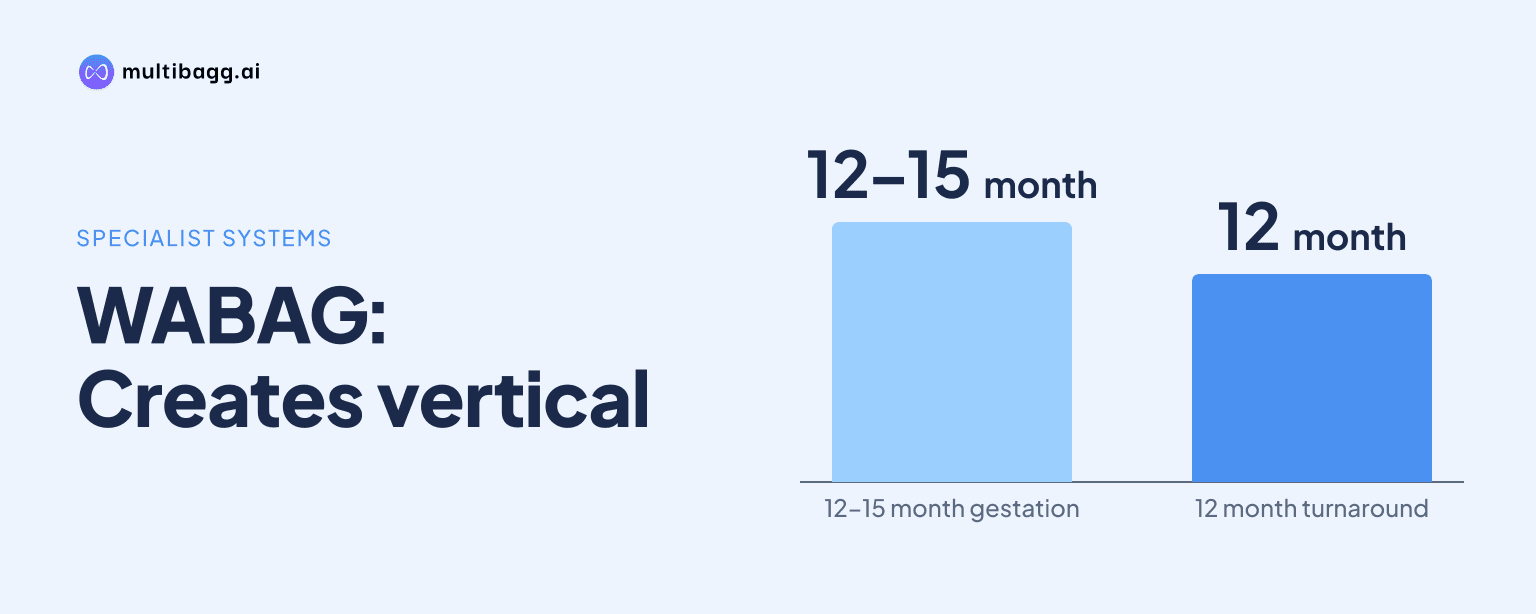
In the Q2 FY2027 call, VA TECH WABAG Limited said it had created a separate team and vertical for semiconductor, data-centre, solar and future green-hydrogen water systems, targeting projects generally turned around in 12 to 15 months. WABAG said its more than 125 patents and trademarks support this technology-led expansion beyond larger water contracts.
Know Va Tech Wabag inside out
Results, valuation, peers and who's buying, in one view.
Why has WABAG formed a specialised high-tech water vertical?
WABAG has formed the vertical because high-tech industrial water projects are smaller, faster-moving and require focused technical and execution resources. Management said semiconductor plants, data centres, photovoltaic solar manufacturing and green hydrogen are sectors of interest, but that their order values will not usually match Rs 1,000 crore or Rs 5,000 crore single-project contracts.
The separate structure is intended to address the shorter project cycle. Management said these orders generally have a gestation period of 12 to 15 months and need to be completed in about 12 months, unlike the larger-scale water infrastructure work that has historically formed WABAG's core project base. The company therefore said a specialised team is needed both to pursue and execute the opportunities.
WABAG's rationale is based on modular expansion rather than one large award. Management said a client may install several units as its facility grows, meaning that winning an initial project could create an opportunity for repeat orders over one, two or three years. That is a different order-intake model from a single municipal or large industrial engineering, procurement and construction contract.
Which water systems will WABAG offer to high-tech industries?
WABAG intends to offer reuse-water and ultra-pure-water solutions for high-tech factories and data-centre utilities. Management identified reuse water for cooling or chilling requirements and ultra-pure water as the principal technical needs it is evaluating for semiconductor and data-centre customers.
For data centres, WABAG said it sees scope to support water-cooled systems where there is reliable and affordable water supply. Management said data centres have commonly used air-cooled air-conditioning systems, but argued that water cooling can offer better capital-cost and operating-cost economics if water reliability is established. This is a management view, not a disclosed customer conversion or order win.
The proposed offering is designed as a one-stop water solution rather than only a treatment package. WABAG said it is assessing the project economics before offering clients its technologies, with the aim of enabling water reuse and ultra-pure-water supply. The company cited its portfolio of more than 125 patents and trademarks as a reason it wants to participate in applications that require advanced water-treatment technology.
Does WABAG have orders from semiconductor or data-centre customers?
WABAG did not disclose any signed semiconductor, data-centre or green-hydrogen orders in the call. Management said it had started interacting with potential clients including Google, Adani and Reliance, while cautioning that activity in the sector still needs to take physical shape.
The absence of disclosed order values is consistent with management's description of the vertical as an emerging growth avenue rather than a current large-ticket order category. WABAG said these projects are not a top-line segment in the sense of producing individual Rs 1,000 crore or Rs 5,000 crore awards, though their modular format could support repeat business after the first installation.
Solar activity appears more immediate than hydrogen, based on management's comments. WABAG said it was already seeing substantial photovoltaic solar activity, while semiconductor investment would pick up and hydrogen could pick up in a couple of years as production scale rises and costs decline. Those timing observations are management expectations, not company guidance for orders or revenue.
Got a follow-up? Ask IRIS
Where is WABAG seeing broader demand for water projects?
WABAG said Gujarat, Maharashtra, Andhra Pradesh and Tamil Nadu are generating enquiries across desalination, sewage treatment and water reuse, from municipal bodies and industrial zones. The company also identified wastewater-treatment opportunities in Gujarat and central India, including larger projects linked to the power and steel sectors.
That wider demand backdrop matters because the high-tech vertical sits alongside, rather than replaces, WABAG's existing desalination, sewerage, reuse and industrial-water activities. Management described the newer semiconductor, solar, data-centre and green-hydrogen applications as additional sectors of focus, while its regional pipeline still includes municipal and industrial projects with more established water-treatment requirements.
WABAG's current project execution comments illustrate the contrast in cycle and scale. In Bangladesh, management said engineering was substantially complete, ordering was 90% complete, and about 30% to 40% of materials and civil works were complete, although a government change could delay the project by around six months. The specialised high-tech projects are expected to have materially shorter 12-to-15-month gestation periods.
How will WABAG manage the execution risks of shorter projects?
WABAG said the dedicated team will be responsible for both winning and delivering the shorter-cycle orders, making execution speed central to the vertical's design. Management's target is to turn around projects with 12-to-15-month gestation in roughly 12 months, which requires a separate focus from its longer-duration infrastructure work.
For its broader portfolio, WABAG said it seeks contracts with full payment security, including sovereign guarantees, multilateral funding or letters of credit. Management cited World Bank, Japan International Cooperation Agency, Asian Development Bank and KfW-funded projects as examples of its payment-security approach, while saying Indian contracts generally include commodity-price escalation formulas and international work is hedged or procured early.
The company also said project risk is distributed across geographies and currencies. Its Bangladesh project, for example, remained in progress despite political disruption because it is World Bank funded, according to management. That framework applies to the existing order book; WABAG did not specify equivalent contractual structures or payment terms for prospective high-tech vertical projects.
Conclusion
WABAG's new vertical is a deliberate move toward technology-intensive water reuse, cooling and ultra-pure-water systems for industries with smaller modular projects. The strategic difference is not the promise of immediately larger individual orders, but the possibility of repeat installations as data centres, semiconductor facilities, solar manufacturing and hydrogen capacity expand.
The next point to watch is whether client discussions translate into disclosed awards and whether WABAG achieves its intended roughly 12-month delivery period. Management expects photovoltaic solar activity to remain active, sees semiconductor demand picking up, and said green hydrogen may gain momentum in a couple of years as production scales and costs decline.